
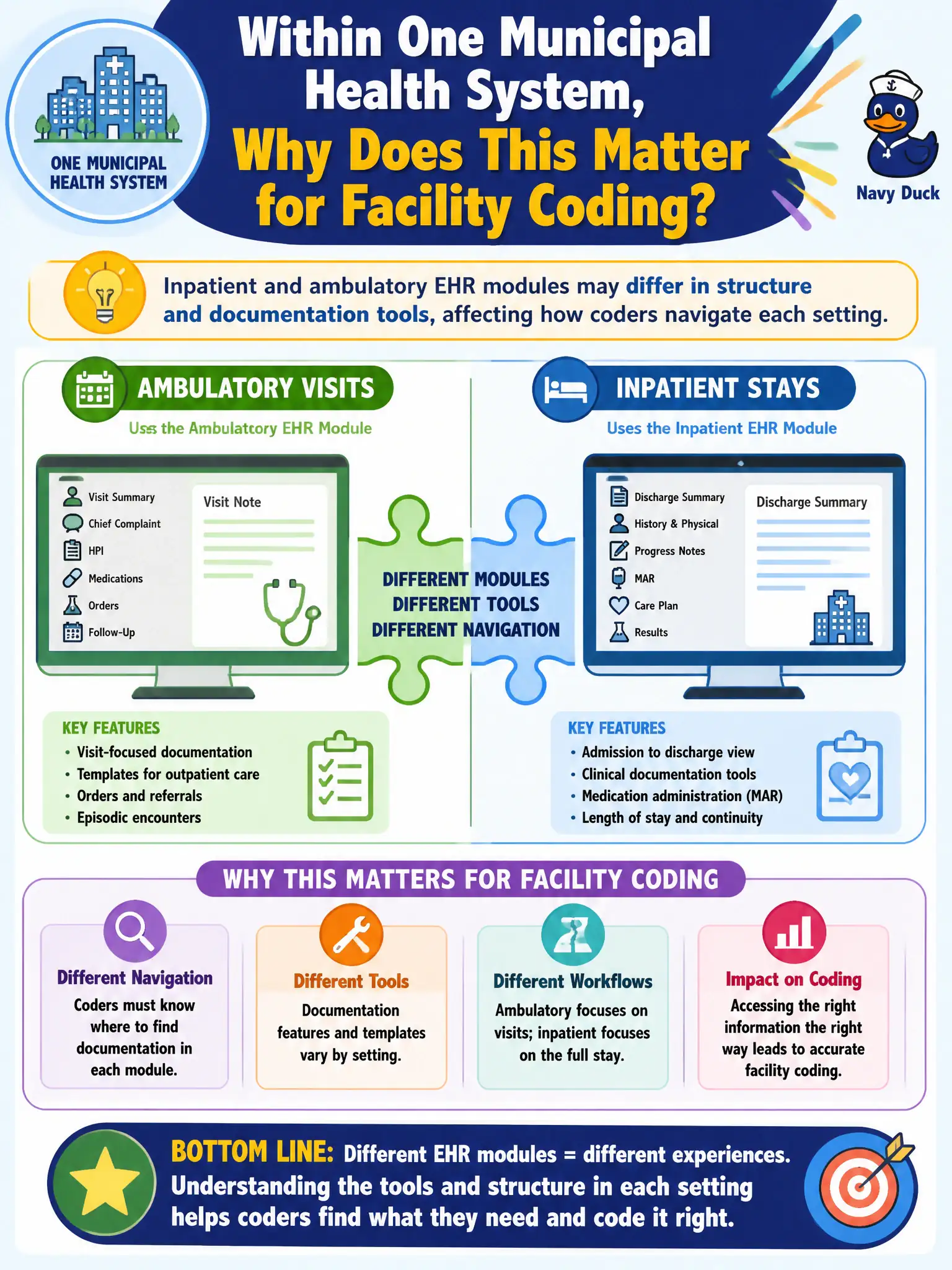
Within one municipal health system, ambulatory visits and inpatient stays use different EHR modules. Why does this matter for facility coding?
Select an answer to reveal the explanation.
Short Explanation
Same health system, different EHR “rooms” for clinic versus inpatient. The buttons and note types may not match, so navigation changes with the setting. Do not assume the ambulatory screen tells the whole inpatient story.
Full Explanation
Within one municipal health system, ambulatory visits and inpatient stays may use different EHR modules, so facility coding navigation and documentation tools can differ by setting. Civic enterprises often evolve module by module; assuming identical screens invites missed inpatient content. CMS does not require ambulatory and inpatient modules to be pixel-identical. Using only the ambulatory module for inpatient DRG assignment skips inpatient-specific documentation. Treating module differences as permission to apply outpatient coding rules to all inpatient charts conflates UI variation with guideline setting. Exam caveat: module differences affect navigation, not which Official Guidelines apply to the encounter. Operational check: train coders on setting-specific module paths, verify inpatient notes and orders live in the inpatient module, avoid coding inpatient stays from ambulatory summaries alone, and maintain tip sheets for cross-module retrieval. Treat encoders, groupers, and CAC as assistants inside civic HIM: useful for speed, never a substitute for documentation review, Official Guidelines, or PHI safeguards. Re-read the authenticated record before finalizing whenever tools, payers, or dashboards push a result the documentation does not support.