
A coder compares inpatient MS-DRG severity with hospital outpatient APC payment. Which distinction is accurate?
Select an answer to reveal the explanation.
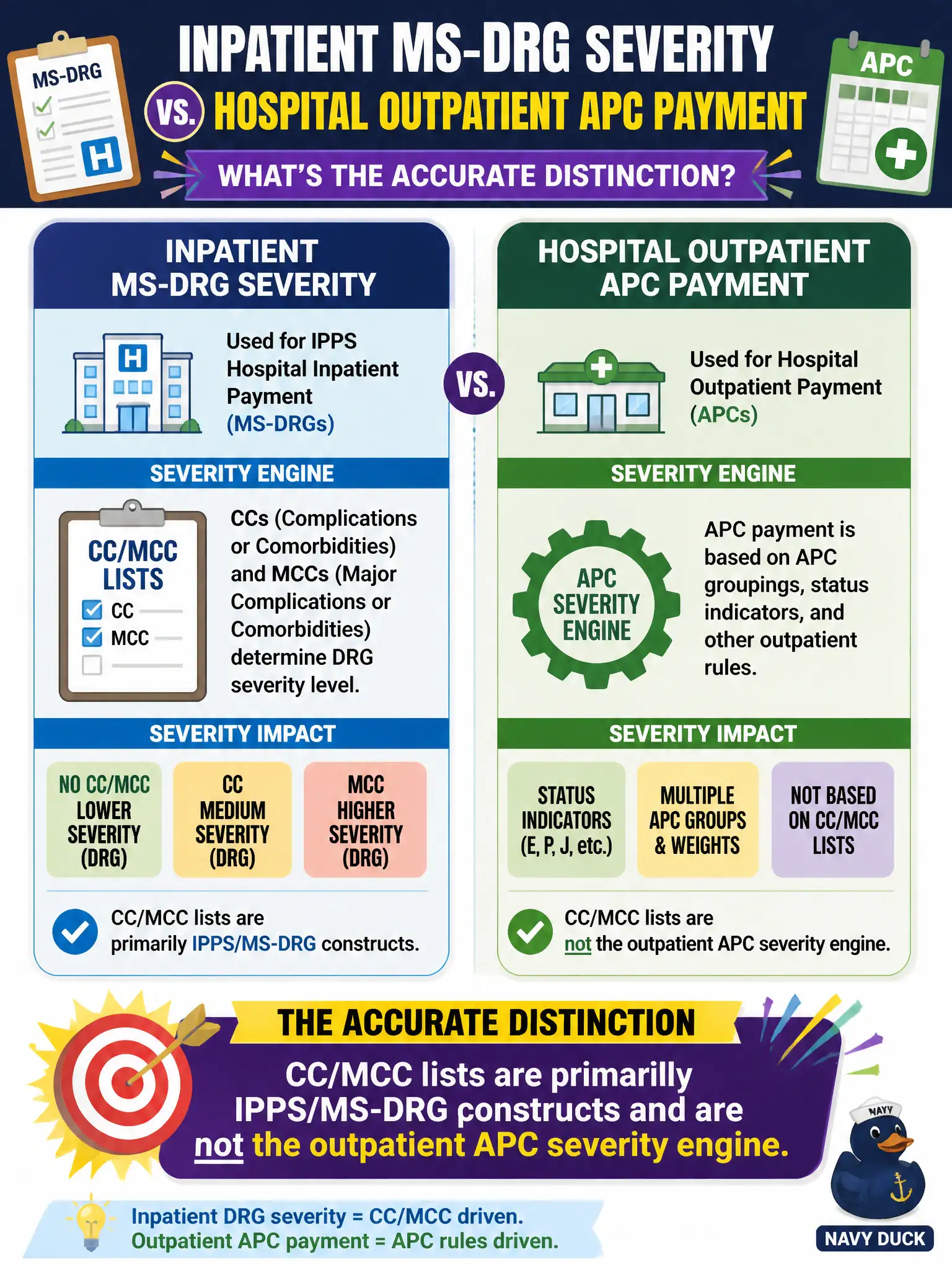
Short Explanation
CC and MCC are an inpatient MS-DRG thing. Outpatient APC packaging plays by different rules—you do not paste the inpatient severity lists onto every clinic or same-day surgery claim as if they were the same engine.
Full Explanation
Comparing inpatient MS-DRG severity with hospital outpatient APC payment, the accurate distinction is that CC/MCC lists are primarily IPPS/MS-DRG constructs and are not the outpatient APC severity engine. Public hospital outpatient payment generally follows CPT/HCPCS, status indicators, and packaging under OPPS. Outpatient APCs do not use the identical inpatient CC/MCC lists as their primary severity engine. CC/MCC lists do not replace CPT coding for hospital outpatient claims. APC payment does not ignore all diagnosis coding entirely—diagnoses remain relevant for medical necessity and other reporting—but APC assignment is not driven by inpatient CC/MCC tiers. Exam caveat: do not export inpatient CC/MCC severity thinking wholesale onto APC payment. Operational check: when training civic coders who work both settings, explicitly contrast MS-DRG CC/MCC tiers with OPPS APC packaging, and review denials that wrongly assume CC capture changes outpatient APC amounts. Keep diagnosis quality high on outpatient claims for necessity without expecting inpatient severity-tier mechanics. In municipal and county facility practice, record the rationale for the chosen coding path and the rejected alternatives in the abstract notes so auditors and future coders understand the clinical and compliance basis. Re-check the decision if new authenticated documentation arrives before final bill drop, and escalate persistent documentation gaps to CDI or compliance rather than normalizing unsupported shortcuts that would distort civic claims, quality metrics, or case-mix reporting.