
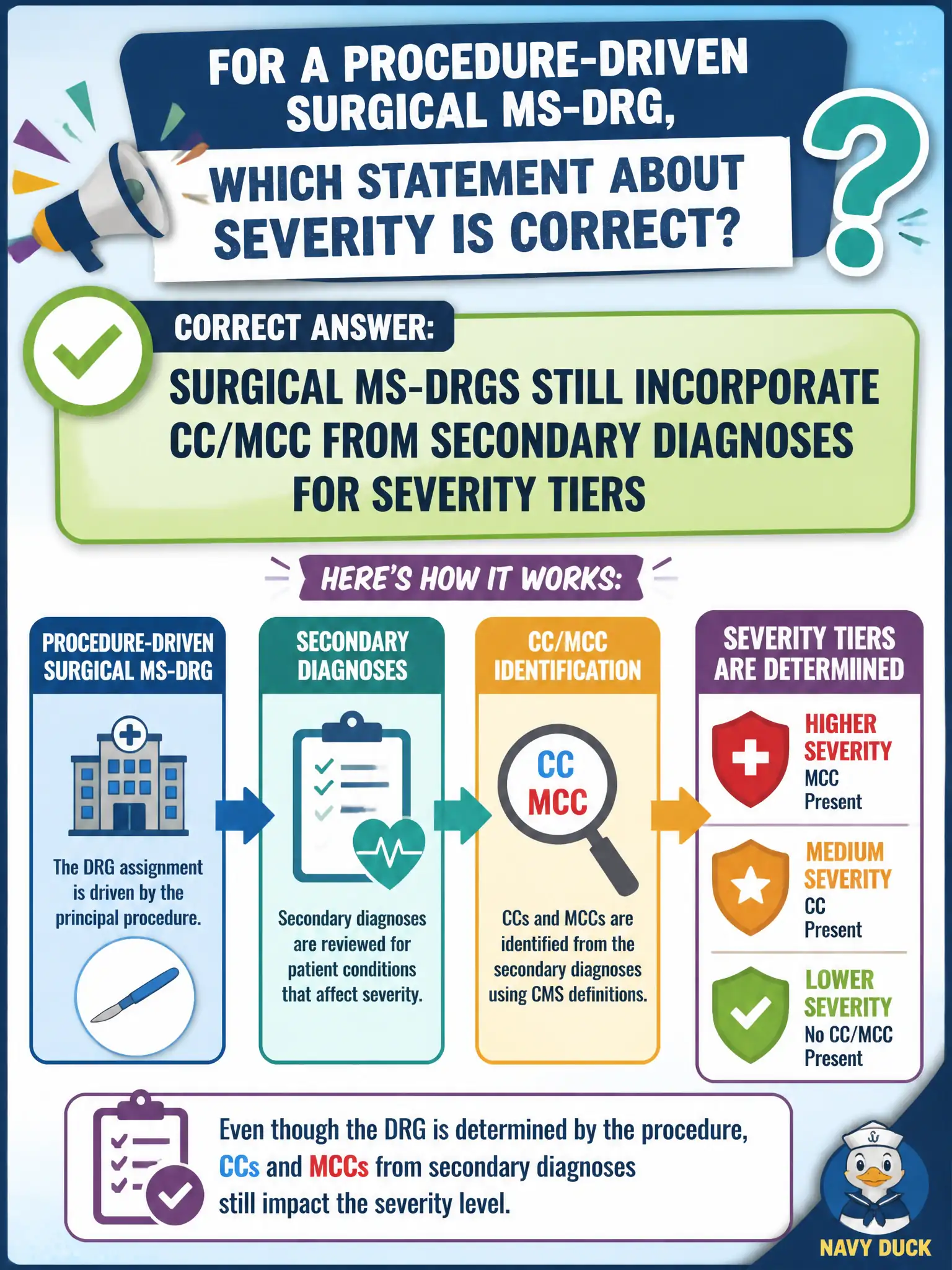
For a procedure-driven surgical MS-DRG, which statement about severity is correct?
Select an answer to reveal the explanation.
Short Explanation
Surgery picks the DRG family, but the secondary diagnoses still set the severity flavor. Even a big OR case can move between no-CC, CC, and MCC tiers based on what else is going on.
Full Explanation
For a procedure-driven surgical MS-DRG, surgical MS-DRGs still incorporate CC/MCC from secondary diagnoses for severity tiers even though the operating-room procedure typically drives the surgical base assignment. Civic surgical coding therefore needs both accurate PCS and supported secondary diagnoses. Surgical DRGs do not ignore all secondary diagnoses once an OR procedure is coded. The ICD-10-PCS code alone does not determine final payment without diagnosis severity inputs. CC/MCC lists are not exclusive to medical DRGs without operating-room procedures. Exam caveat: procedure selects surgical family; CC/MCC still set severity within that family. Operational check: complete operative PCS abstraction and secondary diagnosis review for county surgical inpatients, validate CC/MCC impact on the surgical DRG, and do not stop clinical coding after the procedure code is assigned. Include surgical service education on how postoperative complications and comorbidities still affect payment tier. In municipal and county facility practice, record the rationale for the chosen coding path and the rejected alternatives in the abstract notes so auditors and future coders understand the clinical and compliance basis. Re-check the decision if new authenticated documentation arrives before final bill drop, and escalate persistent documentation gaps to CDI or compliance rather than normalizing unsupported shortcuts that would distort civic claims, quality metrics, or case-mix reporting.