
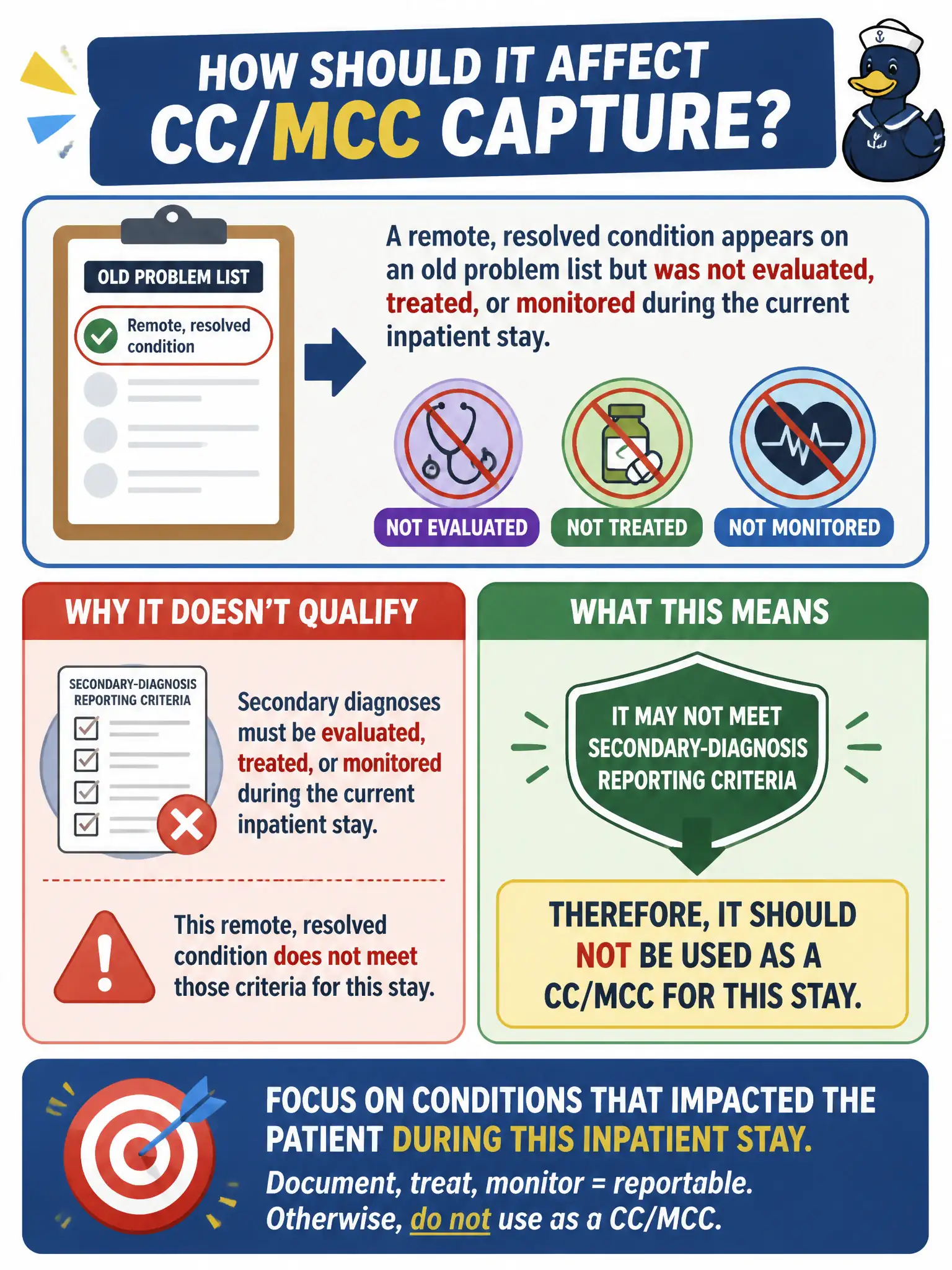
A remote, resolved condition appears on an old problem list but was not evaluated, treated, or monitored during the current inpatient stay. How should it affect CC/MCC capture?
Select an answer to reveal the explanation.
Short Explanation
Old news that nobody touched this admission is not a free CC. Secondaries need to matter this stay—evaluated, treated, monitored, that sort of thing. Dusty history alone usually stays off the claim.
Full Explanation
A remote, resolved condition on an old problem list that was not evaluated, treated, or monitored during the current inpatient stay may not meet secondary-diagnosis reporting criteria and therefore should not be used as a CC/MCC for this stay. County abstracts should reflect the current encounter’s clinical work, not every historical entry. Coding every historical problem-list entry as an MCC fails reporting criteria and ethics. Historical conditions do not always meet UHDDS secondary criteria by default. Reporting a remote condition as principal because it once required surgery fails principal-diagnosis definitions for the current admission. Exam caveat: secondary diagnoses must meet encounter reporting criteria; problem-list antiquity is not enough. Operational check: filter civic inpatient problem lists for conditions addressed this stay, omit purely historical resolved items from CC/MCC capture, and query only when current indicators suggest ongoing significance. Clean copy-forward clutter so public quality and payment data are not distorted by inactive problems. In municipal and county facility practice, record the rationale for the chosen coding path and the rejected alternatives in the abstract notes so auditors and future coders understand the clinical and compliance basis. Re-check the decision if new authenticated documentation arrives before final bill drop, and escalate persistent documentation gaps to CDI or compliance rather than normalizing unsupported shortcuts that would distort civic claims, quality metrics, or case-mix reporting.