
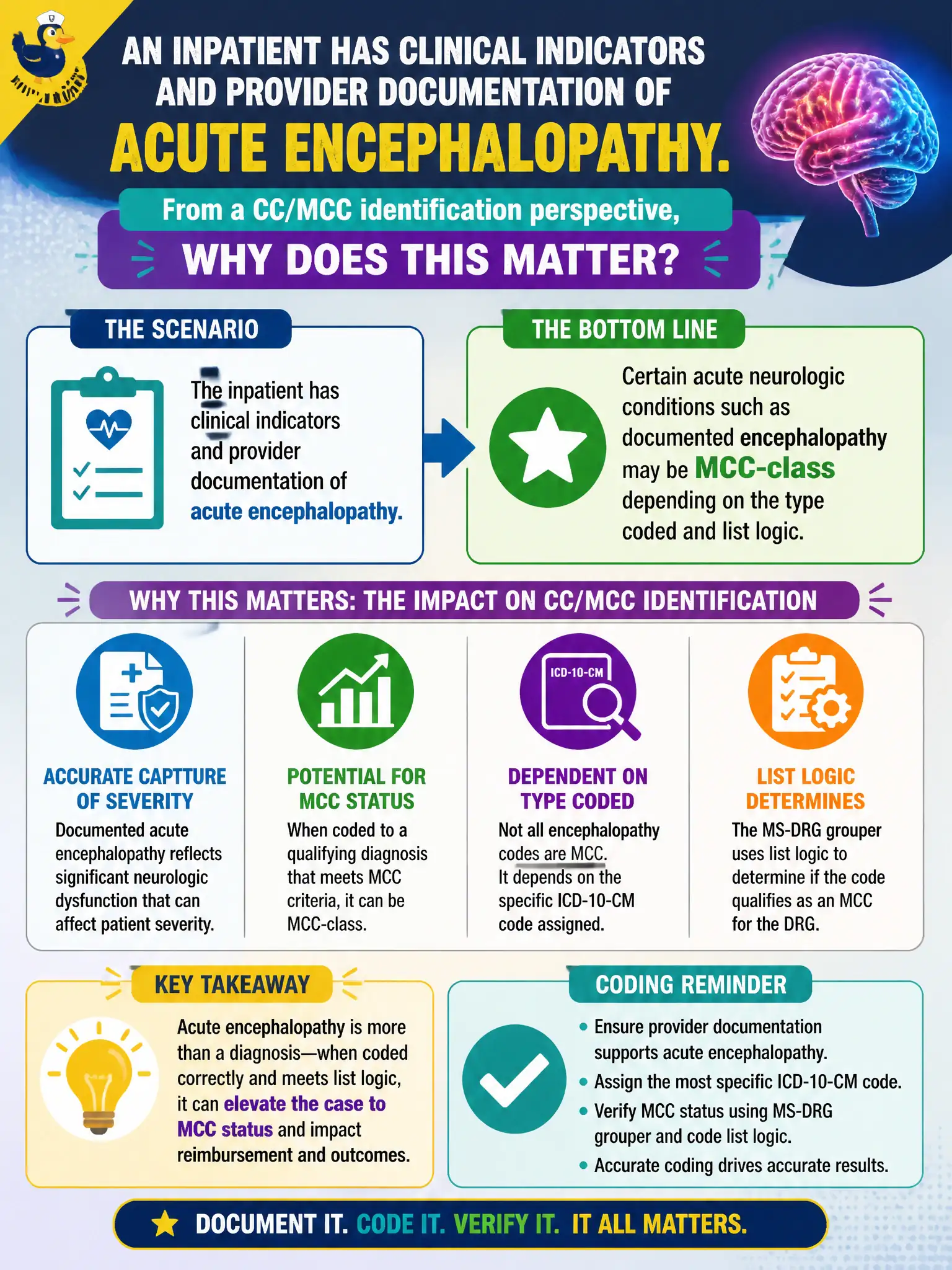
An inpatient has clinical indicators and provider documentation of acute encephalopathy. From a CC/MCC identification perspective, why does this matter?
Select an answer to reveal the explanation.
Short Explanation
When the doctors document real encephalopathy with clinical backup, you are often looking at a high-impact secondary—sometimes MCC territory depending on the type. Vague “altered mental status” without clarity is a different story; specificity matters.
Full Explanation
From a CC/MCC identification perspective, clinical indicators and provider documentation of acute encephalopathy matter because certain acute neurologic conditions such as documented encephalopathy may be MCC-class depending on the type coded and list logic. Accurate recognition supports fair severity reporting for civic inpatients with true neurologic complications. Encephalopathy is reportable as a secondary diagnosis when criteria are met—it is not never reportable. All neurologic terms do not automatically map to the same non-CC code; specificity and CMS lists matter. Encephalopathy is relevant to facility inpatient severity, not only professional cognitive assessment billing. Exam caveat: identify MCC-class documentation families and code the supported type under list logic. Operational check: review mental status documentation and provider diagnosis on municipal neuro/medicine accounts, query for type when indicators support but documentation is vague, assign POA, and confirm MCC-tier impact only with a qualifying code. Avoid coding encephalopathy from altered mental status alone without provider diagnosis support. In municipal and county facility practice, record the rationale for the chosen coding path and the rejected alternatives in the abstract notes so auditors and future coders understand the clinical and compliance basis. Re-check the decision if new authenticated documentation arrives before final bill drop, and escalate persistent documentation gaps to CDI or compliance rather than normalizing unsupported shortcuts that would distort civic claims, quality metrics, or case-mix reporting.