
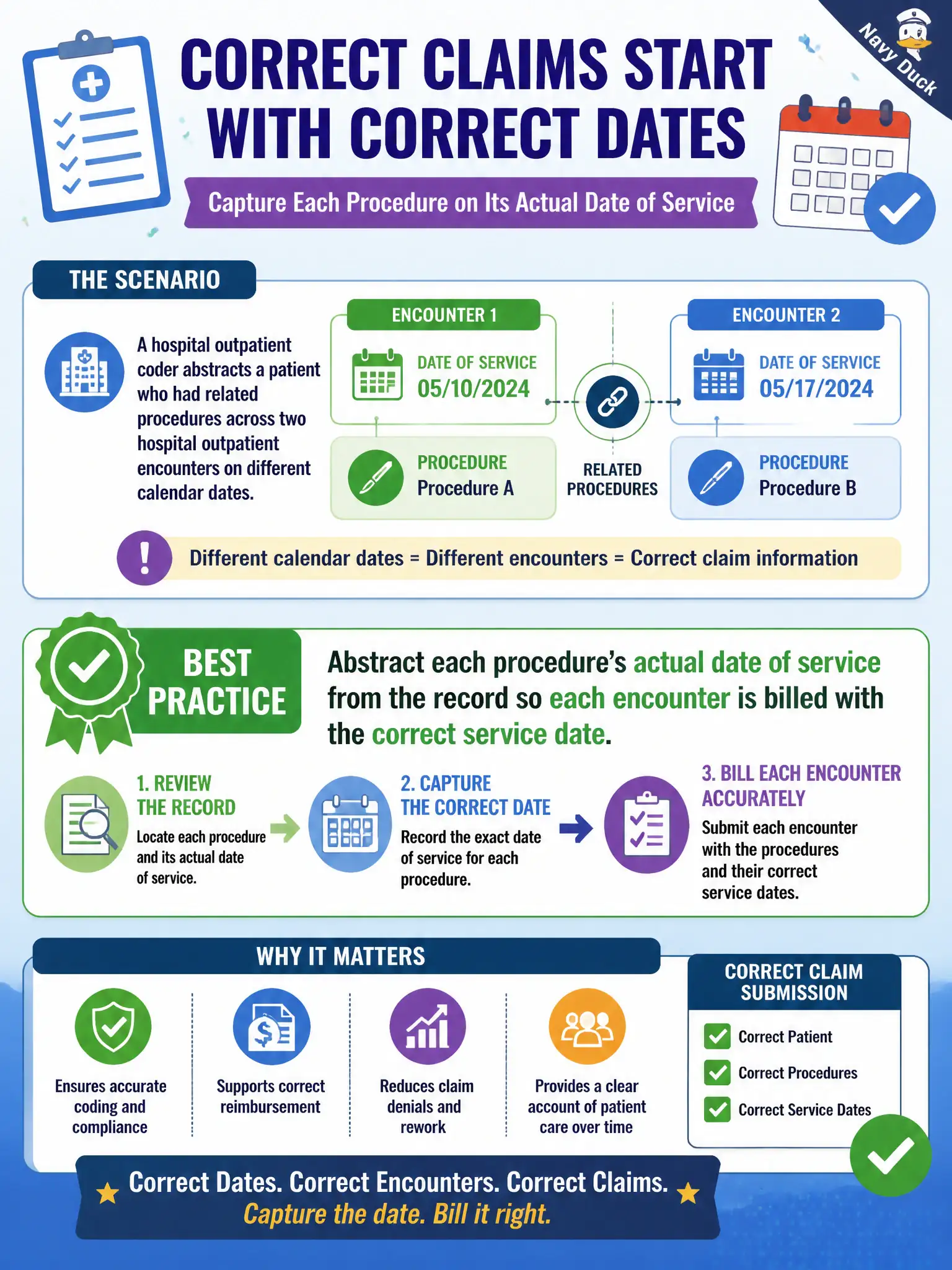
A hospital outpatient coder abstracts a patient who had related procedures across two hospital outpatient encounters on different calendar dates. What practice best supports correct claim submission?
Select an answer to reveal the explanation.
Short Explanation
Outpatient claims live and die by the right date on the right encounter. Pull the real procedure dates from the record—do not mash everything onto day one just to make the claim look tidy. Clean dates keep edits and payment methods honest.
Full Explanation
When a hospital outpatient coder abstracts a patient who had related procedures across two hospital outpatient encounters on different calendar dates, the best practice is to abstract each procedure’s actual date of service from the record so each encounter is billed with the correct service date. Civic outpatient claim integrity depends on accurate dates for edits, medical necessity periods, frequency limitations, and encounter accounting. Assigning every procedure to the first encounter date to simplify billing edits fails and conflates distinct dates of service. Using the account creation date instead of clinical procedure dates fails because registration timestamps are not clinical service dates. Omitting dates of service because outpatient APCs supposedly do not require dates fails; dates of service remain essential claim data under facility outpatient billing. Exam caveat: multi-encounter outpatient abstraction requires true clinical service dates per procedure. Operational check: for county multi-day outpatient care, map each procedure to its documented date, split encounters correctly, and avoid collapsing dates merely to clear edits. Audit same-account multi-date outpatient surgery for date-of-service accuracy before submission to public payers.