
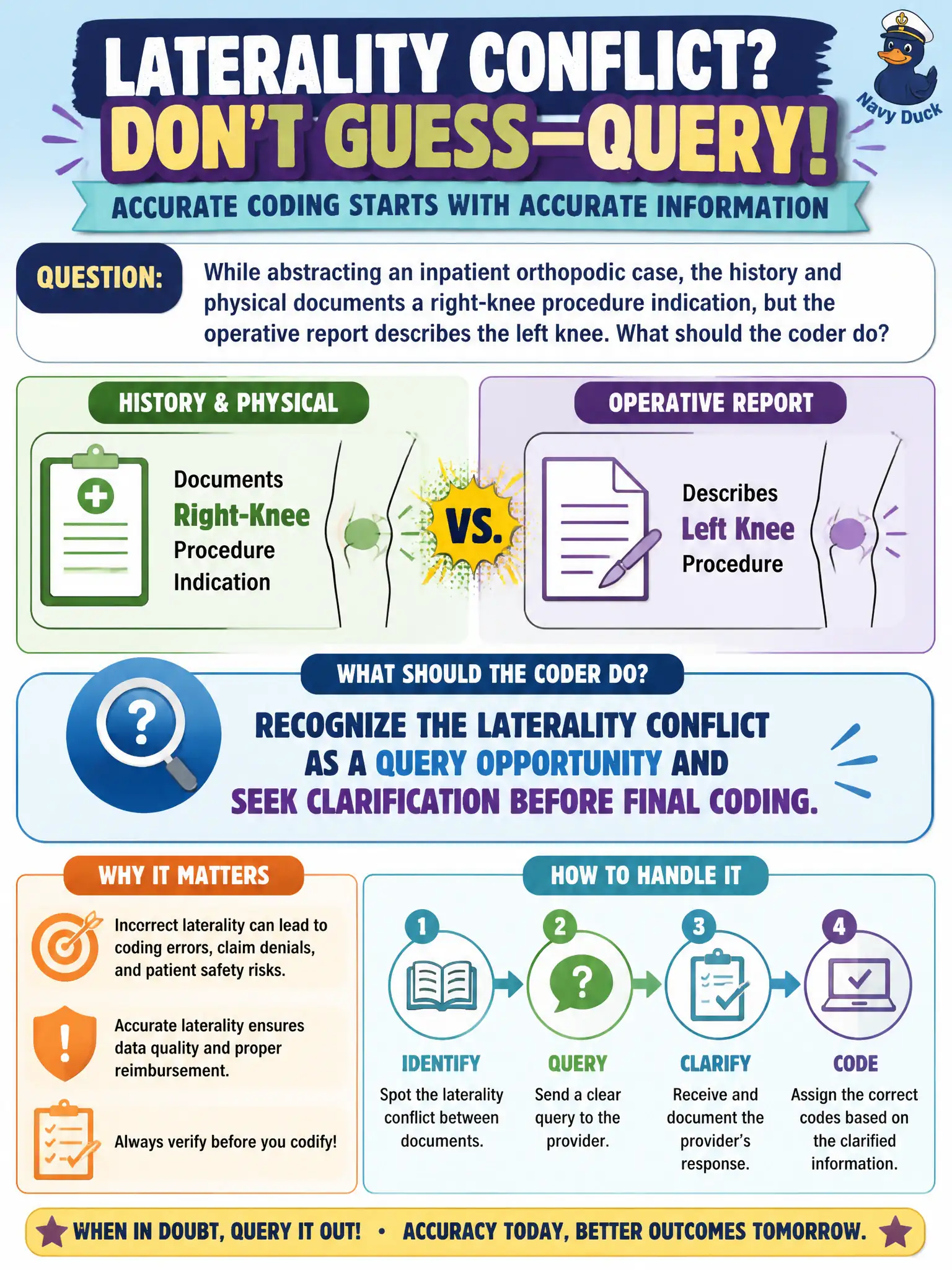
While abstracting an inpatient orthopedic case, the history and physical documents a right-knee procedure indication, but the operative report describes the left knee. What should the coder do?
Select an answer to reveal the explanation.
Short Explanation
Left versus right is not a coin flip. When the H&P and op report disagree on side, stop and clarify—that conflict is exactly what abstraction is supposed to catch. Guessing or dual-coding the wrong side just builds a bad claim.
Full Explanation
While abstracting an inpatient orthopedic case, conflicting laterality between the history and physical (right knee) and the operative report (left knee) is a query opportunity: seek clarification before final coding. Site accuracy at a public hospital protects patients from wrong-site coding errors and protects claim integrity for civic payers. Coding both laterality values so the claim covers either side fails and creates impossible dual-site reporting without clinical support. Ignoring the conflict and coding the side that yields the higher-weighted DRG fails as payment-driven selection. Defaulting to the H&P because it was signed first fails; document chronology does not automatically resolve operative site conflicts when the operative narrative disagrees. Exam caveat: laterality conflicts require clarification, not dual coding, payment preference, or first-signed defaults. Operational check: stop the municipal orthopedic abstract, query the surgeon to confirm the operative site, update documentation as authenticated, then assign laterality-dependent diagnosis and procedure codes. Escalate recurring laterality mismatches to OR safety and documentation improvement leaders so public surgical services reduce wrong-site documentation risk.