
When may a facility coder appropriately abstract a diagnosis from a pathology or radiology report during inpatient coding?
Select an answer to reveal the explanation.
Short Explanation
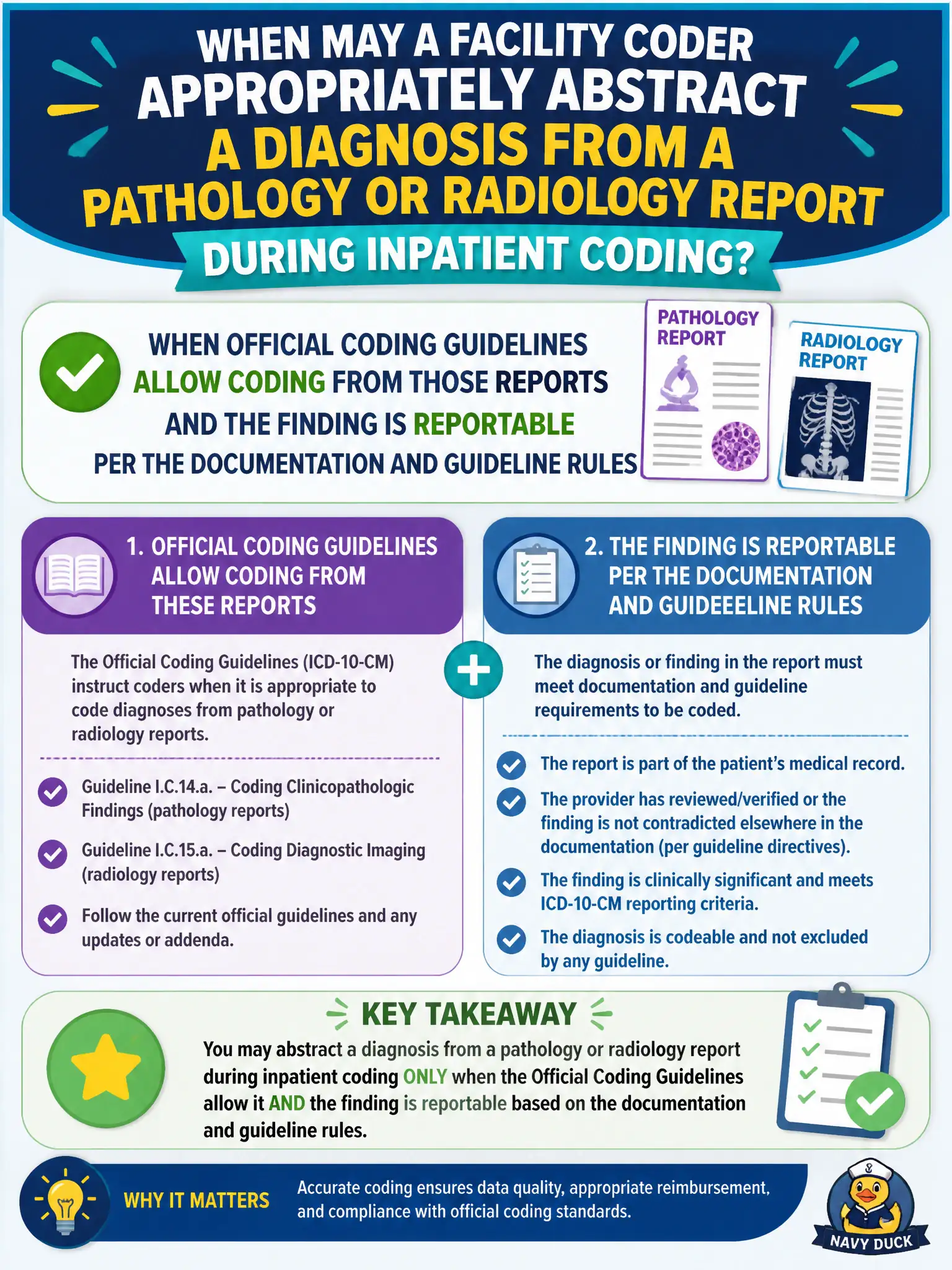
Path and rad reports are part of the clinical story, but you do not vacuum every incidental line into a code. Guidelines tell you when those findings are fair game. If the rules say you can use them and the finding meets reporting criteria, abstract it; otherwise leave it alone.
Full Explanation
A facility coder may appropriately abstract a diagnosis from a pathology or radiology report during inpatient coding when Official Coding Guidelines allow coding from those reports and the finding is reportable per the documentation and guideline rules. Civic coding compliance means following guideline conditions—not coding every ancillary mention. Coding whenever any ancillary report mentions a finding even if the attending never addresses it and guidelines forbid coding from that report alone fails guideline discipline. Coding only when the finding appears in the charge description master without clinical documentation fails because charge text is not a clinical diagnosis source. Never coding from diagnostic reports because they are excluded from the health record fails factually—reports are part of the record and may be used when guidelines permit. Exam caveat: know when Official Guidelines authorize coding from diagnostic reports versus when provider integration is required. Operational check: before coding a path or radiology finding on a county inpatient account, confirm guideline permissibility and documentation standards, query when the finding needs clinical confirmation, and avoid charge-description coding. Document the guideline basis in ambiguous cases for audit readiness.