
For a hospital treat-and-release emergency department encounter, what is the key abstract source for outpatient ED diagnosis and procedure coding?
Select an answer to reveal the explanation.
Short Explanation
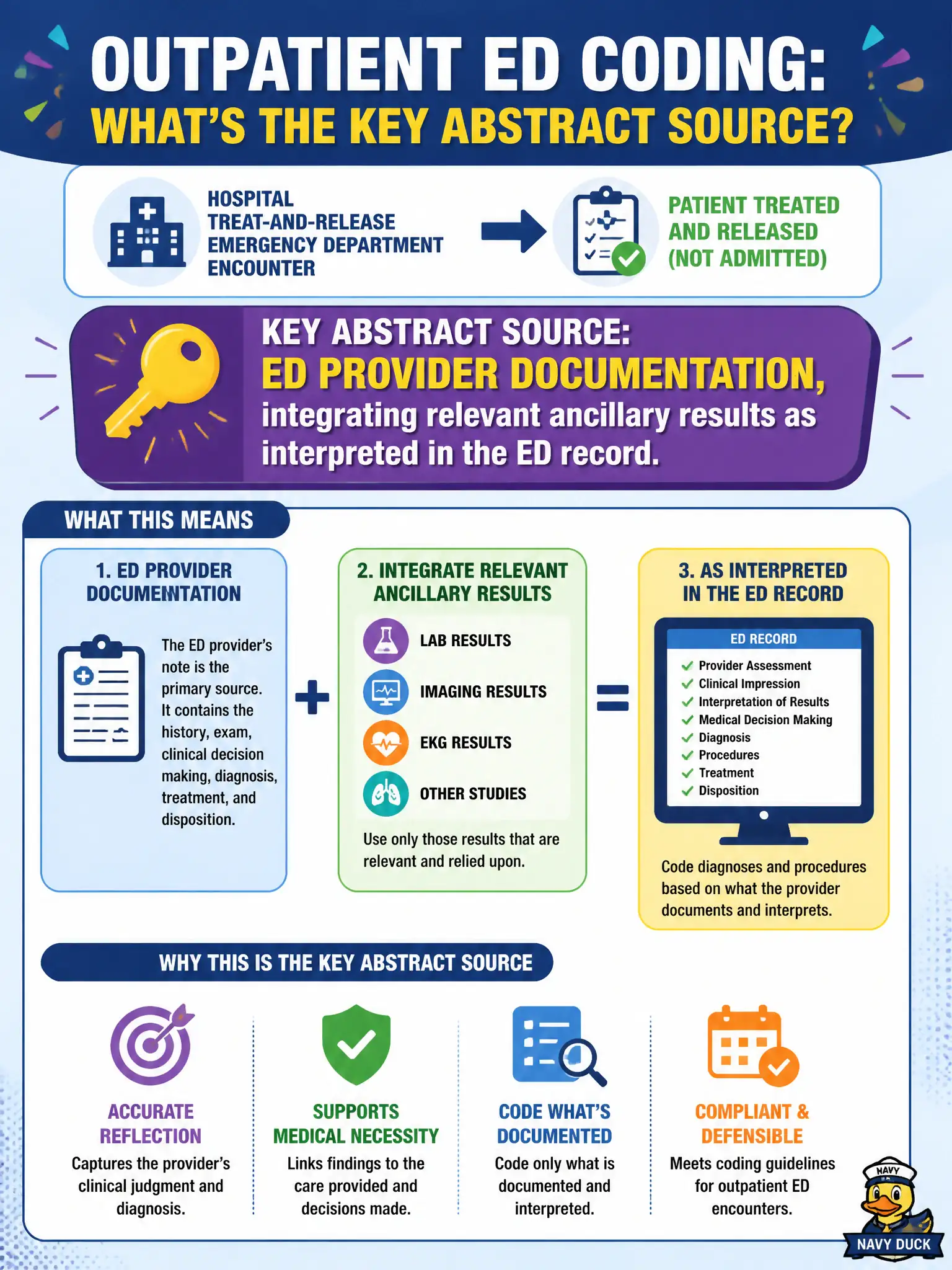
Treat-and-release ED coding lives in the ED provider’s note—that’s your home base. Labs and x-rays matter when the ED doc weaves them into the story, but a decade-old discharge summary isn’t the encounter. Start with today’s ED documentation.
Full Explanation
For a hospital treat-and-release emergency department encounter, the key abstract source for outpatient ED diagnosis and procedure coding is the ED provider documentation, integrating relevant ancillary results as interpreted in the ED record. Municipal ED coding must reflect that visit’s clinical story for compliant public outpatient claims. Relying only on an inpatient discharge summary from a prior admission years earlier fails because historical inpatient narratives are not the primary source for the current treat-and-release encounter. Marketing brochures describing ED services are not clinical documentation. An ambulance run sheet alone is insufficient as the primary coding source, though EMS data may supplement context when clinically relevant and documented. Exam caveat: match the abstract source to the encounter type—ED provider notes for outpatient ED visits. Operational check: code the county treat-and-release visit from the ED note and integrated results, avoid importing unrelated prior-admission diagnoses as if they were current without support, and ensure procedures performed in the ED are documented before billing. Align incomplete-record holds when critical ED documentation is missing.