
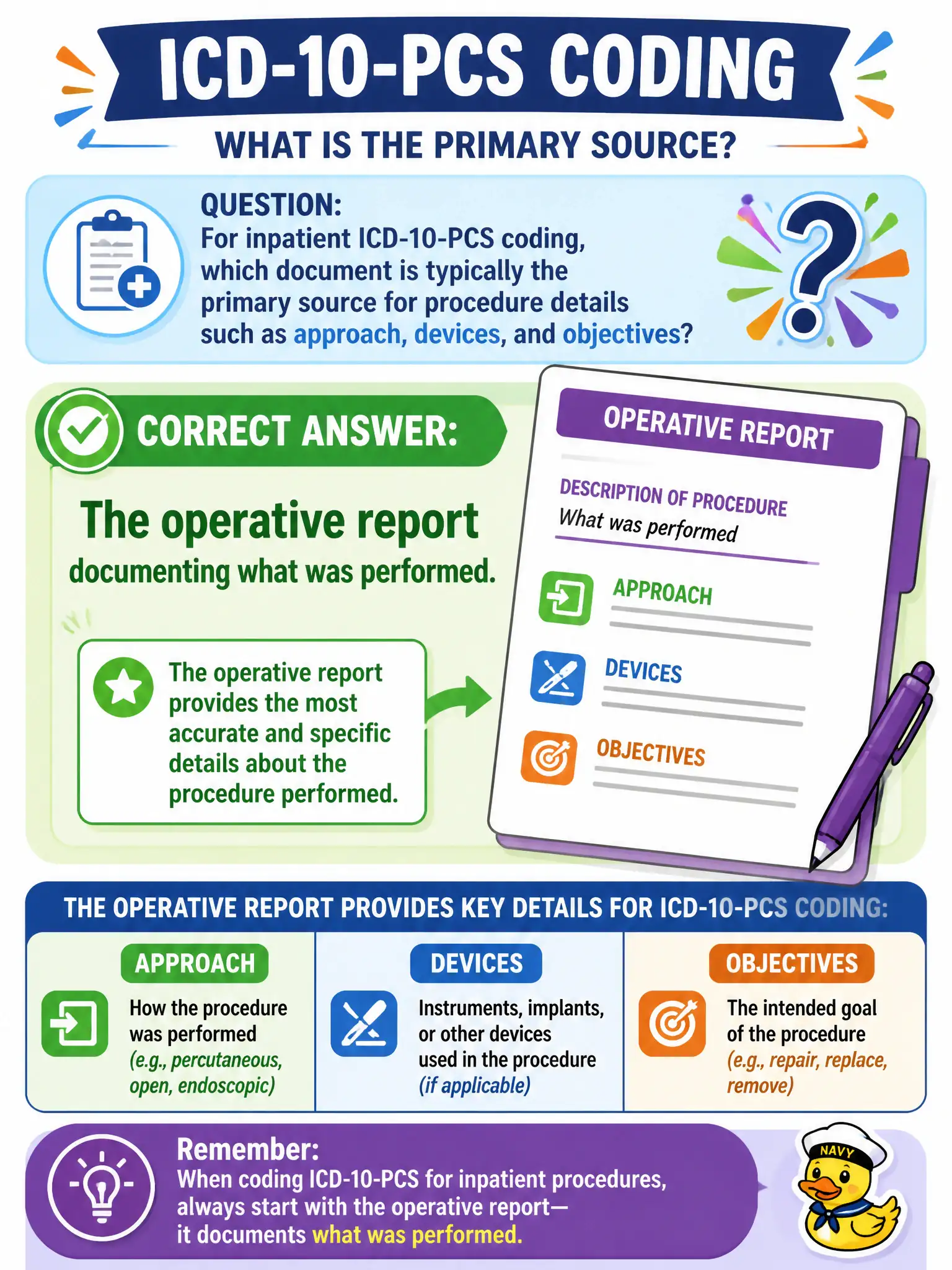
For inpatient ICD-10-PCS coding, which document is typically the primary source for procedure details such as approach, devices, and objectives?
Select an answer to reveal the explanation.
Short Explanation
PCS wants the play-by-play—approach, body part, device, what the surgeon set out to do. That story lives in the operative report, not the face sheet or an old problem list. When in doubt, open the op note.
Full Explanation
For inpatient ICD-10-PCS coding, the operative report documenting what was performed is typically the primary source for procedure details such as approach, devices, and objectives. County OR coding depends on narrative operative facts—not demographics or supply lists—to build accurate PCS characters that feed surgical MS-DRG assignment. Face-sheet demographic fields alone lack operative detail and cannot support root operation or approach. The itemized chargemaster supply list without provider documentation does not establish body part, device, or procedural objective for coding. The patient’s problem list from a prior outpatient visit does not describe the current operative episode and should not drive PCS characters. Exam caveat: PCS characters come from operative documentation; charge and demographic sources are insufficient substitutes. Operational check: abstract PCS from the surgeon’s operative report and related intraoperative records at the civic facility, clarify missing device or approach details with the surgeon, and do not invent characters from stickers or chargemaster lines alone. Cross-check significant supply implants against documented devices before finalizing surgical MS-DRG inputs for public claims.