
When abstracting the principal diagnosis for an inpatient stay, which approach best reflects coding guidelines?
Select an answer to reveal the explanation.
Short Explanation
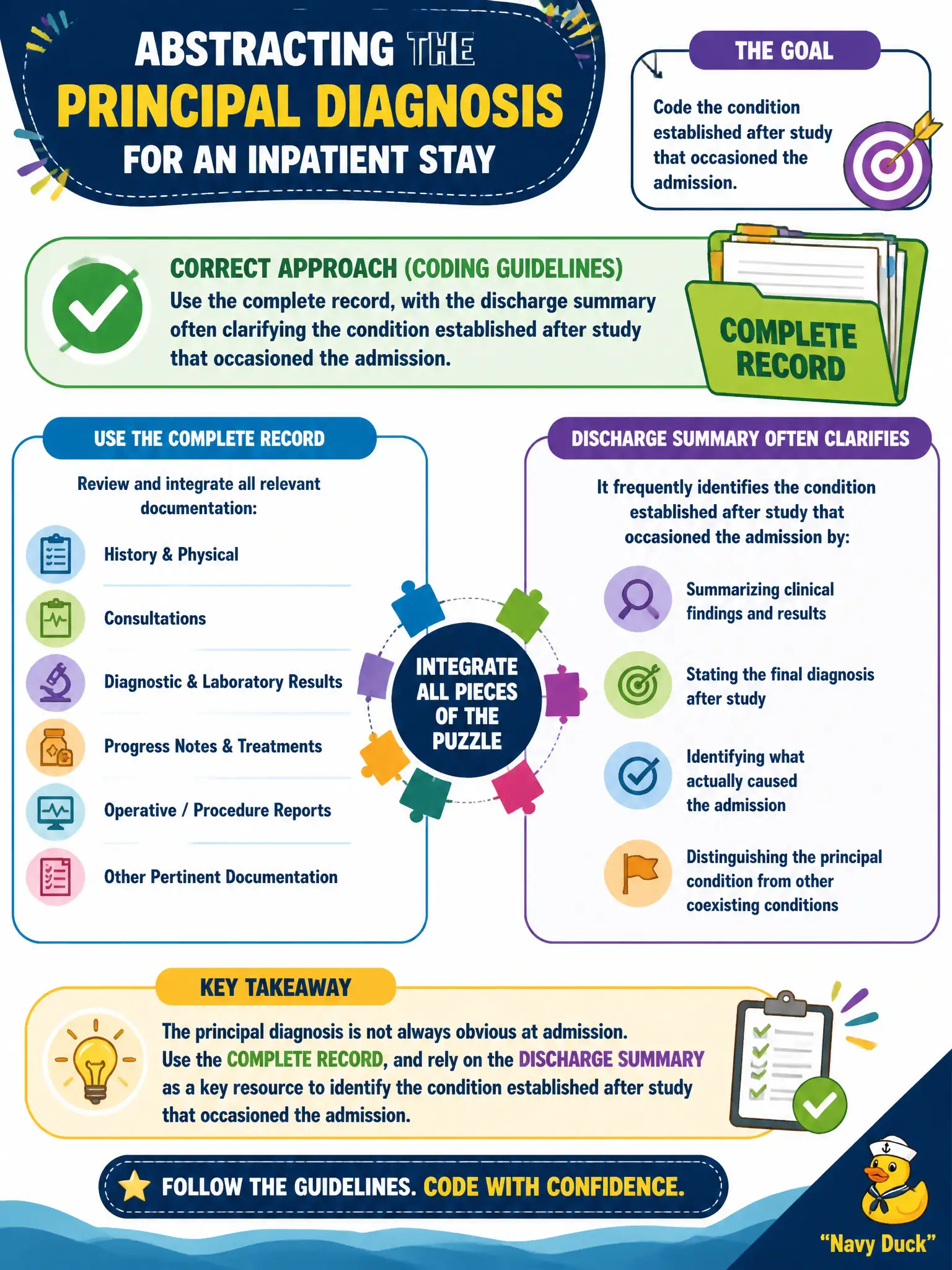
Admission impressions are a first draft; the discharge summary is often the final edit after the workup. Read the whole chart, then pick what really occasioned the stay after study. Don’t freeze on the ED chief complaint alone.
Full Explanation
When abstracting the principal diagnosis for an inpatient stay, the best approach is to use the complete record, with the discharge summary often clarifying the condition established after study that occasioned the admission. Civic inpatient coding follows UHDDS-oriented principal diagnosis definitions rather than early snapshots or payment targets. Always coding only the emergency department chief complaint and ignoring later findings fails because after-study diagnoses may revise the admitting impression. Selecting whichever diagnosis yields the highest relative weight regardless of the record fails as payment-driven selection. Abstracting exclusively from the nursing admission acuity score fails because acuity scores are not the principal-diagnosis determination method. Exam caveat: principal diagnosis is after-study and record-based, not first-written, highest-weight, or nursing-score based. Operational check: read the H&P, progress notes, consults, and discharge summary for the municipal stay; identify the condition chiefly responsible after study; query unresolved conflicts; and document the selection rationale. Reject pressure to pick principal diagnoses for weight alone in public hospital reporting.