
Which action is appropriate when a possible MCC appears clinically relevant to inpatient payment but is not clearly documented?
Select an answer to reveal the explanation.
Short Explanation
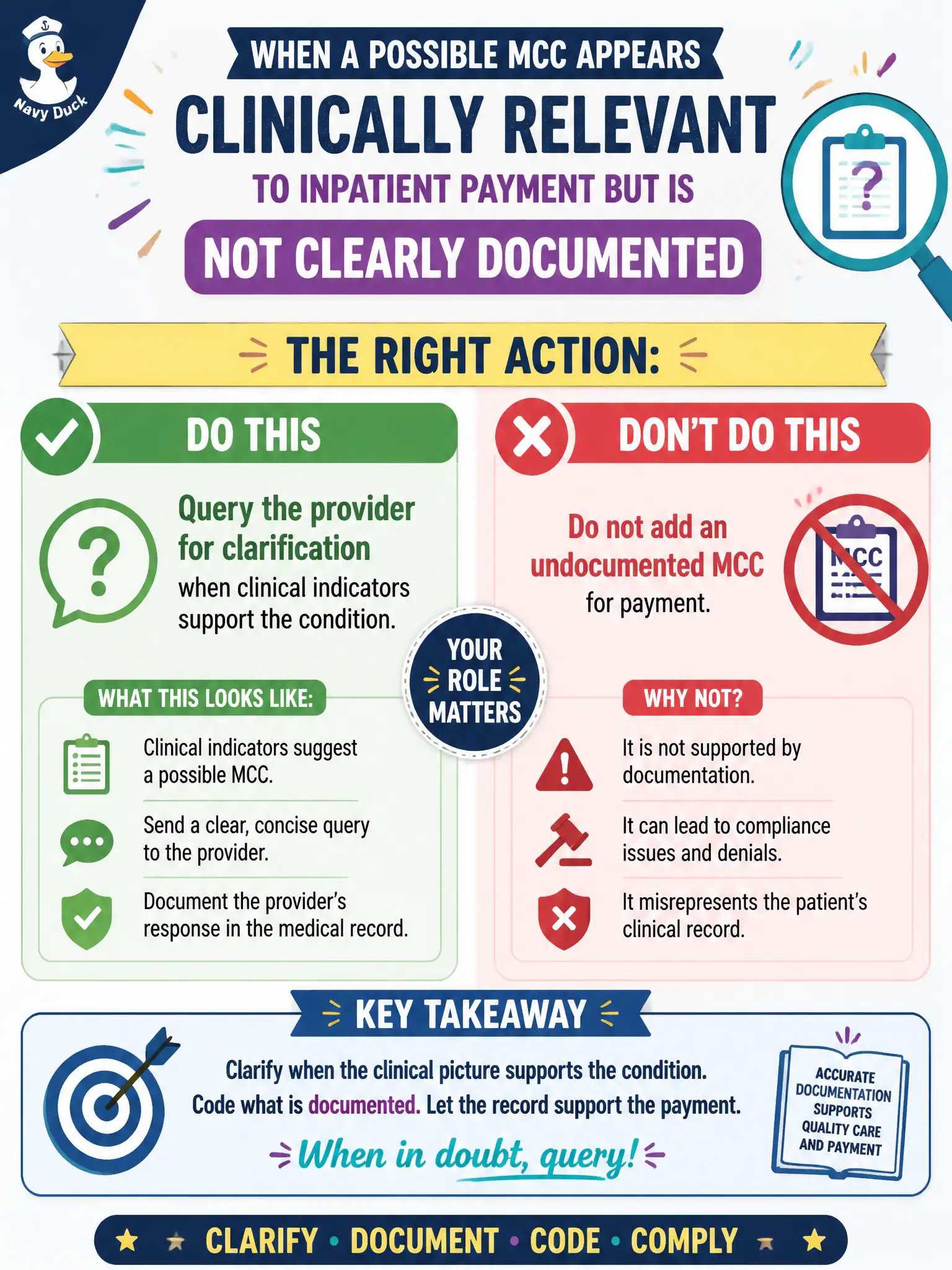
Payment pressure is real, but it’s not a license to invent an MCC. If the clues are in the chart, ask the provider—that’s fair game. Adding what was never documented is the line you don’t cross.
Full Explanation
When a possible MCC appears clinically relevant to inpatient payment but is not clearly documented, the appropriate action is to query the provider for clarification when clinical indicators support the condition—not to add an undocumented MCC for payment. Ethical coding in public hospitals protects civic trust and complies with AHIMA Standards of Ethical Coding. Coding the MCC immediately because higher payment always justifies the addition fails as upcoding without documentation. Instructing CDI to insert the MCC into the discharge summary without provider involvement fails authentication and record-integrity requirements. Replacing the principal diagnosis with the MCC to maximize relative weight fails sequencing rules and is a noncompliant payment-driven resequence. Exam caveat: payment impact never legitimizes unsupported codes; compliant queries are the ethical bridge when indicators exist without clear documentation. Operational check: gather clinical indicators in the county record, issue a non-leading query, await authenticated clarification, then code; never alter the record without provider documentation. Monitor query response quality and turnaround so municipal severity capture remains clinically true and auditable for public program integrity.