
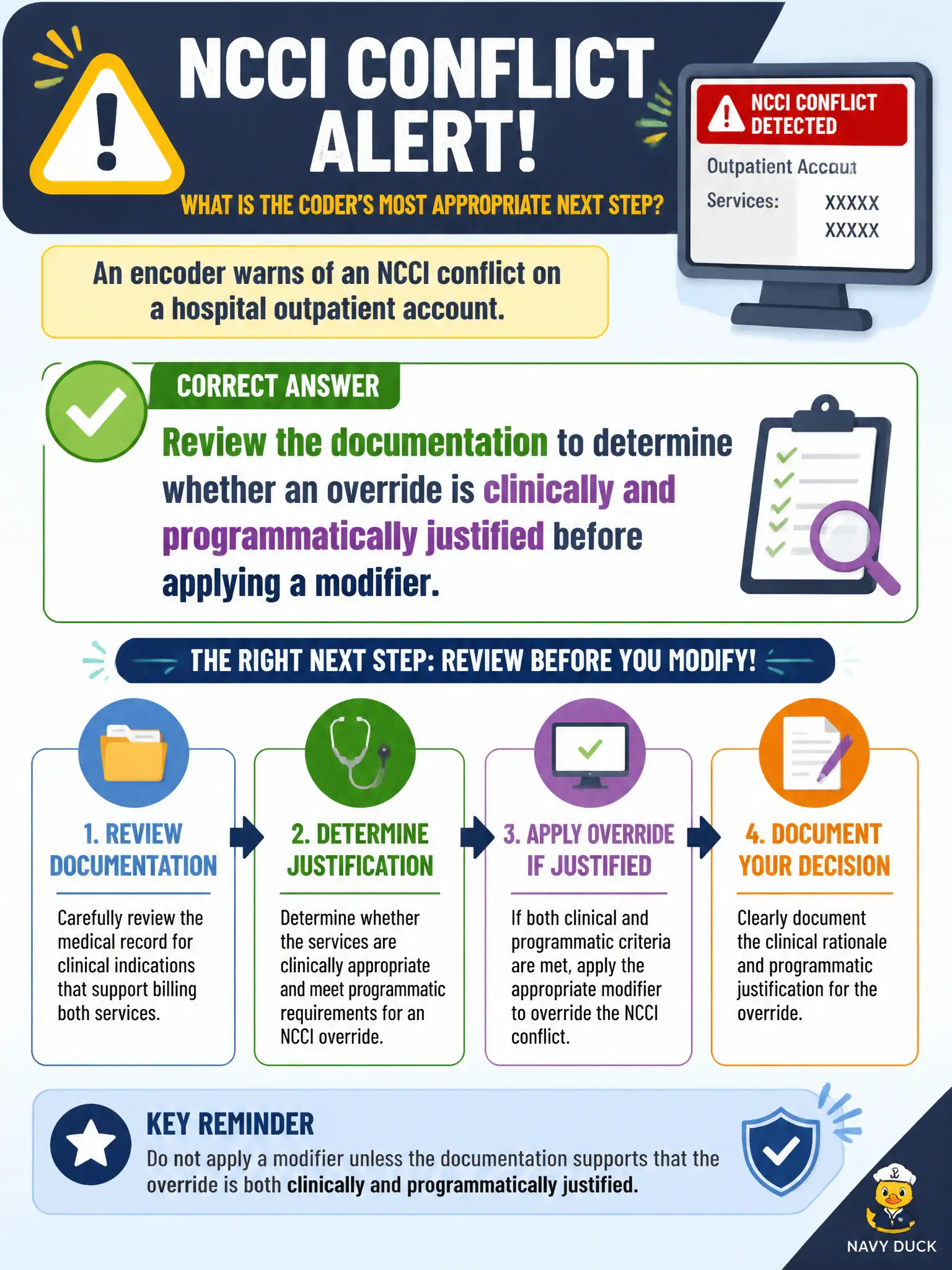
An encoder warns of an NCCI conflict on a hospital outpatient account. What is the coder’s most appropriate next step?
Select an answer to reveal the explanation.
Short Explanation
When the encoder flashes an NCCI warning, it’s raising a hand—not handing you a blank check. Open the chart, see if the services were truly distinct, and only then decide on a modifier. Software can’t invent clinical justification for you.
Full Explanation
When an encoder warns of an NCCI conflict on a hospital outpatient account, the coder’s most appropriate next step is to review the documentation to determine whether an override is clinically and programmatically justified before applying a modifier. County facility coding ethics require human judgment against the record, not automatic deference to software. Always accepting the encoder’s suggested modifier without opening the record fails because encoders propose possibilities; they do not authenticate distinct-service criteria. Automatically deleting the column-two code so no human review is needed fails when a separately reportable service may be supported—deletion without review can under-report legitimate care. Changing diagnosis codes until the NCCI warning disappears fails because diagnosis manipulation does not resolve procedure-to-procedure bundling logic and risks noncompliant coding. Exam caveat: NCCI warnings are prompts for documentation review, not auto-approve, auto-delete, or diagnosis-tweak instructions. Operational check: open the municipal outpatient procedure documentation, compare services to PTP edit and modifier criteria, apply an override only with support, otherwise accept bundling or correct coding, and note the rationale. Sample encoder-driven modifier use in audits to ensure civic claims are not being cleared by unreviewed software suggestions.