
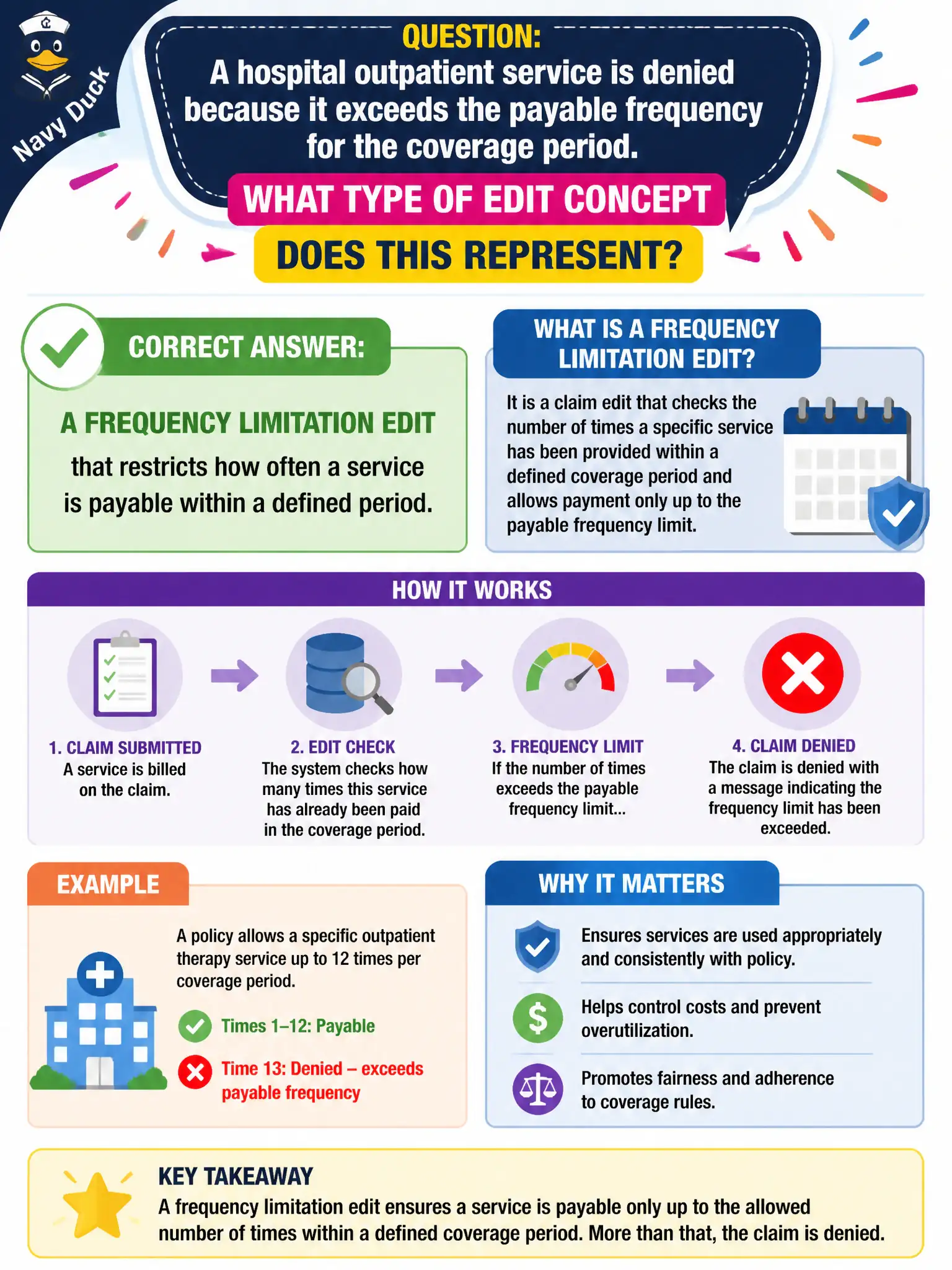
A hospital outpatient service is denied because it exceeds the payable frequency for the coverage period. What type of edit concept does this represent?
Select an answer to reveal the explanation.
Short Explanation
Frequency edits are like a punch card with a limited number of visits stamped on it. Bill the service more often than the rules allow, and the claim gets bounced. It’s about how many times—not whether the code exists.
Full Explanation
Denial because a hospital outpatient service exceeds the payable frequency for the coverage period represents a frequency limitation edit: payment is restricted for how often a service may be paid within a defined period under program or payer rules. Civic outpatient departments must respect utilization limits on therapies, testing, or other services rather than resubmitting excess units unchanged. Calling the issue an MS-DRG surgical hierarchy conflict fails because hierarchy is an inpatient procedure-grouping concept, not outpatient frequency control. Labeling it a present-on-admission mismatch fails because POA indicators apply to inpatient diagnosis reporting for quality and payment adjustments, not outpatient frequency caps. Treating it as an inpatient-only procedure list violation fails because inpatient-only edits concern setting of care for listed CPT codes, not how often a payable outpatient service was billed. Exam caveat: classify denials by the payment rule family—frequency, POA, inpatient-only, DRG hierarchy—before choosing a fix. Operational check: for a county hospital outpatient denial on frequency, review the patient’s utilization history for the benefit period, confirm dates and units, correct erroneous duplicate billing, and evaluate coverage or medical necessity pathways if additional services were truly needed. Do not rebill excess units without addressing the frequency limitation that protects public program dollars.