
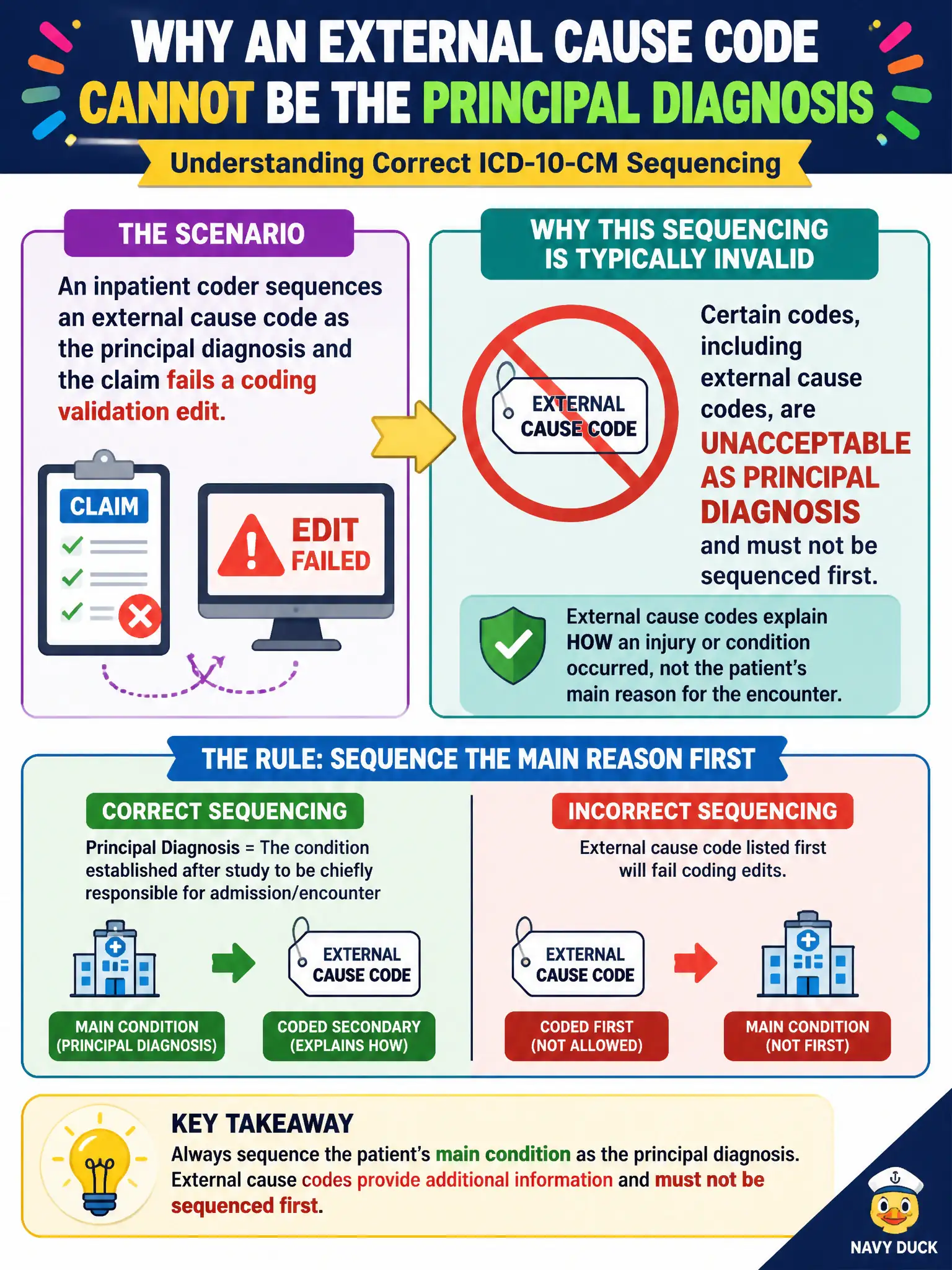
An inpatient coder sequences an external cause code as the principal diagnosis and the claim fails a coding validation edit. Why is this sequencing typically invalid?
Select an answer to reveal the explanation.
Short Explanation
External cause codes tell the story of how something happened—they’re supporting cast, not the lead. Putting one in the principal slot is like listing “fell off ladder” as the main diagnosis instead of the fracture. Validation edits catch that sequencing mistake.
Full Explanation
Sequencing an external cause code as the principal diagnosis is typically invalid because certain codes—including external cause codes—are unacceptable as principal diagnosis and must not be sequenced first. In a municipal inpatient stay, the principal diagnosis is the condition established after study that occasioned admission; external cause codes describe how an injury occurred and support the nature-of-injury diagnosis rather than replacing it. Claiming external cause codes may never appear anywhere on an inpatient claim fails because they are often reported as additional codes when appropriate—they simply cannot be principal. Treating them as replacements for the nature-of-injury diagnosis fails the clinical coding framework that requires the injury or condition itself as the lead diagnosis. Limiting principal-diagnosis edits to outpatient APC claims fails because this sequencing validation is a core inpatient coding and claim-edit concept under facility IPPS reporting. Exam caveat: know which code types are never principal (external cause among them) versus which may be reported secondarily. Operational check: when validating county inpatient abstracts, confirm the principal slot holds an allowable condition code, move external cause codes to additional positions when documented, and correct sequencing before grouper submission. Use edit reports to catch accidental principal assignment of external cause codes after copy-forward or encoder mis-sequencing in civic trauma and injury admissions.