
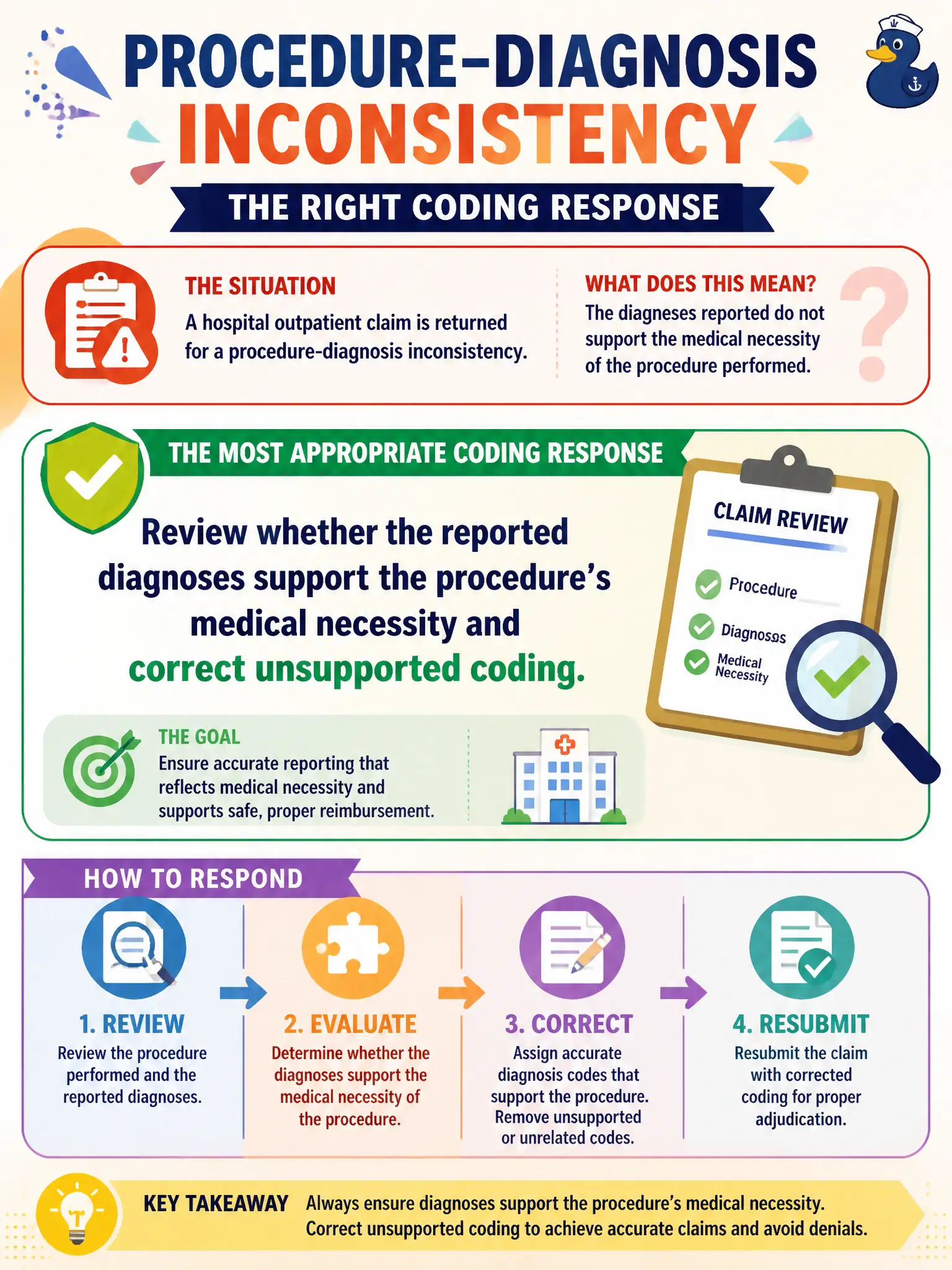
A hospital outpatient claim is returned for a procedure-diagnosis inconsistency. What is the most appropriate coding response?
Select an answer to reveal the explanation.
Short Explanation
If the procedure and the reason don’t line up, don’t just swap codes until the computer goes quiet. Go back to the chart and ask whether the documented diagnoses actually justify what was done. Clean consistency beats gaming the edit.
Full Explanation
When a hospital outpatient claim returns for procedure-diagnosis inconsistency, the compliant response is to review whether the reported diagnoses support the procedure’s medical necessity and to correct unsupported or mismatched coding based on the record. Civic outpatient coding stewardship requires that the reason for the service align with what was done, not that the edit simply disappear. Deleting the procedure and billing only the diagnosis fails because removing a performed service to silence an edit sacrifices accurate reporting and does not evaluate medical necessity. Changing the diagnosis to any code that historically passes screens fails as diagnosis shopping—codes must reflect documented conditions, not edit-pass folklore. Adding a modifier to every CPT line to bypass medical necessity edits fails because modifiers do not manufacture diagnostic support or override necessity logic. Exam caveat: CCS expects you to remediate consistency by documentation and correct coding, not by deletion, diagnosis substitution for payment, or blanket modifiers. Operational check: at the municipal ambulatory surgery center or hospital outpatient department, open the procedure note and provider assessment, confirm linked diagnoses, revise codes or query for clarification, and only then resubmit. Track recurring procedure-diagnosis mismatches for clinic education so public claims reflect medically necessary, documented care.