
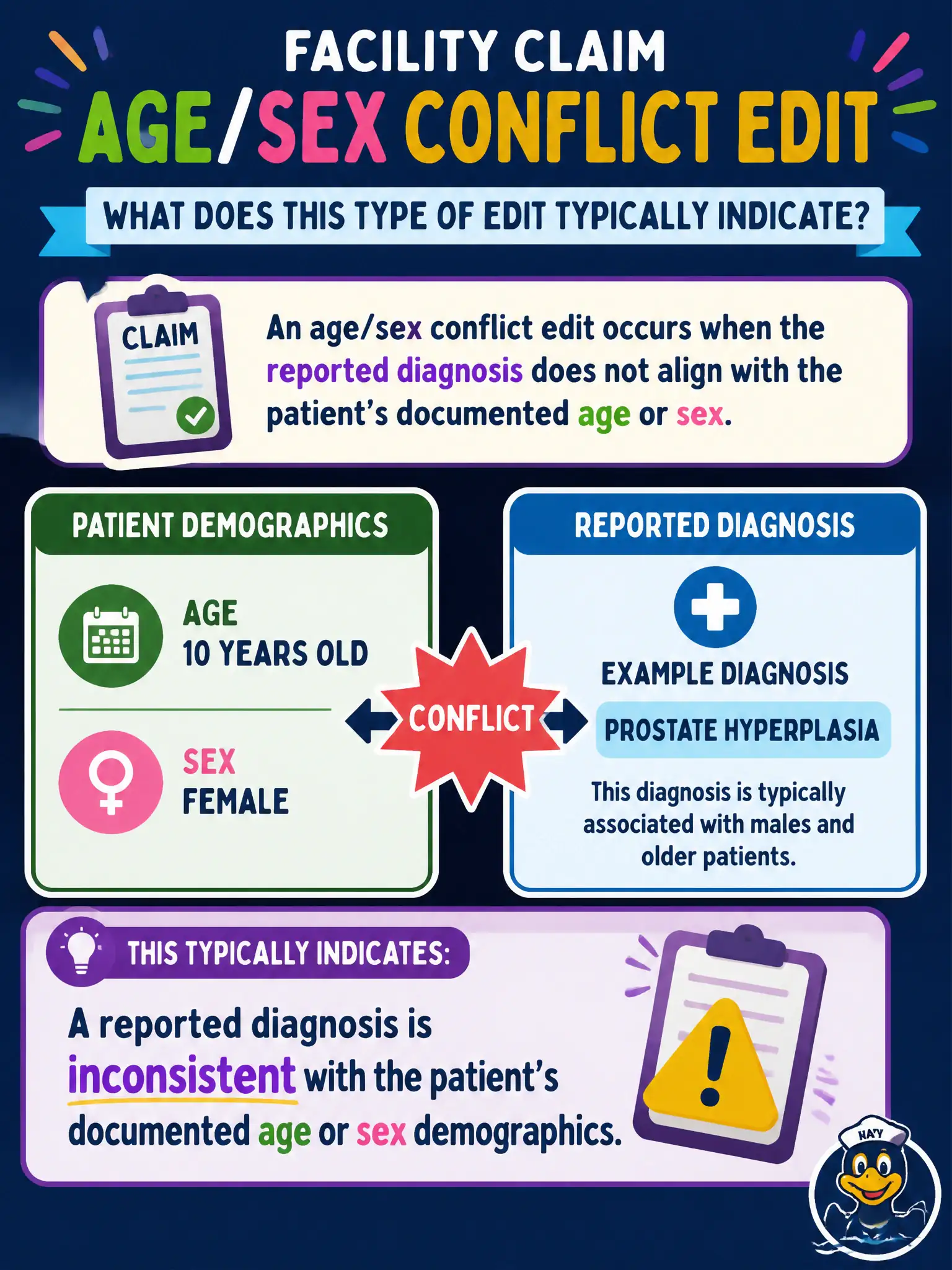
A facility claim returns an age/sex conflict edit. What does this type of edit typically indicate?
Select an answer to reveal the explanation.
Short Explanation
Age and sex edits are the computer catching a square peg in a round hole—like coding pregnancy on a male patient or a neonatal diagnosis on an eighty-year-old. Something in the diagnosis doesn’t match who the patient is on the face sheet. Fix the demographics or the diagnosis before resubmitting.
Full Explanation
An age or sex conflict edit on a facility claim typically means a reported diagnosis is inconsistent with the patient’s documented demographics—for example, a sex-specific condition coded on a patient of the opposite sex, or an age-implausible diagnosis. At a civic hospital, these edits protect data integrity for public reporting and payment by catching impossible clinical combinations and keying errors before funds are requested. Interpreting the edit as a prior-authorization denial fails because authorization is a coverage workflow issue, not a demographic-clinical consistency check. Treating it as an NCCI modifier requirement for two CPT codes fails because PTP edits concern procedure bundling, not diagnosis-to-demographic mismatch. Assuming it signals an inpatient-only CPT on an outpatient claim fails because inpatient-only list edits are procedure-setting payment rules, not age/sex diagnosis conflicts. Exam caveat: map edit names to their conceptual targets—demographic consistency versus bundling, authorization, or inpatient-only lists—rather than treating every rejection as the same problem. Operational check: when a county facility claim returns an age/sex conflict, verify the patient’s sex and date of birth on the face sheet against the coded diagnosis, correct keying or coding errors, and query only if documentation itself is ambiguous. Document the resolution in the coding notes so municipal audit trails show why the demographic-clinical conflict was cleared before resubmission.