
Secondary diabetes mellitus is documented as due to an underlying condition. Which sequencing approach is generally required?
Select an answer to reveal the explanation.
Short Explanation
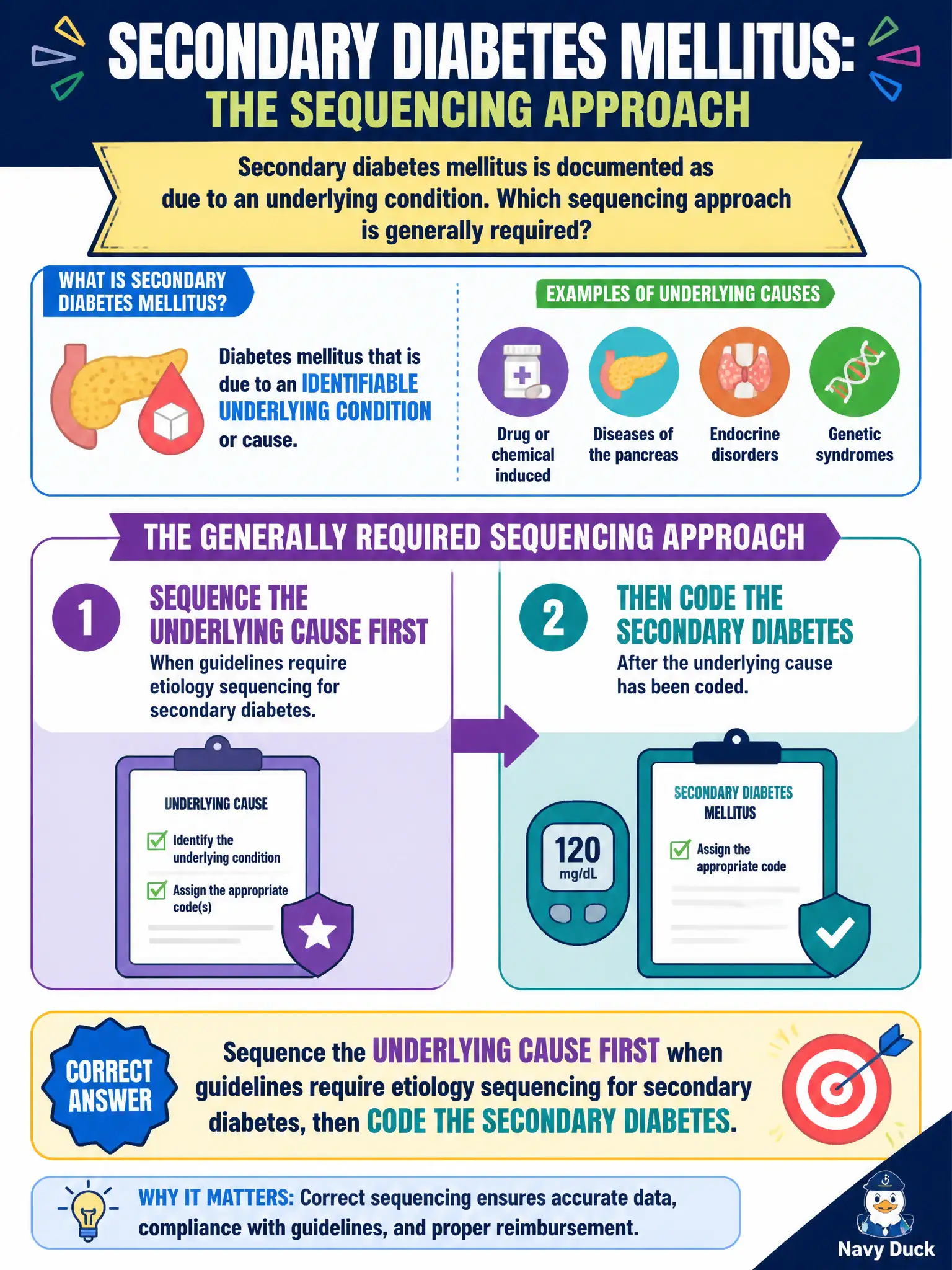
Secondary diabetes has a parent condition driving it. Guidelines usually want that underlying cause up front, then the secondary diabetes—don't relabel it as ordinary type 2 or orphan the etiology.
Full Explanation
When secondary diabetes mellitus is documented as due to an underlying condition, guidelines generally require sequencing the underlying cause first, then the secondary diabetes. Etiology-first sequencing expresses the causal pathway rather than mislabeling secondary diabetes as primary type 2 disease. Correct order improves accuracy of public endocrine abstracts when diabetes is a consequence of another disease or agent.
Sequencing type 2 diabetes first and ignoring the documented secondary etiology fails by concept—it misclassifies secondary diabetes as primary type 2. Coding secondary diabetes alone and never reporting the underlying cause fails when guidelines require the etiology first. Replacing secondary diabetes with a pregnancy chapter code on every adult admission fails because obstetric diabetes pathways apply to pregnancy encounters, not as a universal substitute for secondary diabetes.
Exam caveat: drug/chemical-induced diabetes and postpancreatectomy diabetes have specific code families and note instructions—follow those rather than forcing type 2. Operational check: identify the documented underlying cause; sequence it first per secondary-diabetes guidelines; assign the secondary diabetes code; add complications if documented; avoid defaulting to type 2 when secondary etiology is clear.