
A burn patient has documented burns of differing degrees on multiple sites. When sequencing burn diagnosis codes, which guideline applies?
Select an answer to reveal the explanation.
Short Explanation
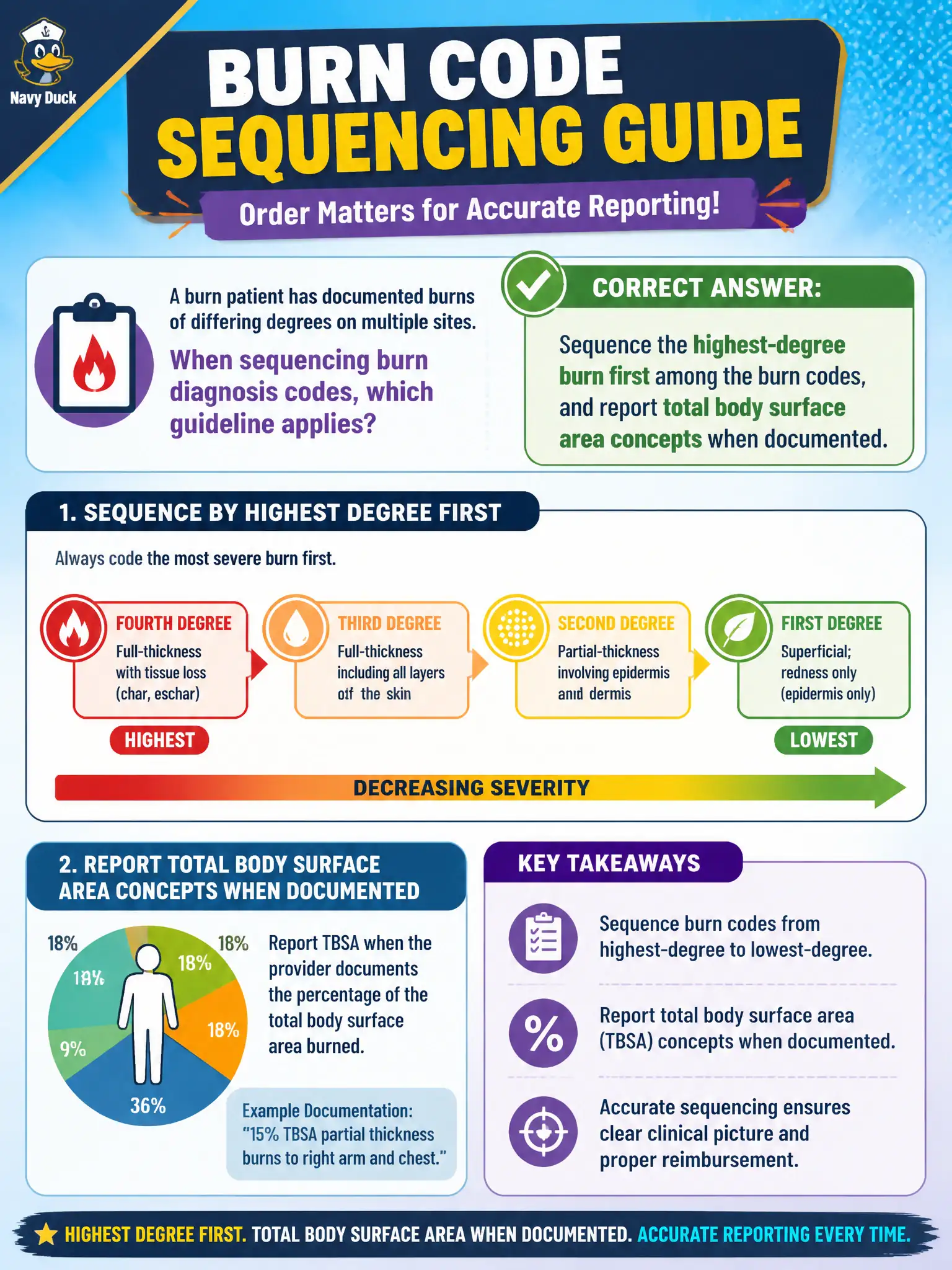
Among burn codes, the worst burn leads the parade. Highest degree first, then the rest—and if TBSA is documented, that story gets coded too. You don't bury the third-degree site behind a first-degree scrape.
Full Explanation
When a burn patient has documented burns of differing degrees on multiple sites, Official Guidelines direct sequencing the highest-degree burn first among burn codes and reporting total body surface area (TBSA) concepts when documented. Highest-degree-first sequencing reflects clinical severity hierarchy for civic burn-center reporting. Additional site/degree codes and TBSA codes complete the burn profile.
Sequencing the lowest-degree burn first fails by concept because guidelines prioritize highest degree. Reporting only one burn code regardless of multiple sites/degrees fails when documentation supports multiple reportable burn codes. Sequencing non-burn trauma ahead of all burn codes even when burns occasioned admission fails if burns are the principal reason for admission—principal selection still follows after-study occasioning condition, and among burns, highest degree leads.
Exam caveat: TBSA coding (T31/T32 concepts) is additional and important for severity; do not skip TBSA when extent is documented. Operational check: identify the highest-degree burn and sequence it first among burns; code other burn sites/degrees; add TBSA when documented; assign external causes as secondary; ensure principal diagnosis matches the admission reason.