
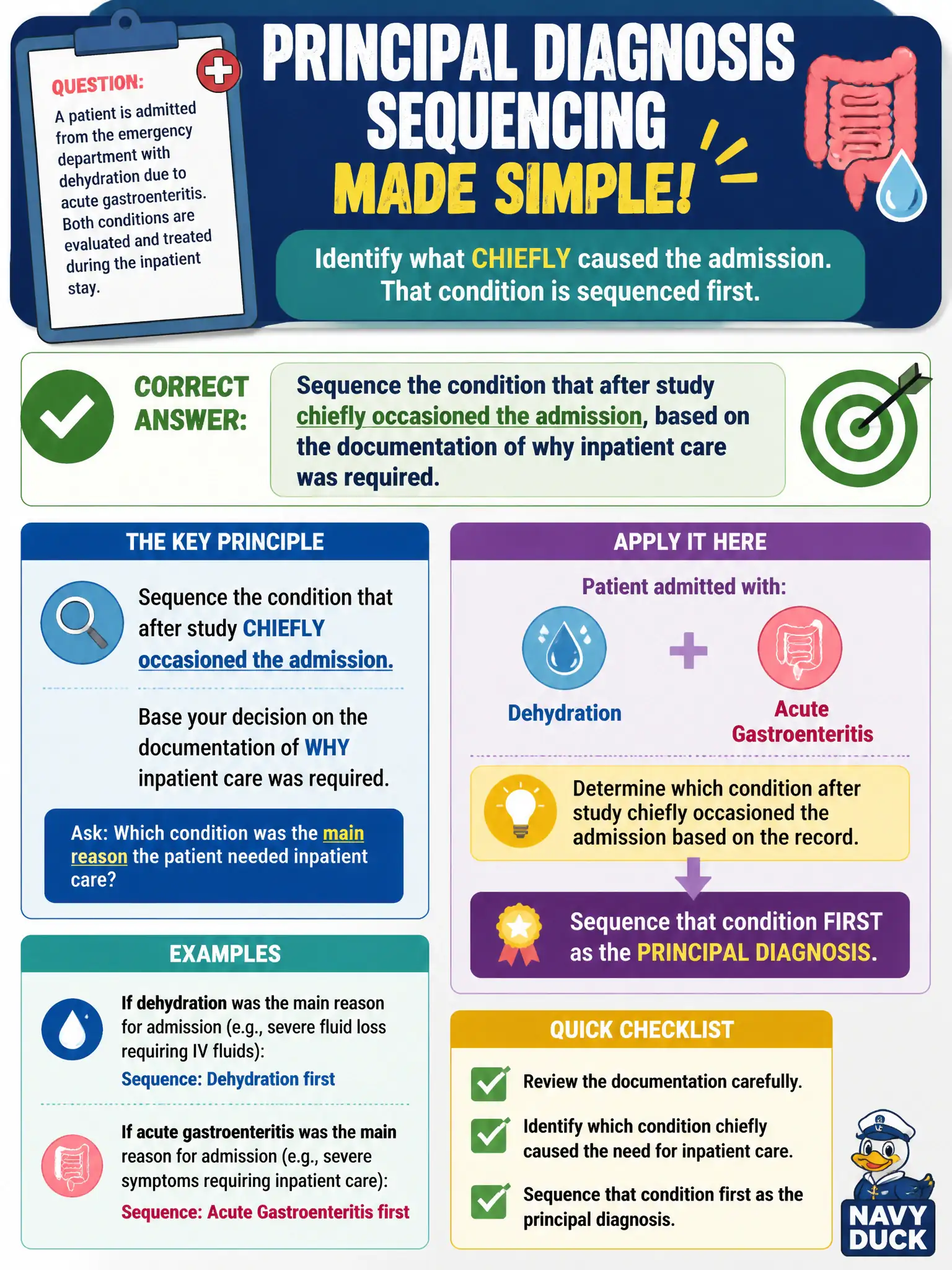
A patient is admitted from the emergency department with dehydration due to acute gastroenteritis. Both conditions are evaluated and treated during the inpatient stay. How should the coder determine principal diagnosis sequencing?
Select an answer to reveal the explanation.
Short Explanation
When two related problems ride in together, don't auto-pick the IV bag or the stomach bug by habit. Read what after study really drove the inpatient stay, then put that condition first. Both can still be coded—you're choosing the lead, not deleting the supporting cast.
Full Explanation
When a patient is admitted from the ED with dehydration due to acute gastroenteritis and both are evaluated and treated, principal diagnosis is the condition that after study chiefly occasioned the admission, based on documentation of why inpatient care was required—not a blanket “always dehydration” or “always gastroenteritis” rule. Documentation-driven after-study selection respects UHDDS and avoids mechanical sequencing myths in civic medicine services.
Always sequencing dehydration first because fluids are resource-intensive fails by concept—resource intensity alone does not define principal diagnosis. Always sequencing gastroenteritis first because it is “the underlying cause in every dehydration admission” fails as an absolute; sometimes dehydration severity drives admission even though gastroenteritis is the cause, and guidelines/documentation must be applied case by case. Omitting one condition so only a single diagnosis appears fails because both may be reportable when documented and treated.
Exam caveat: integral sign/symptom rules may sometimes affect whether dehydration is separately coded with gastroenteritis—apply guideline relationships after selecting the correct clinical story. Operational check: read ED-to-admission and discharge documentation for the chief reason inpatient care was needed; assign that condition as principal; report the other when criteria are met; avoid automatic sequencing slogans.