
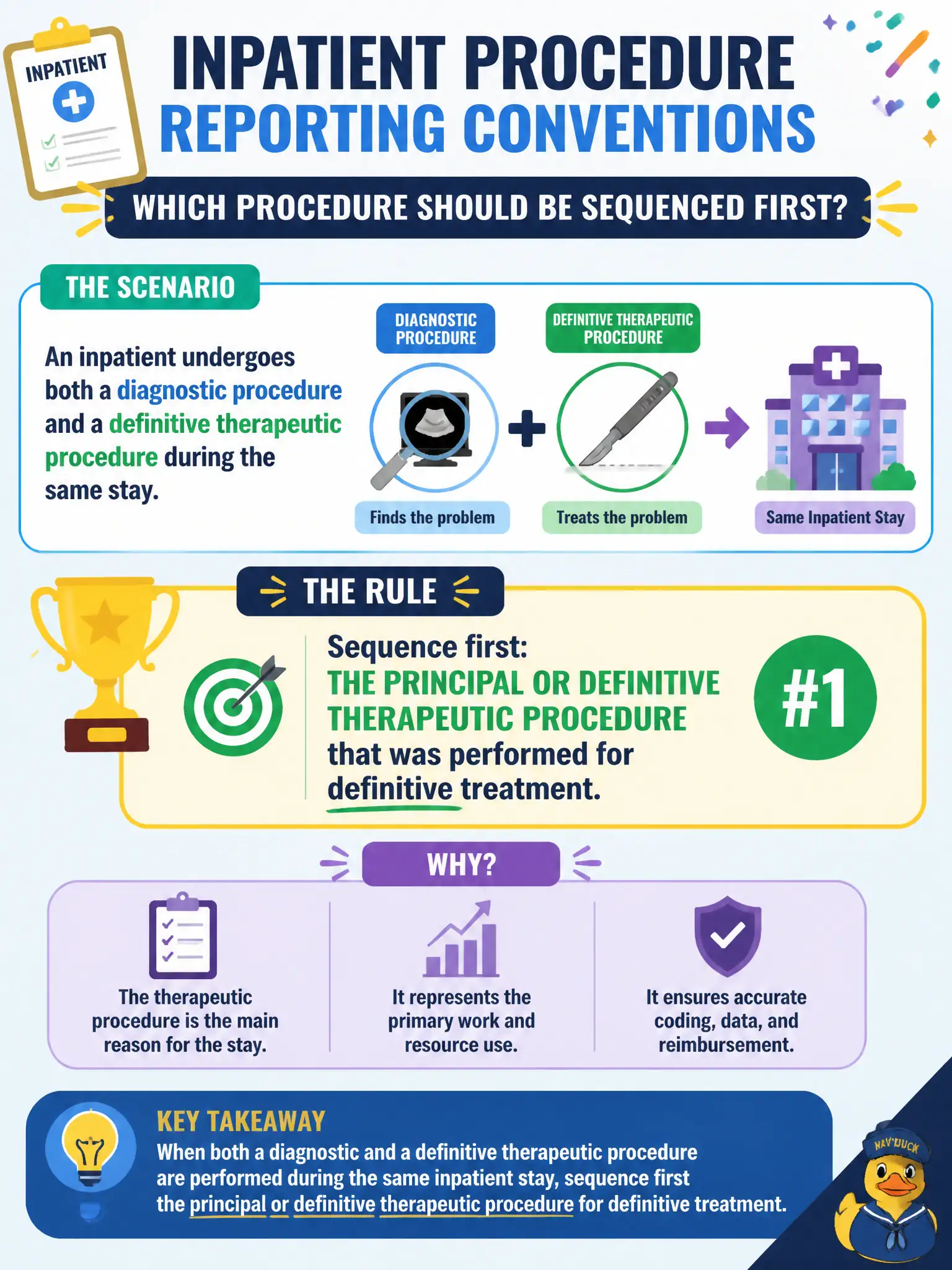
An inpatient undergoes both a diagnostic procedure and a definitive therapeutic procedure during the same stay. For inpatient procedure reporting conventions, which procedure should be sequenced first?
Select an answer to reveal the explanation.
Short Explanation
Think of the definitive fix as the headliner. When several procedures happen, the one that actually treated the problem goes first—not the cheapest line item, not a canceled attempt, and not a rule that therapeutic codes somehow don't count inpatient.
Full Explanation
When an inpatient undergoes both a diagnostic procedure and a definitive therapeutic procedure during the same stay, inpatient procedure reporting conventions generally sequence first the principal/definitive therapeutic procedure performed for definitive treatment. Diagnostic procedures remain reportable when they meet coding criteria but do not outrank definitive therapy related to the principal diagnosis for principal-procedure designation. This keeps public hospital procedure statistics oriented to definitive care.
Selecting the lowest-cost procedure regardless of clinical purpose fails by concept—cost is not the sequencing criterion. Reporting only the diagnostic procedure because “therapeutic codes are never reported inpatient” fails; therapeutic procedures are central to inpatient PCS reporting. Sequencing a canceled nursing-note procedure ahead of a completed definitive procedure fails because canceled/incomplete concepts and nursing mentions do not outrank completed definitive operative therapy.
Exam caveat: if the only significant procedure is diagnostic, it may be principal procedure; the rule prioritizes definitive treatment when both exist. Operational check: identify definitive therapeutic PCS procedures tied to the principal diagnosis; sequence/designate that procedure first as principal procedure; report diagnostic procedures as additional when coded.