
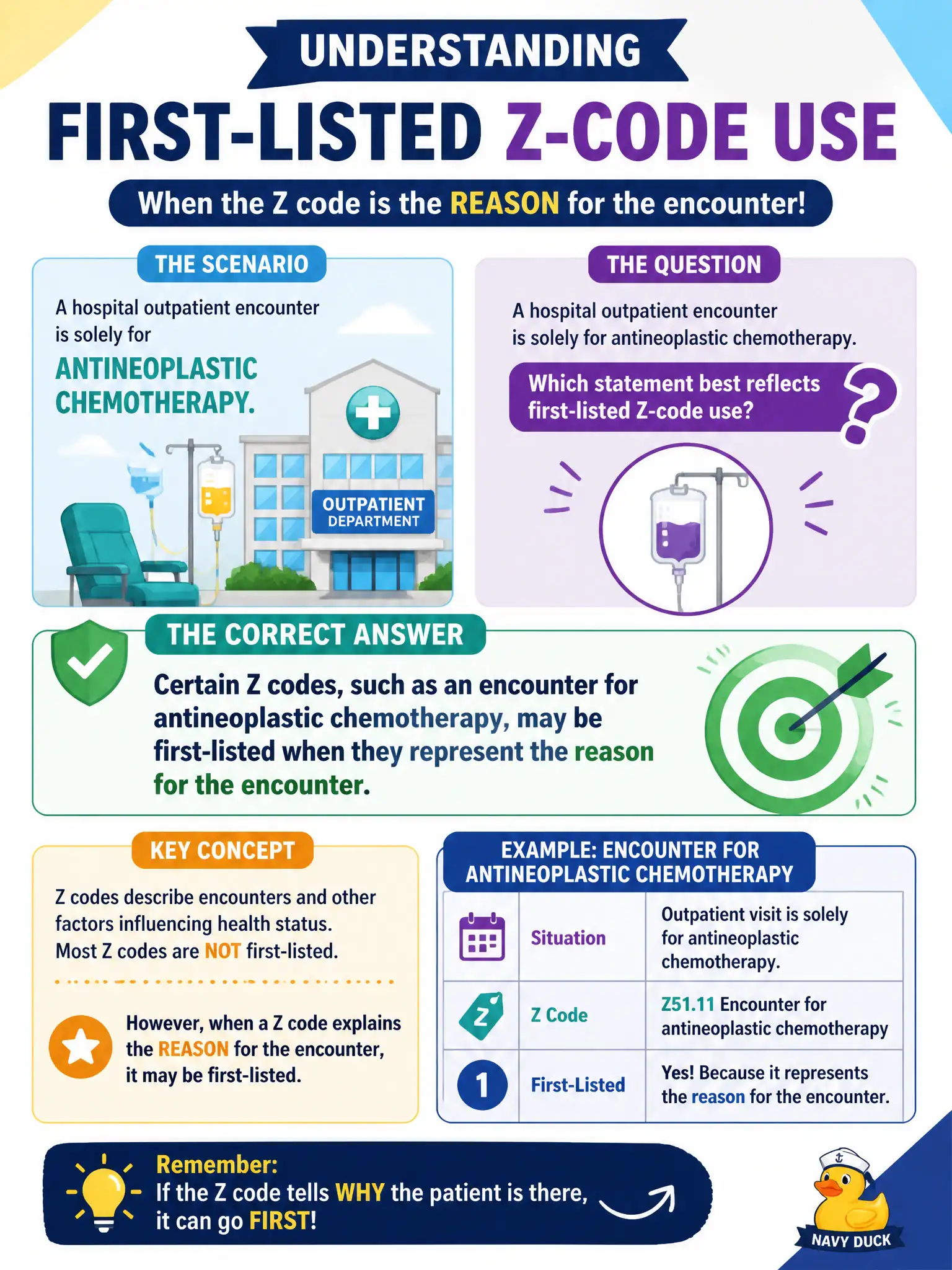
A hospital outpatient encounter is solely for antineoplastic chemotherapy. Which statement best reflects first-listed Z-code use?
Select an answer to reveal the explanation.
Short Explanation
Z codes aren't always the understudy. When the visit exists only for chemo (or another allowed encounter reason), the right Z code can take the lead. Plenty of other Z codes stay secondary-only—so match the code to the reason for being there.
Full Explanation
When a hospital outpatient encounter is solely for antineoplastic chemotherapy, certain Z codes—such as encounter for antineoplastic chemotherapy—may be first-listed when they represent the reason for the encounter. Outpatient guidelines explicitly allow appropriate Z codes as first-listed in these circumstances. Correct Z-first sequencing prevents forcing an acute symptom into first position when the visit’s sole purpose is chemo administration in municipal cancer clinics.
Saying Z codes may never be first-listed fails by concept—many encounter Z codes are designed as first-listed. Requiring every Z code after an acute symptom even when chemo is the only reason fails because it invents a symptom-first mandate that contradicts chemo-encounter guidance. Claiming Z codes are inpatient-only fails—Z codes are widely used in outpatient reporting.
Exam caveat: the malignancy is typically coded as an additional diagnosis when chemo is administered for that cancer; first-listed chemo Z-code does not mean omitting the cancer. Operational check: confirm the encounter reason is antineoplastic chemotherapy; assign the appropriate chemo encounter Z code first-listed; add the malignancy and other relevant diagnoses; do not demote the Z code behind unrelated symptoms.