
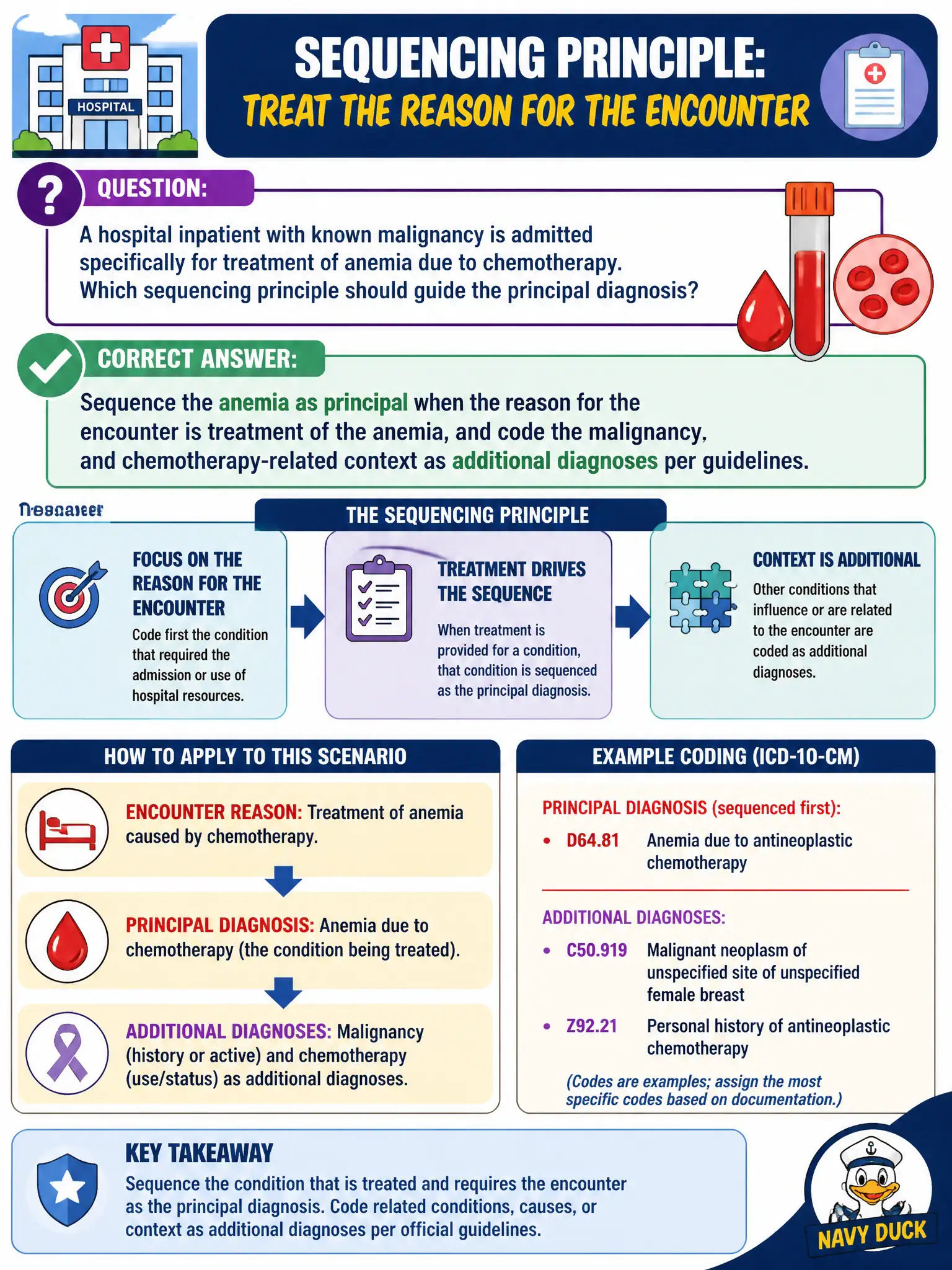
A hospital inpatient with known malignancy is admitted specifically for treatment of anemia due to chemotherapy. Which sequencing principle should guide the principal diagnosis?
Select an answer to reveal the explanation.
Short Explanation
Ask what brought the patient through the door. If this admission is to treat the chemo-related anemia, that anemia leads—then you still carry the cancer and chemo story as supporting codes. You don't auto-promote the malignancy just because it's on the problem list.
Full Explanation
When a hospital inpatient with known malignancy is admitted specifically for treatment of anemia due to chemotherapy, guidelines direct sequencing the anemia as principal when anemia treatment is the reason for the encounter, with malignancy and chemotherapy-related context as additional diagnoses as instructed. Reason-for-encounter sequencing prevents automatically forcing cancer as principal when today’s admission is for managing treatment-related anemia—a pattern common in civic oncology services.
Always sequencing malignancy as principal whenever chemo-related anemia is present, regardless of admission reason, fails by concept because it ignores encounter-specific principal-diagnosis definition. Coding only a chemotherapy encounter Z-code and omitting anemia and malignancy fails when anemia treatment is the inpatient focus and malignancy remains clinically relevant. Sequencing an unrelated chronic condition as principal because “malignancy history is never coded with anemia” fails—both anemia and malignancy generally remain reportable with correct sequencing.
Exam caveat: distinguish admission for anemia treatment versus admission for chemotherapy administration versus admission for the malignancy itself—each has different first/principal patterns. Operational check: confirm the admission is for treating chemo-induced anemia; assign anemia as principal; code malignancy and chemo context additionally per guidelines; align POA and treatment documentation.