
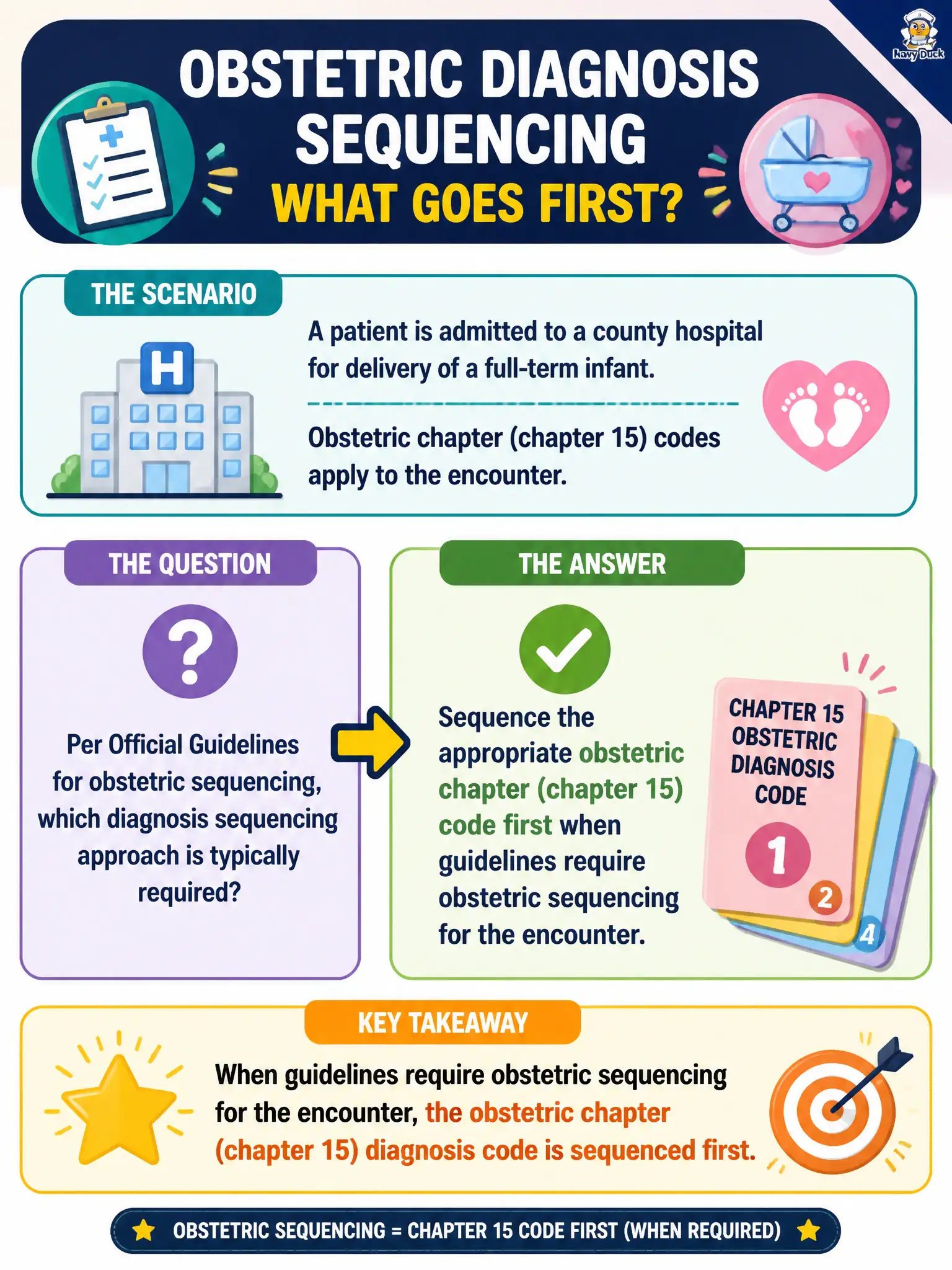
A patient is admitted to a county hospital for delivery of a full-term infant. Obstetric chapter (chapter 15) codes apply to the encounter. Per Official Guidelines for obstetric sequencing, which diagnosis sequencing approach is typically required?
Select an answer to reveal the explanation.
Short Explanation
Picture the mother's stay as an obstetric story first. When guidelines say chapter 15 leads, that obstetric code goes up front—not a random adult medical code, and not the baby's newborn codes on mom's claim. Delivery procedures don't erase the need for correct OB diagnosis sequencing.
Full Explanation
For a county hospital admission for delivery of a full-term infant, Official Guidelines typically require sequencing an appropriate obstetric chapter (chapter 15) code first for the maternal obstetric encounter. Obstetric sequencing keeps pregnancy, childbirth, and the puerperium as the framework for maternal claims. Correct chapter-15-first practice aligns civic perinatal abstracts with national obstetric coding rules.
Sequencing a non-obstetric chapter code first and treating chapter 15 as an afterthought fails by concept when obstetric sequencing is required for the delivery encounter. Sequencing newborn chapter codes on the mother’s claim as principal fails because newborn codes belong on the infant’s record, not as the mother’s principal diagnosis. Omitting chapter 15 codes when a delivery procedure is also coded fails—procedure coding does not replace obstetric diagnosis coding.
Exam caveat: incidental conditions may still be coded additionally, but the obstetric encounter’s sequencing priority remains chapter 15 when guidelines so require. Operational check: select the chapter 15 code that identifies the obstetric encounter/outcome circumstances; sequence it first per guidelines; add other maternal conditions as secondary; never place newborn Z38-type codes as the mother’s principal.