
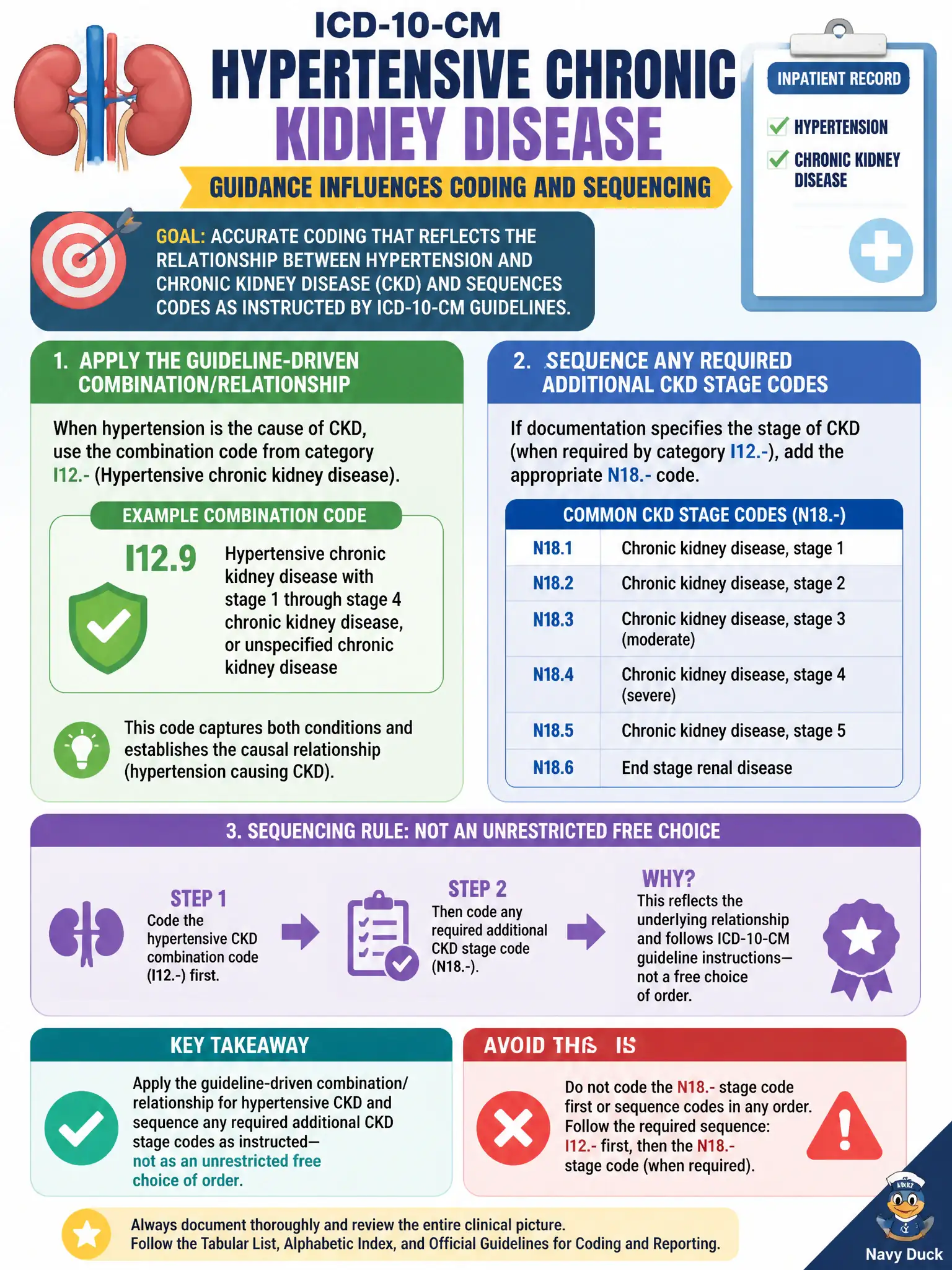
An inpatient record documents hypertension and chronic kidney disease. How should ICD-10-CM hypertensive chronic kidney disease guidance influence coding and sequencing?
Select an answer to reveal the explanation.
Short Explanation
Hypertension plus CKD is not two strangers sharing a cab—the guidelines treat them as a related combo in most cases. Follow that relationship and add stage detail when the book says to, instead of lining the codes up in whatever order feels convenient.
Full Explanation
ICD-10-CM provides guideline-driven combination/relationship logic for hypertension with chronic kidney disease; coding is not an unrestricted free choice of two unrelated codes in any order. Assign the appropriate hypertensive CKD combination relationship and sequence any required additional CKD stage codes as instructed. Correct application improves accuracy of municipal CKD–hypertension reporting and DRG relationships.
Coding hypertension and CKD only as unrelated conditions with freely chosen order fails by concept because Official Guidelines presume a causal relationship for hypertensive CKD categories unless the provider documents otherwise in ways the guidelines recognize. Omitting CKD whenever hypertension is coded fails—kidney disease is not automatically “inherent” to every hypertension code without the combination framework. Reporting only an external cause for hypertensive kidney disease fails because external causes do not replace disease coding.
Exam caveat: if the provider explicitly documents a non-hypertensive cause of CKD, coding may differ—follow provider linkage and guideline exceptions rather than always forcing hypertensive CKD. Operational check: apply hypertensive CKD combination guidance; add CKD stage codes when instructed; verify documentation of hypertension and CKD; do not freely reorder as unrelated diseases when guidelines link them.