
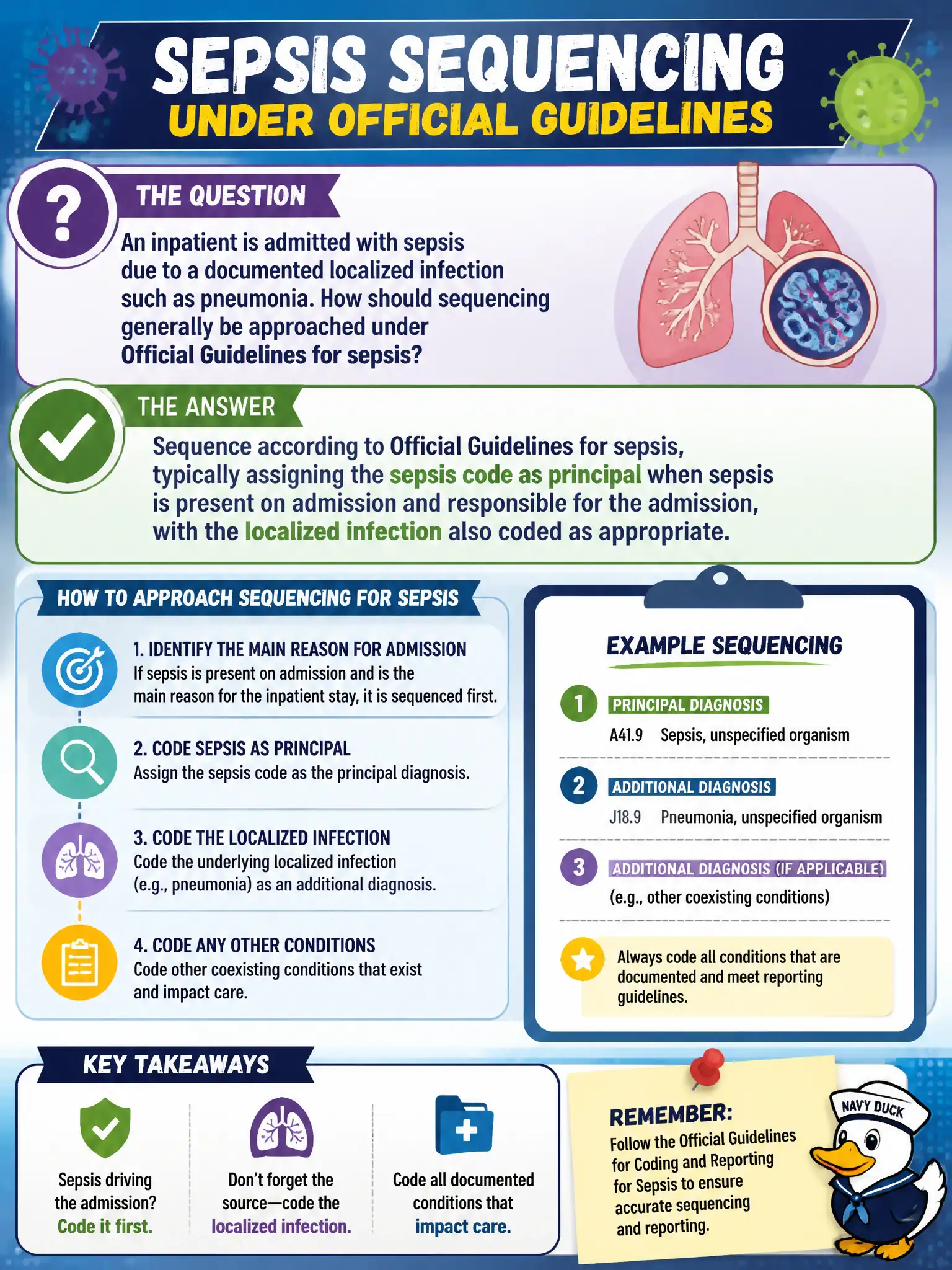
An inpatient is admitted with sepsis due to a documented localized infection such as pneumonia. How should sequencing generally be approached under Official Guidelines for sepsis?
Select an answer to reveal the explanation.
Short Explanation
Sepsis sequencing is a guideline dance, not a coin flip. When sepsis is why the patient came in, sepsis usually leads, and the localized infection still gets coded. Severe sepsis with organ failure adds its own chapter—follow the Official Guidelines rather than inventing an order.
Full Explanation
When an inpatient is admitted with sepsis due to a documented localized infection such as pneumonia, sequencing follows Official Guidelines for sepsis—typically assigning the sepsis code as principal when sepsis is present on admission and responsible for the admission, and also coding the localized infection as appropriate. Guideline-directed sepsis sequencing prevents both under-capture of systemic infection and incorrect principal selection in civic hospital severe-infection cohorts.
Always sequencing only the localized infection as principal and never reporting sepsis fails by concept when sepsis meets principal-definition and guideline criteria. Coding only R65.2x without a sepsis organism or localized infection code fails because severe sepsis coding requires the underlying systemic infection and instructions about organ dysfunction coding—R65.2x is not a stand-alone substitute for the sepsis diagnosis framework. Using an external cause as principal whenever infection is present fails because external causes are never principal diagnoses.
Exam caveat: sepsis guidelines have nuanced pathways (sepsis due to device, obstetric sepsis, whether sepsis developed after admission, etc.)—apply the subsection that matches the record. Operational check: confirm sepsis POA and that sepsis occasioned admission; assign sepsis as principal per guidelines; code pneumonia/localized infection and organism when documented; add severe sepsis/organ dysfunction codes when criteria and documentation support them.