
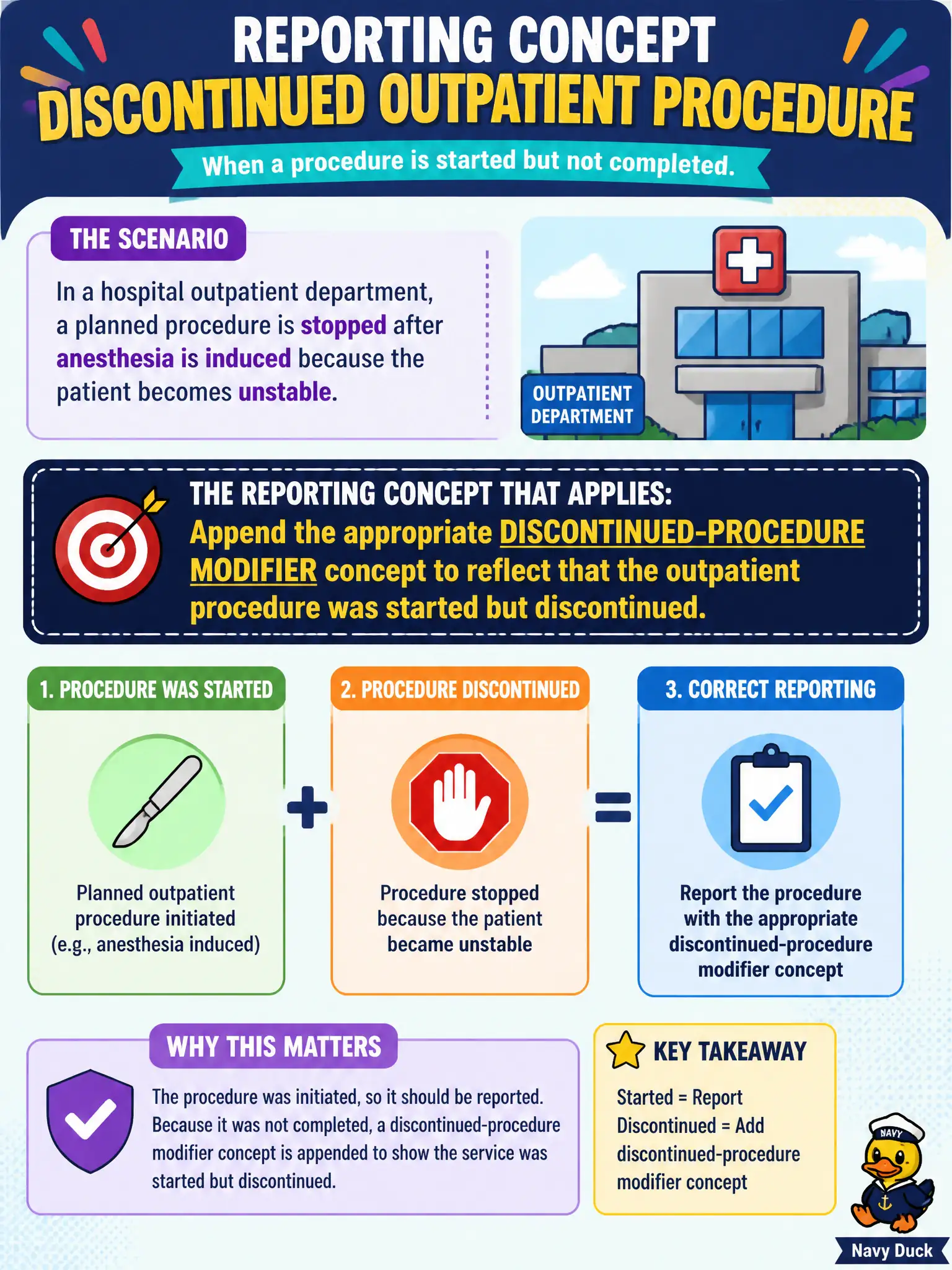
In a hospital outpatient department, a planned procedure is stopped after anesthesia is induced because the patient becomes unstable. Which reporting concept applies?
Select an answer to reveal the explanation.
Short Explanation
If the team got as far as anesthesia and then had to abort because the patient went sideways, you do not pretend the whole outpatient procedure finished. The discontinued-procedure modifier family exists to tell the payer the case started and then stopped.
Full Explanation
When a planned hospital outpatient procedure is stopped after anesthesia is induced because the patient becomes unstable, reporting uses the discontinued-procedure modifier concept to show the procedure was started but discontinued. Billing must reflect that the full service was not completed, while still recognizing work that occurred. Accurate discontinued-procedure reporting protects patients and municipal payers from full-service charges for incomplete outpatient procedures.
Billing the full procedure code without modification because anesthesia started fails by concept—anesthesia induction does not equal completion of the planned procedure. Deleting all procedure coding and reporting only the instability diagnosis fails because a started-then-discontinued procedure still needs appropriate procedure reporting with the discontinued concept. Changing the encounter to inpatient solely to avoid an outpatient modifier fails: status conversion requires medical necessity for inpatient admission, not coding convenience.
Exam caveat: physician versus facility reporting and exact modifier selection can differ by payer; the CCS concept is that discontinued outpatient procedures are not billed as completed services. Operational check: confirm anesthesia was induced and the procedure discontinued for instability; append the appropriate discontinued-procedure modifier/reporting approach; document the reason; code the instability/medical reason for discontinuation as supported.