
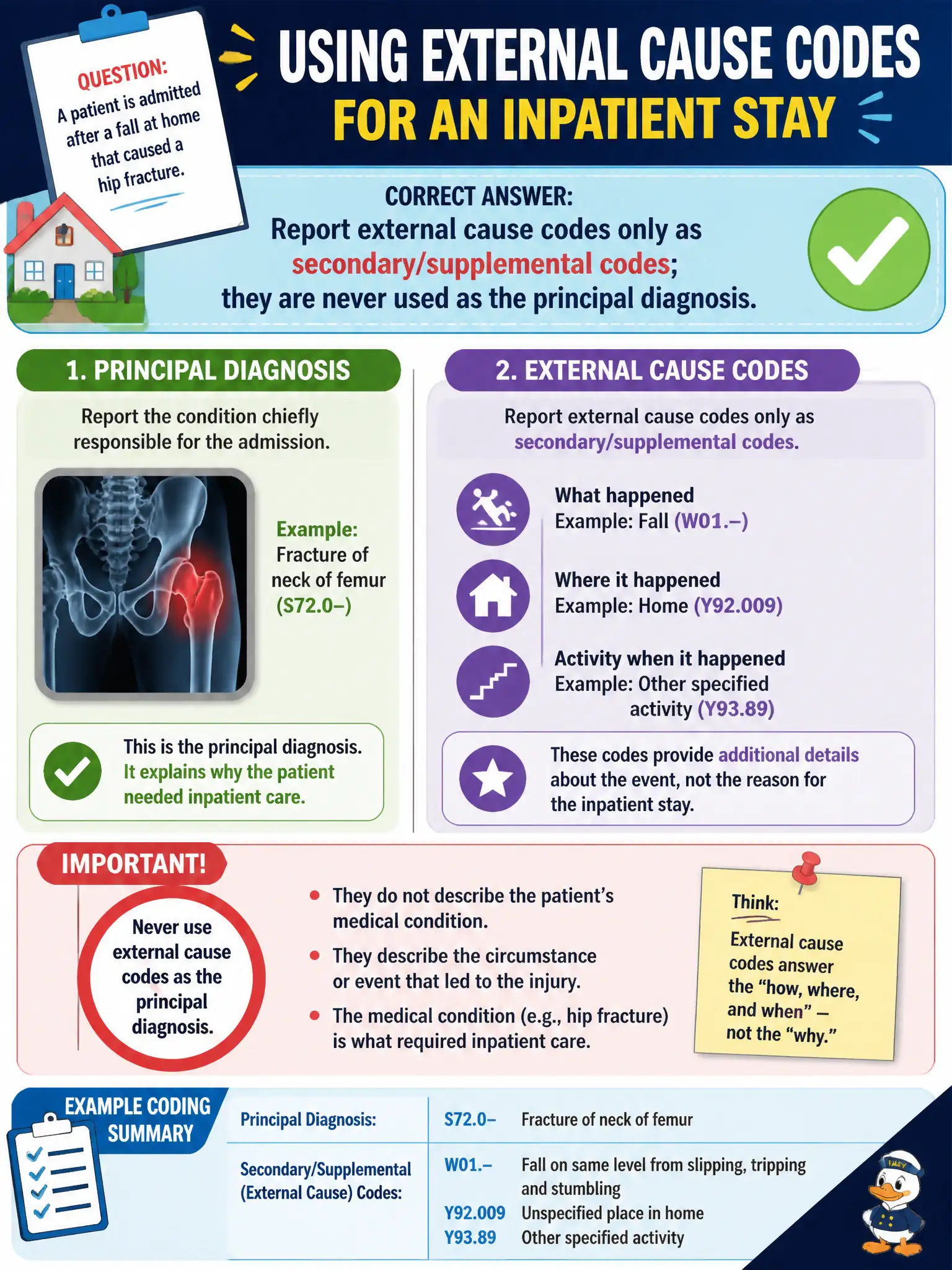
A patient is admitted after a fall at home that caused a hip fracture. How should external cause codes be used for the inpatient stay?
Select an answer to reveal the explanation.
Short Explanation
External cause codes tell the “how it happened” story, but they are never the headliner on an inpatient claim. The injury or illness stays principal; the fall/crash/etc. codes tag along in supporting roles.
Full Explanation
External cause codes for a fall-at-home hip fracture are reported only as secondary/supplemental codes; they are never the principal diagnosis. The injury (hip fracture) is principal when it occasioned admission; external cause codes explain how/where/why the injury occurred. Supplemental external-cause reporting strengthens civic injury epidemiology without displacing clinical injury principals.
Sequencing the fall external cause as principal fails by concept—external causes are prohibited as principal diagnoses. Replacing the fracture code with external cause codes only when surgery is performed fails because the fracture diagnosis remains essential regardless of operative versus nonoperative management, and external causes supplement rather than replace injury codes. Claiming external causes are outpatient-only fails because inpatient coding also reports external causes when documented and required by reporting programs.
Exam caveat: assign complete external-cause detail available (mechanism, place, activity, status) per guidelines and state/facility reporting rules without over-specifying undocumented elements. Operational check: code the hip fracture as principal with correct seventh character; add external cause codes as secondary; never let the fall code occupy the principal field; verify place-of-occurrence documentation for the home fall.