
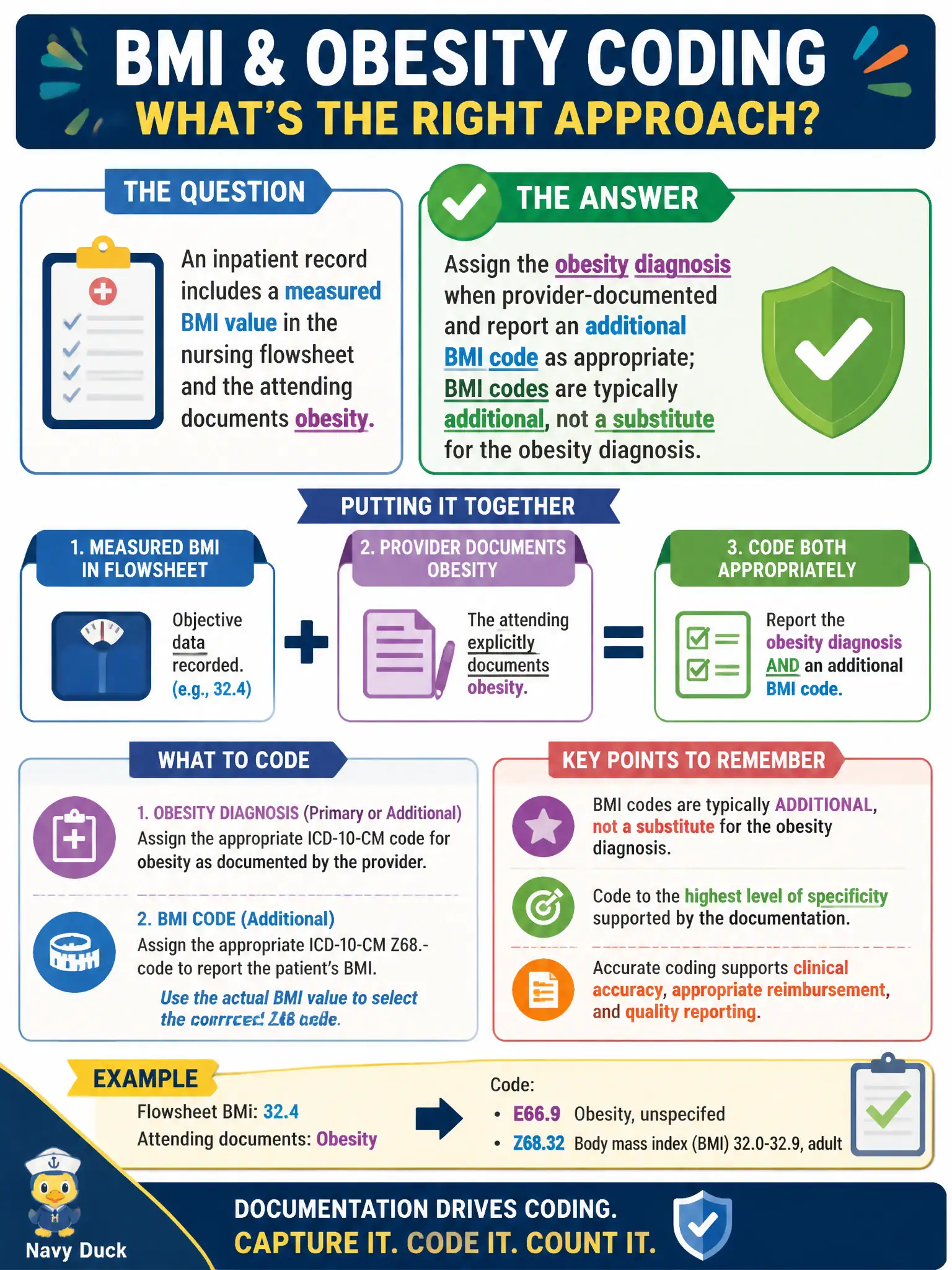
An inpatient record includes a measured BMI value in the nursing flowsheet and the attending documents obesity. What is the appropriate approach to BMI and obesity coding?
Select an answer to reveal the explanation.
Short Explanation
A BMI number in the flowsheet is useful, but it is not a magic wand that creates an obesity diagnosis by itself. You still need the provider to call obesity (or overweight) out—then the BMI code can ride along as an extra detail.
Full Explanation
When the attending documents obesity and a measured BMI appears in the nursing flowsheet, assign the provider-documented obesity diagnosis and report an additional BMI code as appropriate. BMI codes are typically additional codes that further specify obesity/overweight; they are not a substitute for a provider obesity diagnosis and are not used as principal merely because a number exists. This approach balances nursing-measurable BMI with provider diagnostic authority in county hospital abstracts.
Coding BMI alone as principal whenever a numeric BMI is present fails by concept—BMI codes are not designed as principal stand-ins for the clinical obesity diagnosis in typical inpatient scenarios. Ignoring BMI entirely because nursing documentation “can never support any associated coding” fails: guidelines allow BMI from other clinicians’ documentation when associated overweight/obesity is provider-diagnosed, per Official Guideline conventions. Coding obesity from the BMI number alone without a provider obesity/overweight diagnosis fails because the diagnosis itself requires provider documentation.
Exam caveat: follow current Official Guidelines on who may document BMI versus who must document the obesity diagnosis; do not invent obesity from BMI alone. Operational check: confirm provider obesity/overweight documentation; add the matching BMI code from recorded BMI; do not sequence BMI as principal in place of obesity; query if obesity is clinically implied by BMI-driven treatment but never diagnosed.