
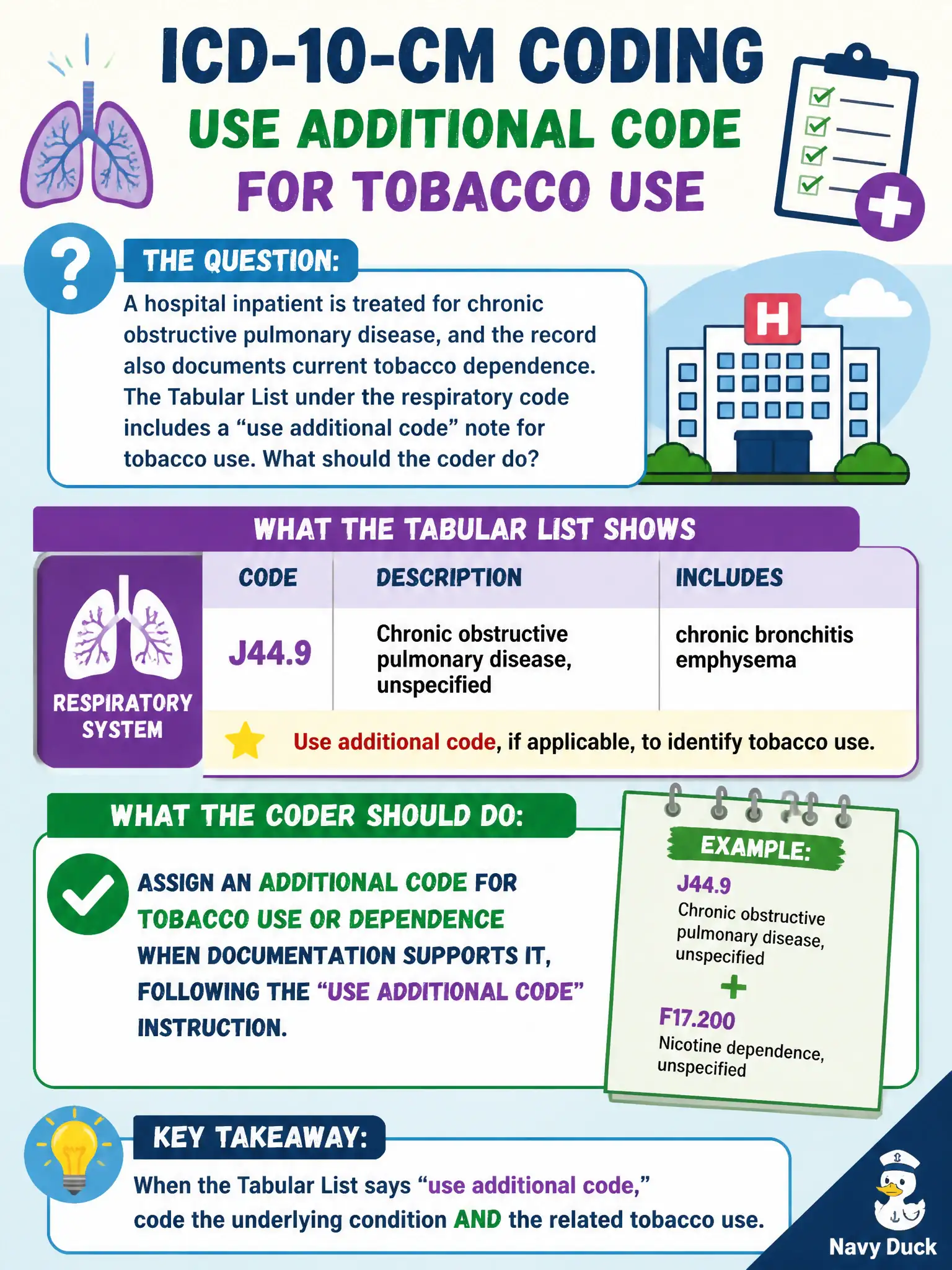
A hospital inpatient is treated for chronic obstructive pulmonary disease, and the record also documents current tobacco dependence. The Tabular List under the respiratory code includes a “use additional code” note for tobacco use. What should the coder do?
Select an answer to reveal the explanation.
Short Explanation
“Use additional code” is the codebook tapping you on the shoulder: if the chart backs the associated condition—like tobacco with a lung diagnosis—add it. Skipping it because it feels optional is how instructional notes get ignored.
Full Explanation
When the Tabular List under a COPD code includes “use additional code” for tobacco use/dependence and the inpatient record documents current tobacco dependence, the coder should assign the additional tobacco code. “Use additional code” notes are instructional requirements when documentation supports the associated factor. Capturing tobacco dependence alongside COPD improves civic public-health and quality reporting without replacing the respiratory principal diagnosis inappropriately.
Omitting tobacco coding because “lifestyle factors never affect facility coding” fails by concept—tobacco use/dependence codes are reportable and often instructed. Replacing the respiratory code with a tobacco code as principal fails because tobacco dependence is not the condition that typically occasions a COPD admission; it is additional. Reporting tobacco only if the patient requests cessation counseling fails because documentation of dependence/use, not counseling consent alone, drives the additional code when instructed.
Exam caveat: distinguish nicotine dependence, use, history, and exposure codes; pick the code that matches current documentation, and do not assume dependence from a remote history entry. Operational check: locate tobacco documentation; assign the appropriate additional tobacco code per Tabular instructions; keep COPD (or other respiratory condition) sequenced per principal-diagnosis rules; educate teams that “use additional code” is not optional fluff.