
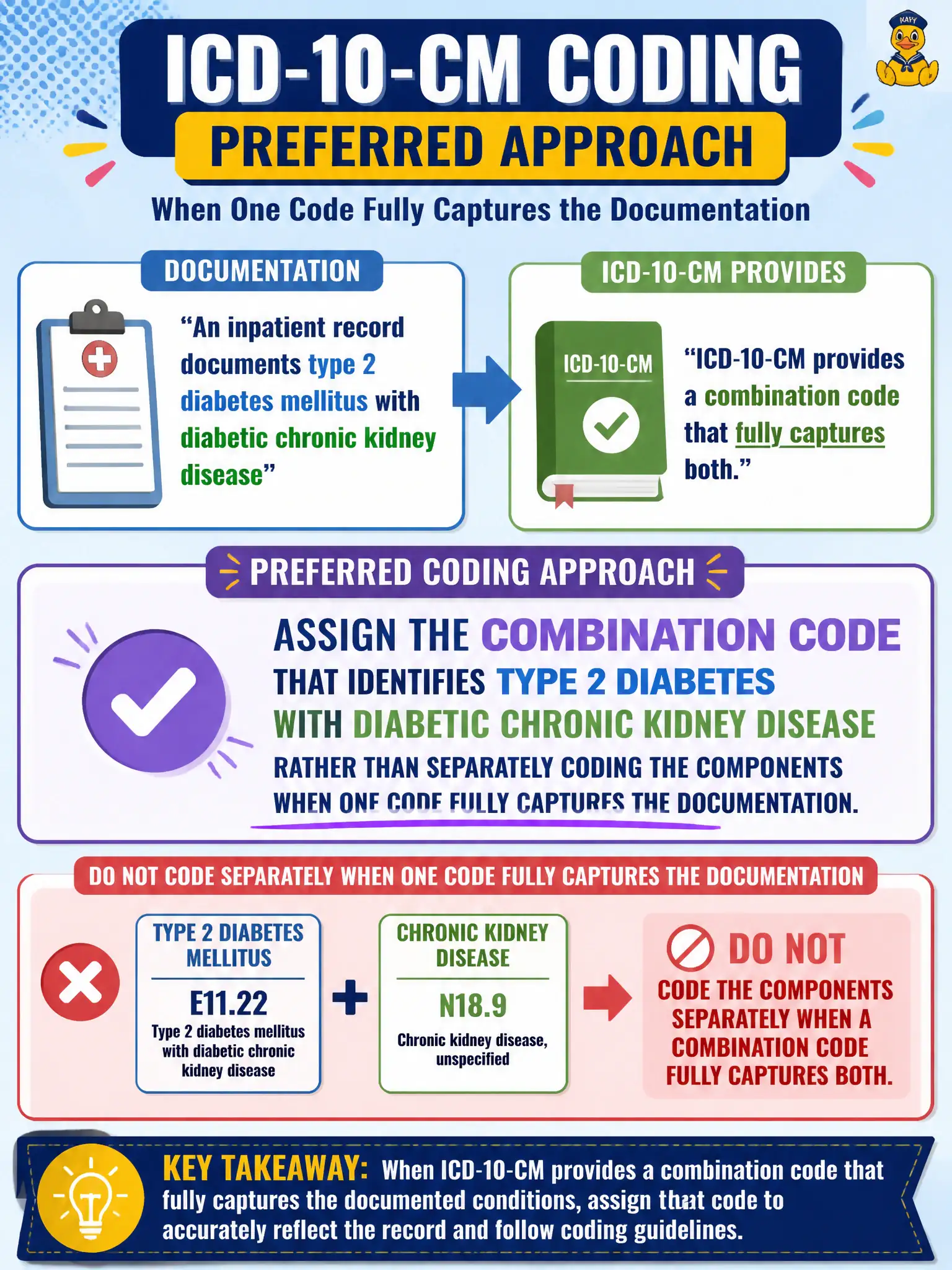
An inpatient record documents type 2 diabetes mellitus with diabetic chronic kidney disease, and ICD-10-CM provides a combination code that fully captures both. What is the preferred coding approach?
Select an answer to reveal the explanation.
Short Explanation
When the book hands you one combination code that already says “diabetes with diabetic CKD,” do not build a DIY sandwich out of separate pieces. One solid combo beats two half-codes that say the same thing less cleanly.
Full Explanation
When ICD-10-CM provides a combination code that fully captures type 2 diabetes mellitus with diabetic chronic kidney disease, the preferred approach is to assign that combination code rather than separately coding components already included. Combination codes exist to express linked etiology–manifestation relationships efficiently and accurately. Using the combination code improves clarity in public diabetes–CKD reporting and aligns with Official Guideline preference for combination codes when they fully identify the diagnostic statement.
Always coding diabetes and CKD as two unrelated codes “so severity is visible” fails by concept when a combination code already includes both; fragmenting may misstate the relationship and violate combination-code guidance. Coding only unspecified diabetes and omitting CKD until nephrology consults fails when the attending already documented diabetic CKD. Using an external cause as principal with diabetes/CKD as secondary findings fails because external causes are not principal diagnoses and do not replace disease coding.
Exam caveat: additional codes may still be required for CKD stage or other instructed details even when a diabetes-with-CKD combination is used—read “use additional code” notes. Operational check: select the diabetes-with-diabetic-CKD combination that matches documentation; add stage/insulin/other required codes; avoid redundant separate diabetes + unspecified CKD pairings that the combination already covers.