
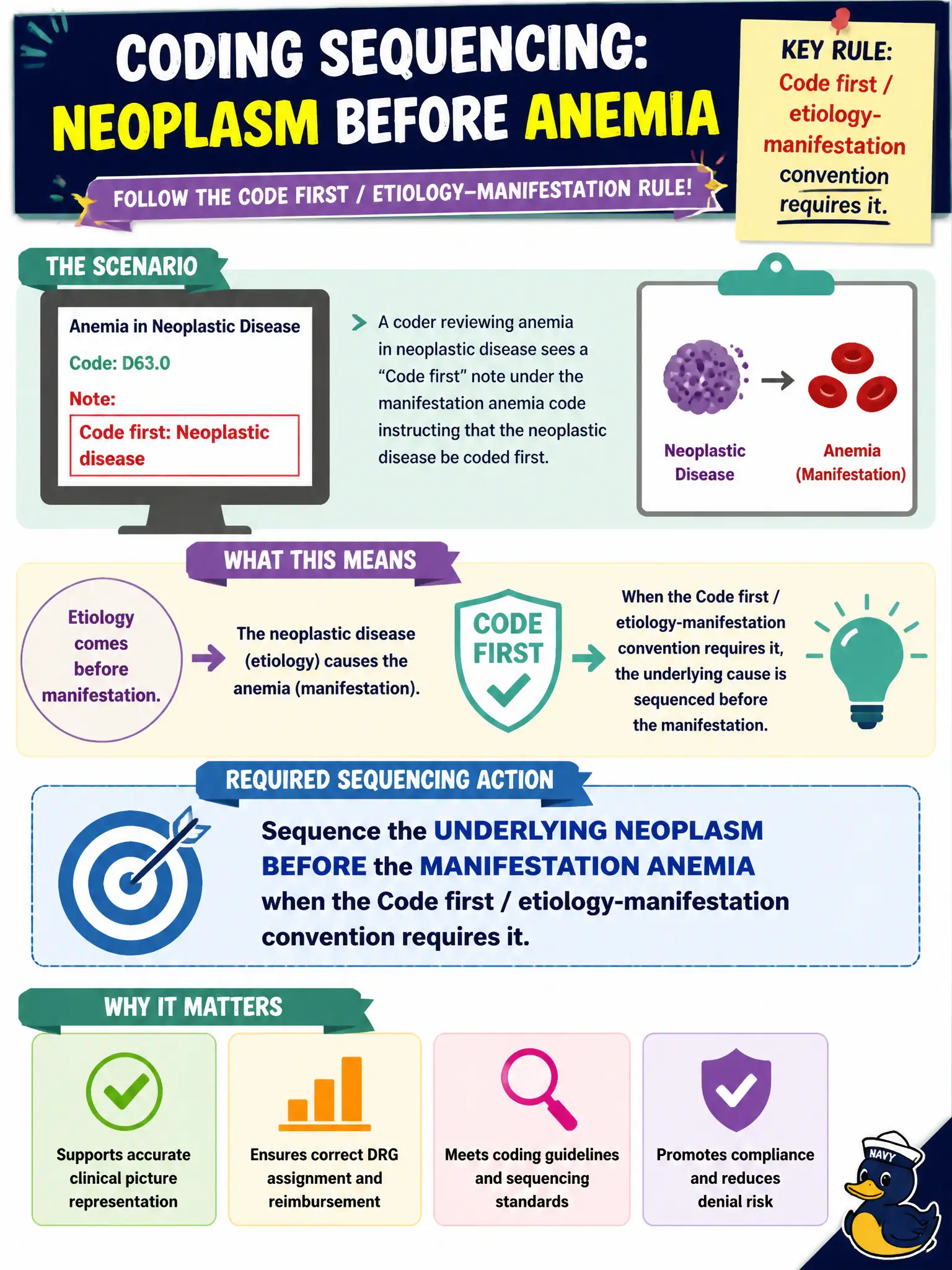
A coder reviewing anemia in neoplastic disease sees a “Code first” note under the manifestation anemia code instructing that the neoplastic disease be coded first. What sequencing action is required?
Select an answer to reveal the explanation.
Short Explanation
“Code first” is the codebook tapping you on the shoulder: put the cause ahead of the symptom-style manifestation. For anemia in neoplastic disease, the cancer etiology lines up before the anemia manifestation when that note applies.
Full Explanation
When a “Code first” note under a manifestation anemia code instructs that the neoplastic disease be coded first, the coder must sequence the underlying neoplasm before the manifestation anemia per the etiology–manifestation convention. Instructional notes in the Tabular List are binding sequencing rules, not suggestions. Honoring Code first relationships keeps civic oncology abstracts clinically coherent and guideline-compliant.
Sequencing anemia before the neoplasm while ignoring Code first fails by concept because it violates the mandated etiology-first order. Omitting the neoplasm because “manifestation codes always stand alone” fails—the manifestation depends on reporting the underlying etiology when instructed. Replacing both with a single unspecified anemia code fails because it discards documented neoplastic disease and manifestation specificity to dodge sequencing, which under-reports cancer-related anemia.
Exam caveat: not every anemia with cancer uses the same combination; follow the specific Tabular notes for anemia in neoplastic disease and any “code also” requirements. Operational check: identify the manifestation code’s Code first note; sequence neoplasm first, anemia manifestation second; confirm both are supported in provider documentation; never reverse the mandated order for DRG shopping.