
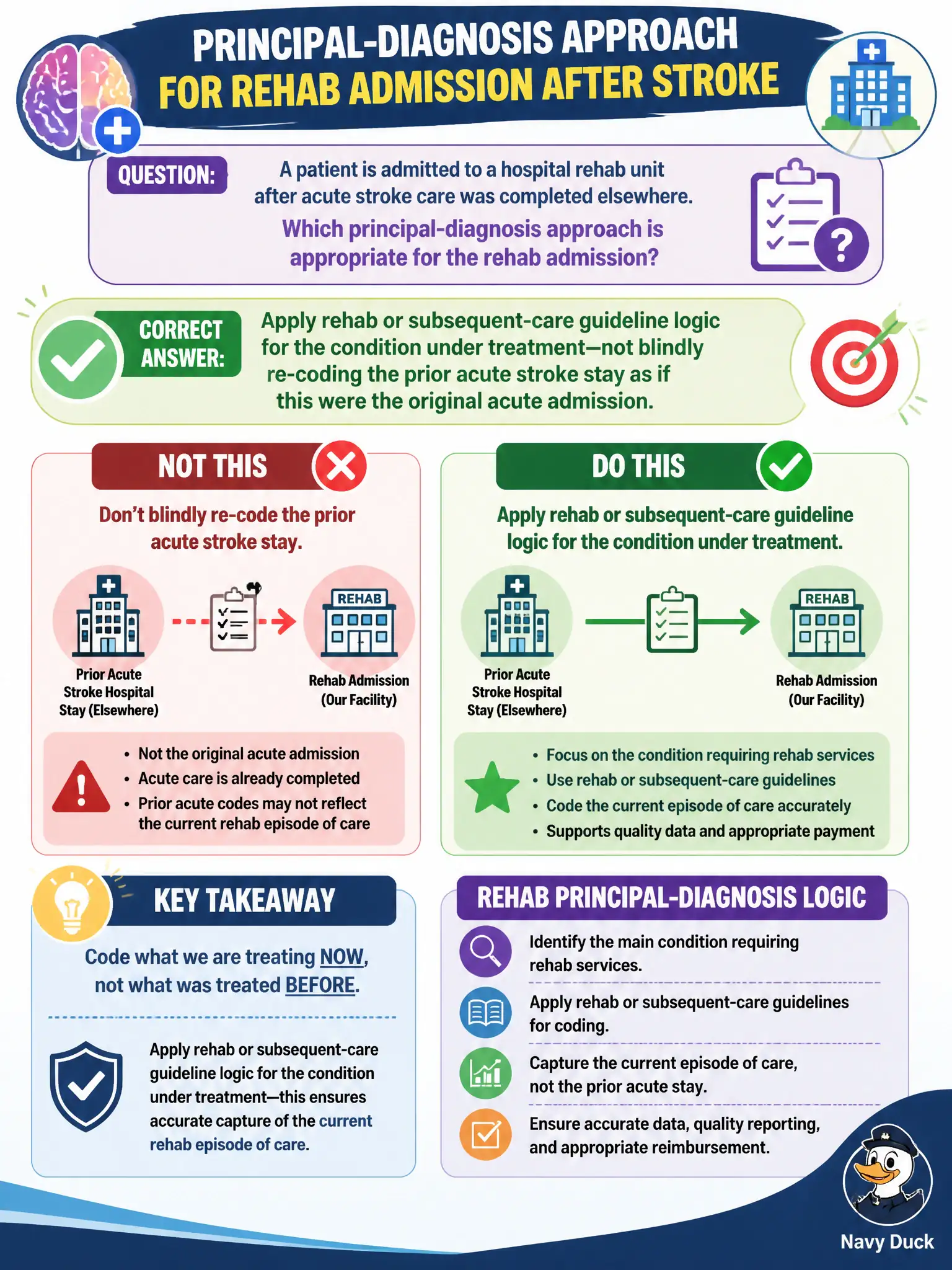
A patient is admitted to a hospital rehab unit after acute stroke care was completed elsewhere. Which principal-diagnosis approach is appropriate for the rehab admission?
Select an answer to reveal the explanation.
Short Explanation
Rehab is chapter two of the story, not a reprint of chapter one. You code this admission for why they’re in rehab now—late effects, rehab encounter logic, whatever the guidelines say—not a copy-paste of the old acute stroke principal.
Full Explanation
A hospital rehab-unit admission after acute stroke care elsewhere uses rehab or subsequent-care guideline logic for the condition under treatment—not a blind copy of the prior acute facility’s principal diagnosis as if this were the original acute stroke admission. Rehab encounters focus on the condition receiving rehabilitative care and applicable aftercare/sequela/subsequent frameworks documented for this admission. Correct framing keeps public rehab outcomes aligned to the rehab episode rather than replaying the acute stay.
Always reusing the prior acute facility’s exact principal without reviewing rehab-admission documentation fails by concept because each encounter is coded from its own record and guideline context. Coding only an unrelated chronic skin tag as principal fails because incidental history items do not displace the neurologic condition under rehab treatment. Omitting neurologic diagnoses because “rehab uses therapy CPT only” fails—rehab admissions require appropriate diagnosis coding to explain the need for rehabilitative services.
Exam caveat: acute versus subsequent seventh characters / sequela coding and rehab-specific Z-code practices must match documentation phase—do not paste the acute MI/stroke principal pattern unchanged. Operational check: read rehab admission H&P and goals; apply rehab/subsequent-care guideline logic; code the treated condition appropriately for this stay; verify therapy orders align with coded rehab focus.