
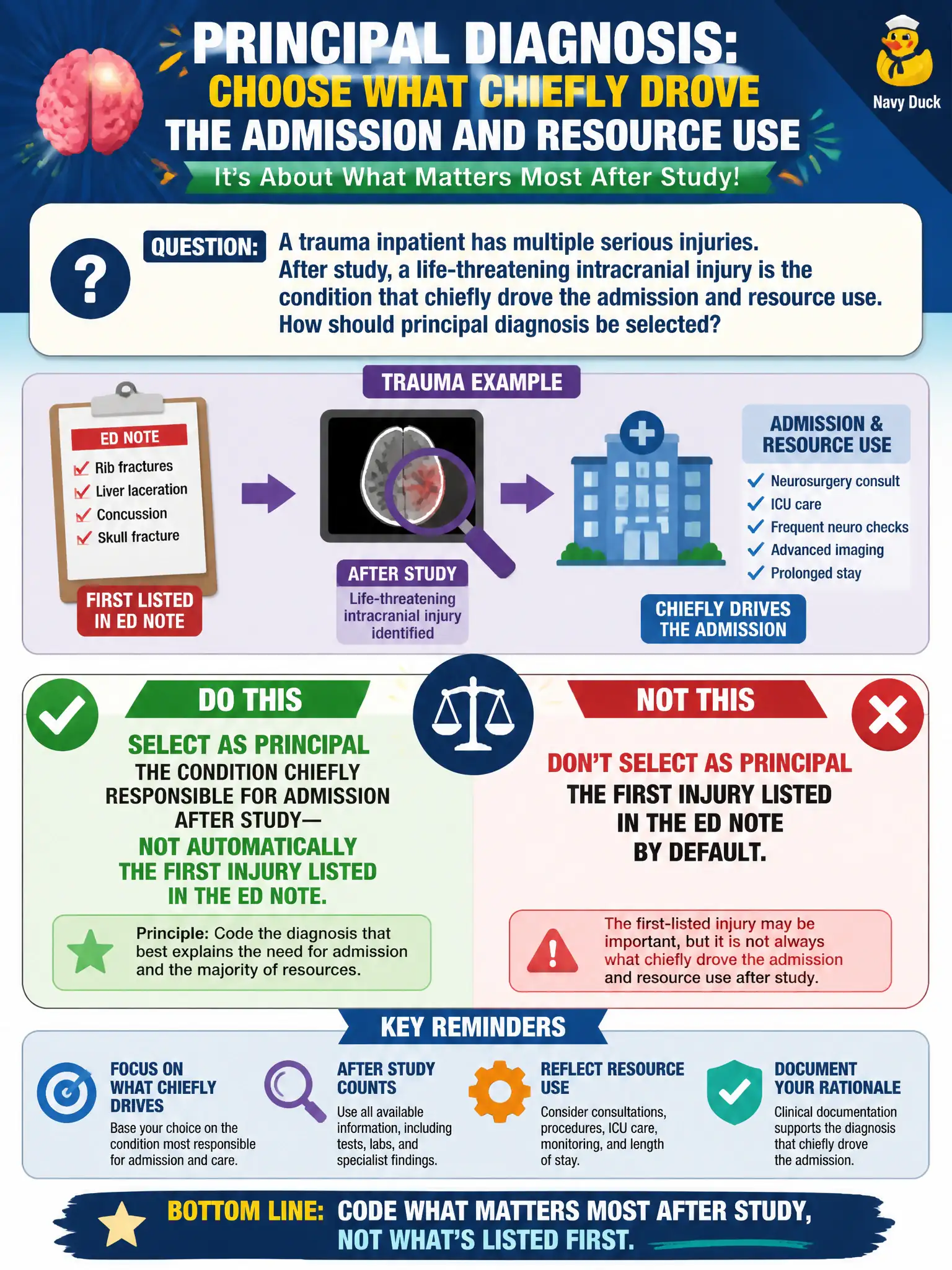
A trauma inpatient has multiple serious injuries. After study, a life-threatening intracranial injury is the condition that chiefly drove the admission and resource use. How should principal diagnosis be selected?
Select an answer to reveal the explanation.
Short Explanation
In a multi-injury wreck, principal isn’t “whoever got typed first in triage.” After study, pick the injury that truly drove the admission—here the life-threatening intracranial injury—not the top line of the ED list by habit.
Full Explanation
In a trauma inpatient with multiple serious injuries, principal diagnosis is the condition chiefly responsible for admission after study—not automatically the first injury listed in the ED note. When a life-threatening intracranial injury chiefly drove admission and resource use, that injury is the appropriate principal. After-study selection among multiple trauma diagnoses preserves truthful civic trauma severity profiling.
Always coding the first ED-listed injury as principal fails by concept because ED order of mention is not the after-study criterion. Omitting intracranial injury because “multiple trauma never has a principal” fails—multiple injury cases still designate a principal diagnosis. Selecting the lowest-severity injury to make the case appear less complex fails ethically and clinically; understating principal severity distorts quality and payment integrity.
Exam caveat: some coding systems use multiple-trauma combination concepts or guidelines; still, when a single condition chiefly occasioned admission, select that condition rather than a trivial listed injury. Operational check: review trauma attending documentation and resource drivers; assign the chiefly responsible injury (here intracranial) as principal; code other injuries as additional with correct seventh characters; ignore ED list order as the sequencing rule.