
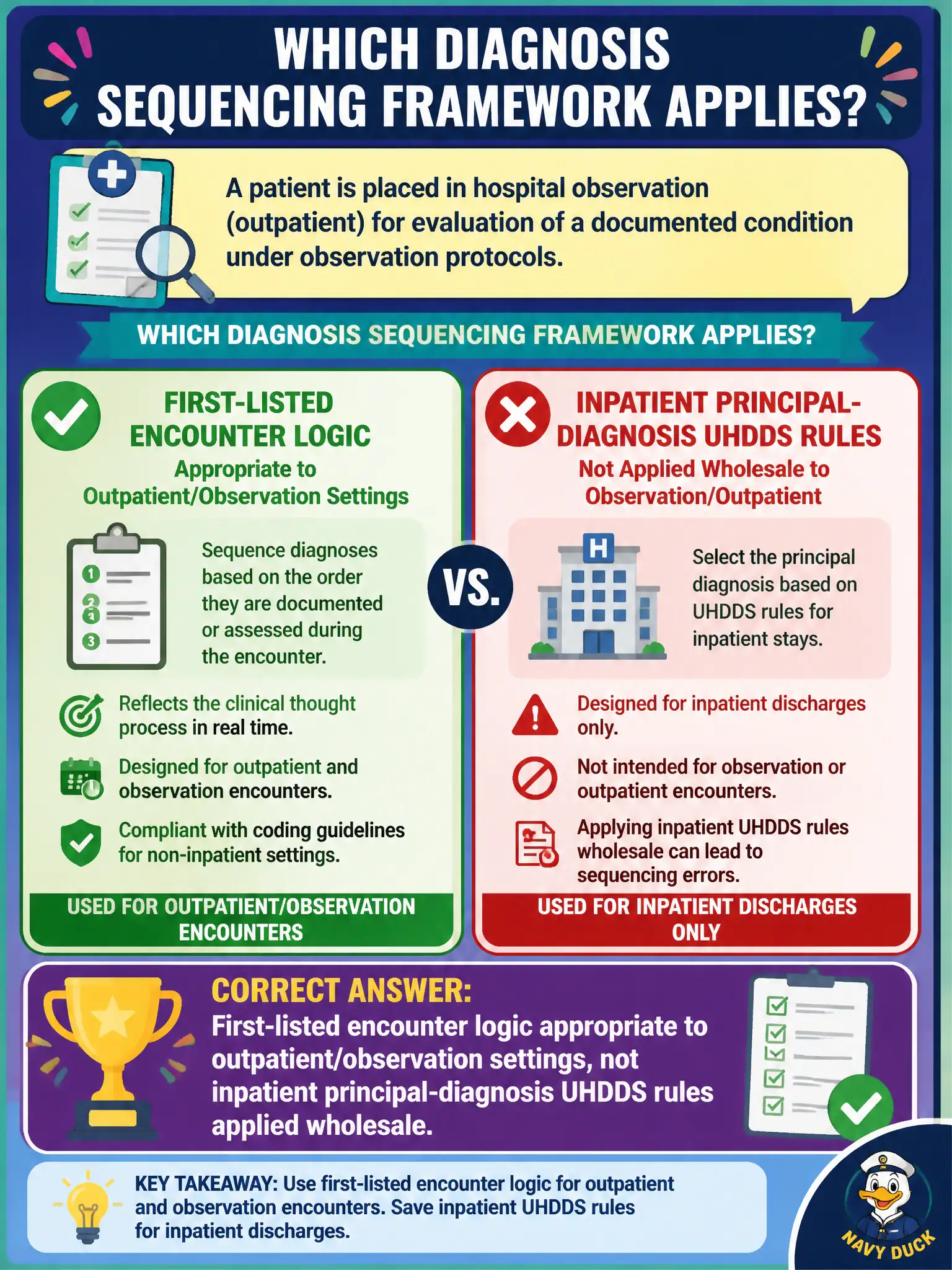
A patient is placed in hospital observation (outpatient) for evaluation of a documented condition under observation protocols. Which diagnosis sequencing framework applies?
Select an answer to reveal the explanation.
Short Explanation
Observation is still an outpatient lane—even if the bed looks inpatient. Use first-listed encounter logic for what you’re observing, not the inpatient “principal after study” script stamped on every chart.
Full Explanation
Hospital observation is an outpatient setting; diagnosis sequencing uses first-listed encounter logic appropriate to outpatient/observation—not inpatient UHDDS principal-diagnosis rules applied wholesale. The condition being evaluated under observation protocols should be reported using outpatient guideline frameworks that match the patient’s outpatient status. This protects municipal observation metrics from being distorted by inpatient sequencing vocabulary.
Mandatory inpatient UHDDS principal wording as if the patient were an inpatient discharge fails by concept because observation status remains outpatient unless formally admitted as inpatient. Claiming no diagnosis reporting is required fails because observation encounters need diagnoses explaining medical necessity and services. Always sequencing a history Z-code before the condition being observed fails when the reason for observation is the acute/documented condition under evaluation; history codes do not automatically outrank the observation focus.
Exam caveat: if observation converts to inpatient admission, inpatient principal-diagnosis rules then apply to the inpatient stay—status drives which framework you use. Operational check: confirm observation versus inpatient status; apply outpatient/observation first-listed logic to the documented condition under evaluation; avoid forcing inpatient UHDDS phrasing onto pure observation abstracts.