
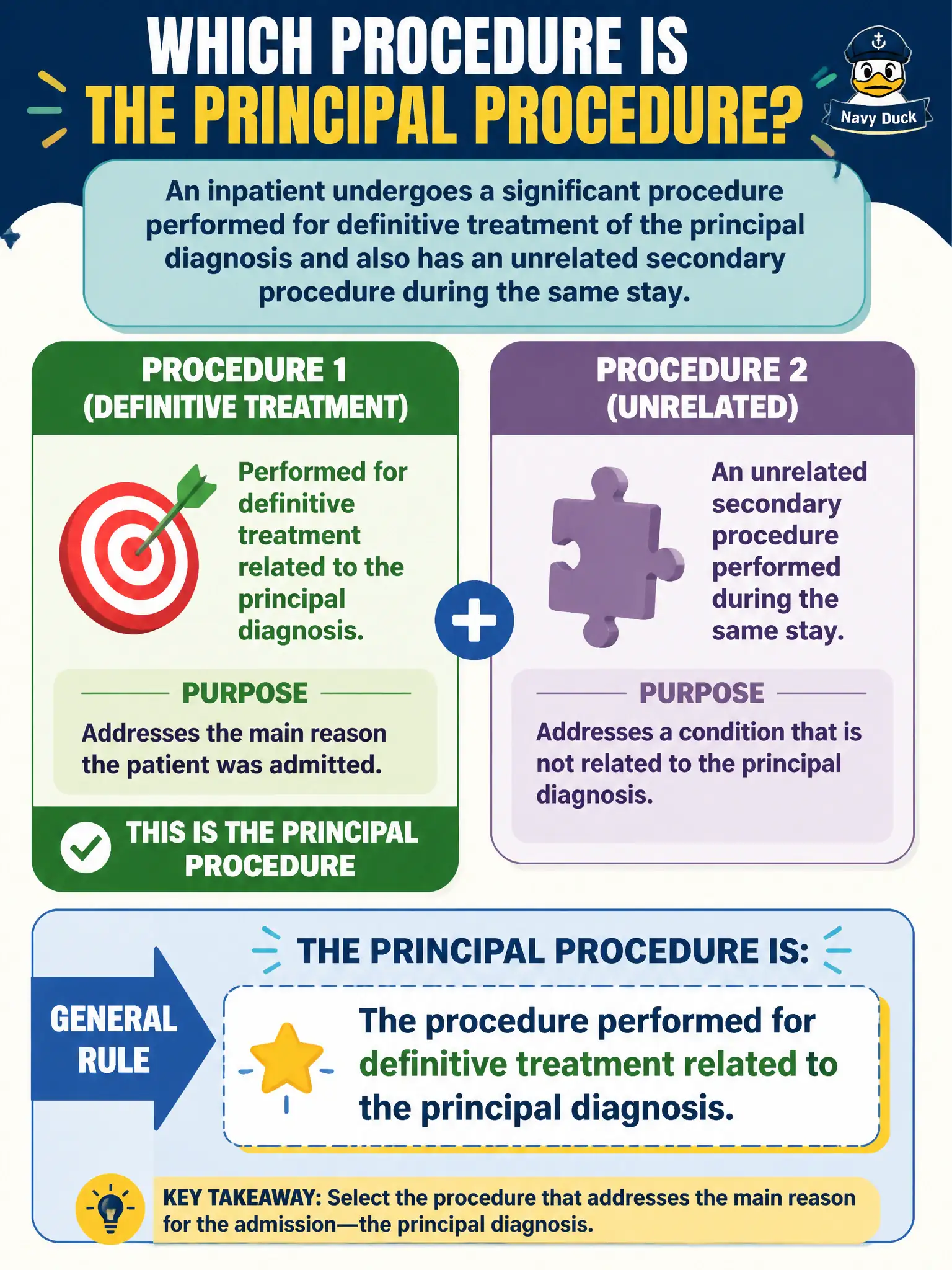
An inpatient undergoes a significant procedure performed for definitive treatment of the principal diagnosis and also has an unrelated secondary procedure during the same stay. Which procedure is generally identified as the principal procedure?
Select an answer to reveal the explanation.
Short Explanation
Principal procedure is the main fix for the main problem—the definitive treatment tied to the principal diagnosis. The side quest procedure doesn’t steal that title just because it happened on the same OR day.
Full Explanation
When an inpatient undergoes a significant procedure for definitive treatment of the principal diagnosis and also has an unrelated secondary procedure, the principal procedure is generally the definitive treatment related to the principal diagnosis. Principal-procedure identification follows relationship to the principal diagnosis and therapeutic intent, not convenience metrics. Correct designation supports accurate public hospital procedure statistics and DRG logic tied to the reason for admission.
Choosing whichever procedure had the longest scheduled OR time fails by concept because schedule duration is not the UHDDS/principal-procedure criterion. Preferring the unrelated secondary procedure because “secondary always outranks definitive treatment” fails—that reverses the relationship rule. Claiming no principal procedure is ever reported when more than one procedure is performed fails because multiple procedures are common and one principal procedure is still identified when criteria are met.
Exam caveat: if two procedures equally relate to the principal diagnosis, facility and guideline conventions for selecting among them apply; unrelated procedures remain additional. Operational check: map each PCS/CPT procedure to documentation; designate as principal the definitive procedure treating the principal diagnosis; list unrelated procedures as secondary; avoid using OR minutes as the deciding factor.