
A municipal hospital codes a newborn’s birth admission. Which principal-diagnosis approach is appropriate?
Select an answer to reveal the explanation.
Short Explanation
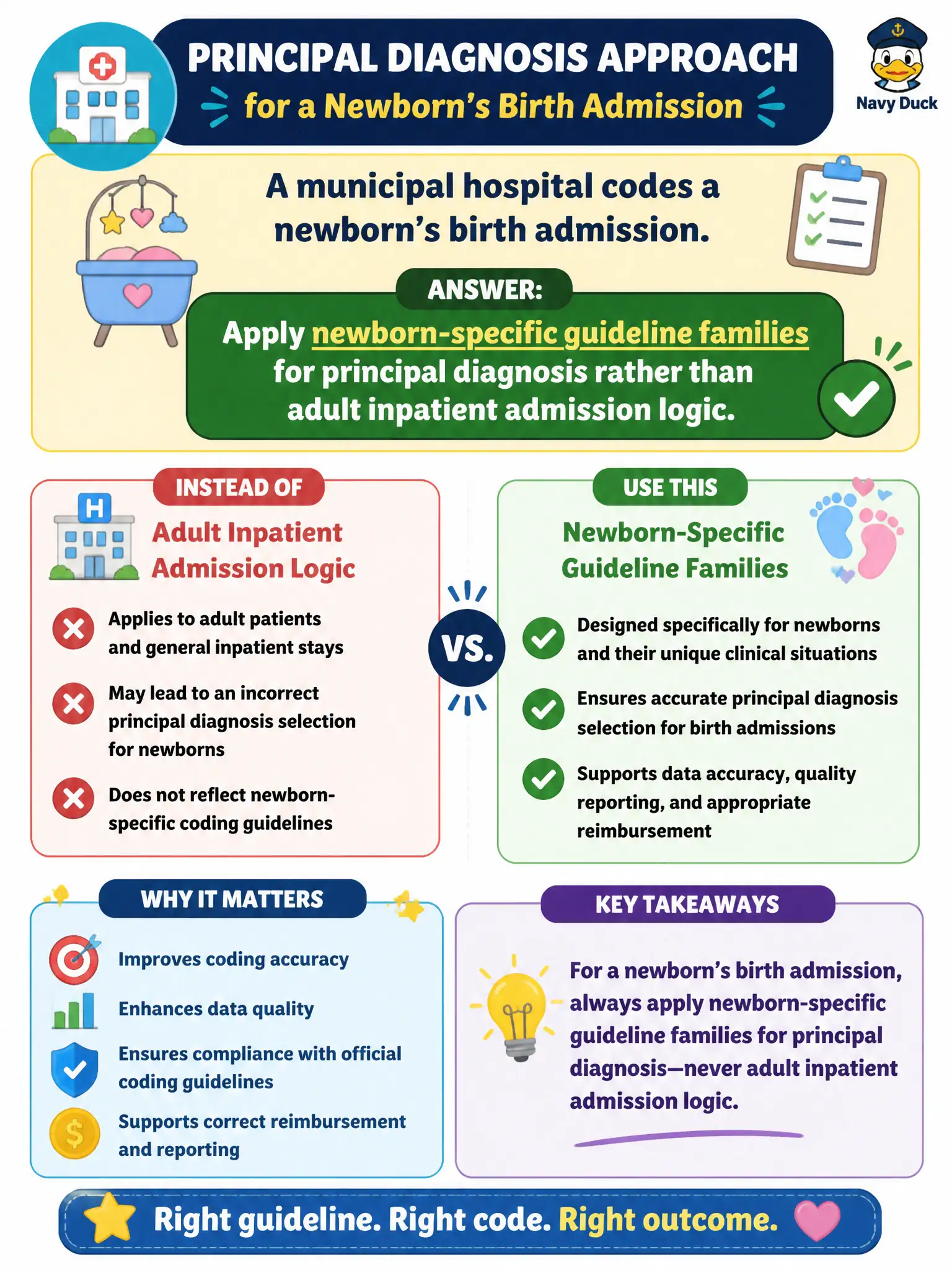
Newborns get their own rulebook chapter—liveborn status and newborn conditions, not adult “why did we admit this 60-year-old” logic. Don’t paste mom’s diagnoses onto baby’s claim as a shortcut.
Full Explanation
Newborn birth-admission coding at a municipal hospital follows newborn-specific Official Guideline families for principal diagnosis—not adult inpatient admission logic. Newborn records use dedicated Z38 and related newborn coding pathways reflecting liveborn status and conditions originating in the perinatal period as documented. Applying newborn rules preserves accurate civic perinatal reporting and avoids adult-centric principal-diagnosis habits that misstate the infant’s encounter.
Always using the mother’s principal diagnosis as the newborn’s principal fails by concept: mother and newborn are separate patients with separate records and guideline sets. Applying adult chest pain guidelines because the mother had GERD in pregnancy fails because maternal history does not import adult symptom coding frameworks onto the newborn. Omitting all diagnoses because “newborns use procedure codes only” fails because newborns require diagnosis coding, including birth status and clinically significant conditions.
Exam caveat: conditions arising in the perinatal period and observation/evaluation of newborns have specific guideline sections—do not default to adult “after study” examples without reading newborn guidance. Operational check: apply newborn guideline families; assign appropriate liveborn/category codes; add documented perinatal conditions; never copy the mother’s principal diagnosis onto the infant chart as a shortcut.