
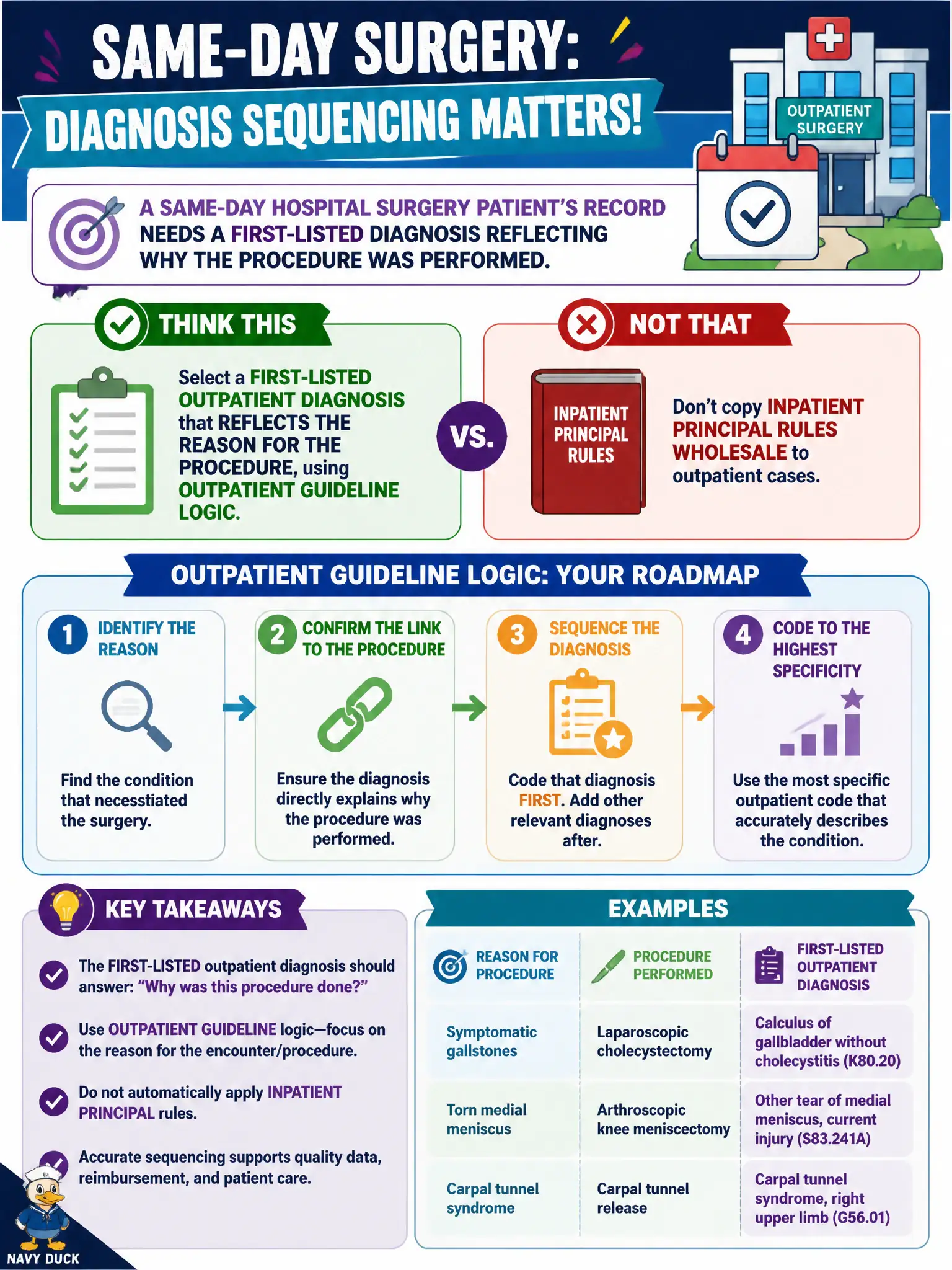
A same-day hospital surgery patient’s record needs a first-listed diagnosis reflecting why the procedure was performed. How should the coder think about diagnosis sequencing in this setting?
Select an answer to reveal the explanation.
Short Explanation
Same-day surgery still needs a “why are we here?” diagnosis—but it’s outpatient first-listed thinking, not the full inpatient UHDDS principal speech. Match the setting’s rulebook to the reason for the procedure.
Full Explanation
Same-day hospital surgery uses outpatient first-listed diagnosis logic reflecting why the procedure was performed, not a wholesale copy of inpatient UHDDS “after study” principal-diagnosis wording for multi-day stays. The coder selects the diagnosis that best explains the ambulatory procedure under outpatient Official Guidelines. That distinction keeps municipal ambulatory surgery abstracts aligned with outpatient reporting rules rather than forcing inpatient sequencing vocabulary onto outpatient encounters.
Applying inpatient UHDDS principal wording exactly as if the patient were a multi-day inpatient fails by concept because setting-specific guideline frameworks differ. Leaving the diagnosis blank because “first-listed rules do not apply” fails because hospital outpatient/ambulatory surgery claims require appropriate diagnosis reporting. Always listing a postoperative complication code first when no complication occurred fails because complication codes require documented complications and must not fabricate postoperative problems to fill a sequencing slot.
Exam caveat: some ambulatory cases still require careful distinction between the reason for surgery and incidental findings discovered intraoperatively—follow outpatient guideline hierarchy rather than inventing inpatient principal logic. Operational check: identify the condition that necessitated the planned outpatient procedure; assign it as first-listed per outpatient rules; add other diagnoses only when documented and reportable; do not auto-apply inpatient principal definitions.