
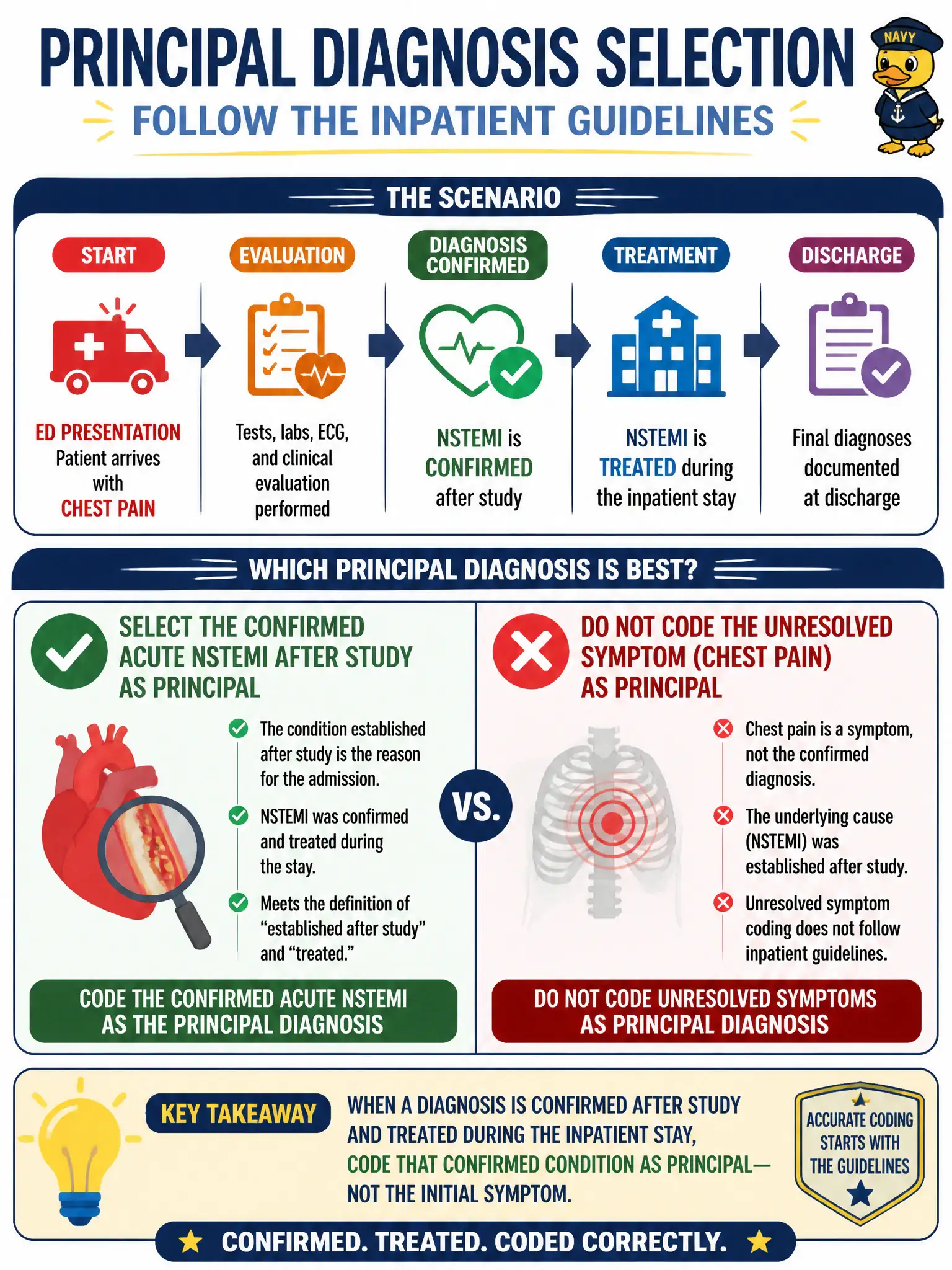
An ED-to-inpatient admission begins with chest pain. After study, NSTEMI is confirmed and treated during the stay. Which principal diagnosis selection best follows inpatient guidelines?
Select an answer to reveal the explanation.
Short Explanation
Chest pain got them through the door; NSTEMI is what the workup proved. For the inpatient stay, the confirmed acute MI after study is the principal—not a frozen chief-complaint time capsule.
Full Explanation
For an ED-to-inpatient admission that begins with chest pain and after study confirms NSTEMI treated during the stay, principal diagnosis should be the confirmed acute NSTEMI. Inpatient guidelines require selecting the condition established after study as chiefly responsible for the admission—not freezing the ED triage chief complaint as principal once a definitive acute coronary syndrome diagnosis is made. Accurate NSTEMI principal selection supports honest civic cardiac quality metrics and appropriate MS-DRG assignment.
Keeping chest pain as principal because it was the ED triage chief complaint fails by concept: triage symptoms initiate evaluation but yield to definitive after-study diagnoses. Coding only GERD because an antacid was given in the ED fails because incidental symptomatic treatment does not erase a confirmed NSTEMI. Using a rule-out MI symptom code as principal even after NSTEMI is confirmed fails because confirmed acute myocardial infarction supersedes uncertain or symptom-only coding.
Exam caveat: distinguish STEMI/NSTEMI specificity, encounter timing, and subsequent myocardial infarction rules; do not code ruled-out MI as confirmed, and do not keep chest pain principal after confirmation. Operational check: verify cardiology/attending confirmation of NSTEMI in the inpatient record; assign NSTEMI as principal; sequence related comorbidities appropriately; retire unresolved rule-out symptom principals once the MI is established.