
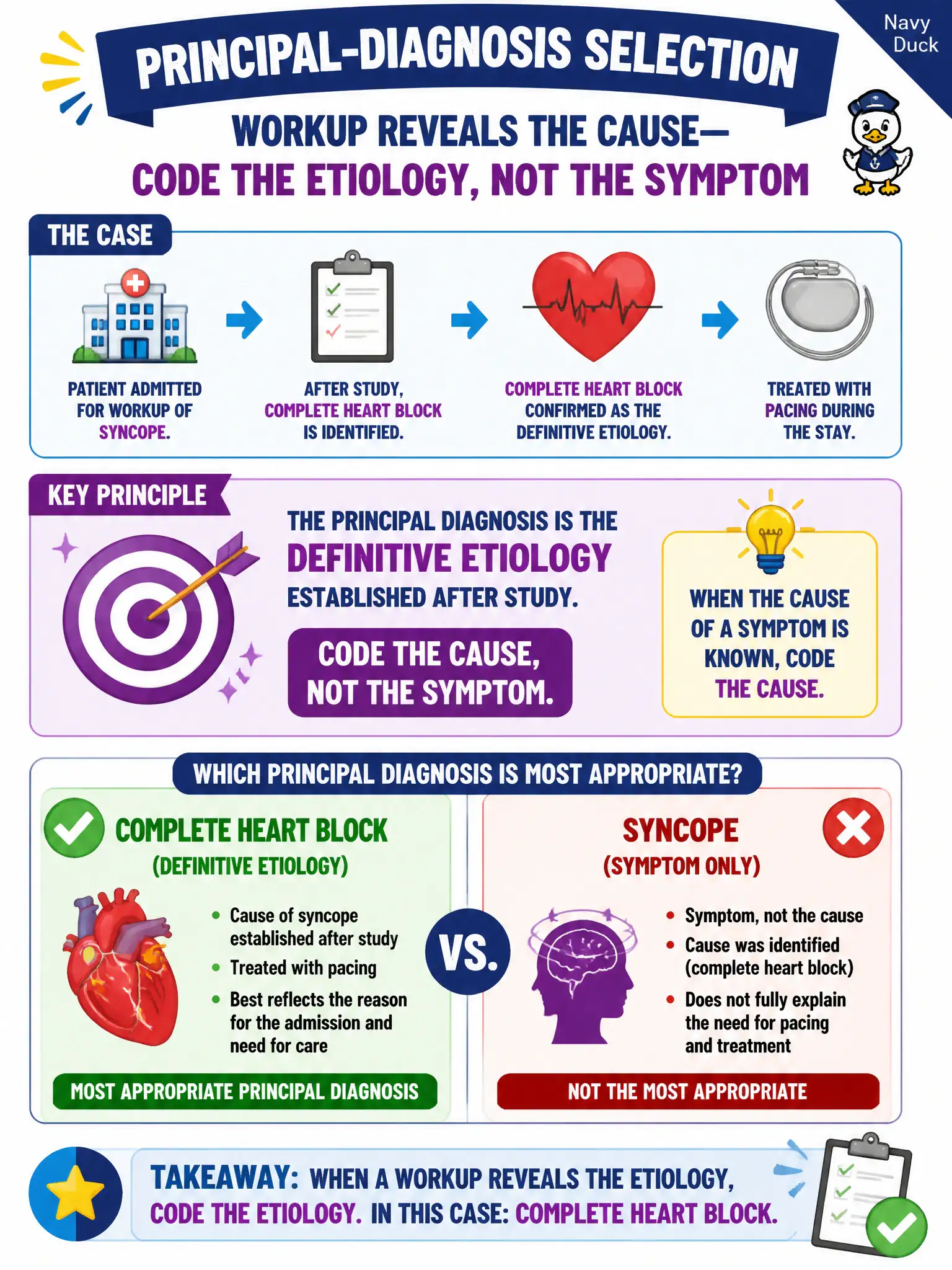
A patient is admitted for workup of syncope. After study, complete heart block is identified and treated with pacing during the stay. Which principal-diagnosis selection is most appropriate?
Select an answer to reveal the explanation.
Short Explanation
Syncope was the smoke alarm; complete heart block was the fire they found. Once the cause is nailed down after study, that etiology—not the leftover symptom—usually takes the principal seat.
Full Explanation
When a civic hospital inpatient is admitted for syncope workup and after study complete heart block is identified and treated with pacing, principal diagnosis should be the definitive etiology—complete heart block—rather than the presenting syncope alone. UHDDS principal-diagnosis logic favors the condition established after study that occasioned the admission; once syncope’s cause is known and treated, coding the cause as principal yields accurate severity and resource representation for public reporting.
Keeping syncope as principal forever even after complete heart block is confirmed fails by concept because a nonspecific symptom should not remain principal when a definitive related etiology is established after study. Reporting only the pacing procedure without diagnosis codes for the cardiac condition fails because procedures do not replace diagnoses; the underlying complete heart block remains essential for clinical and DRG context. Selecting unspecified abnormal ECG as principal while ignoring documented complete heart block fails because a vague test finding must not displace a definitive arrhythmia diagnosis already established and treated.
Exam caveat: if syncope remains unexplained after study, symptom coding may still be appropriate; the distinguishing fact here is that complete heart block was confirmed and treated. Operational check: confirm discharge documentation ties pacing therapy to complete heart block; assign complete heart block as principal; report syncope only if guidelines still support it as additional; never leave a nonspecific symptom principal when the definitive cause is documented.