
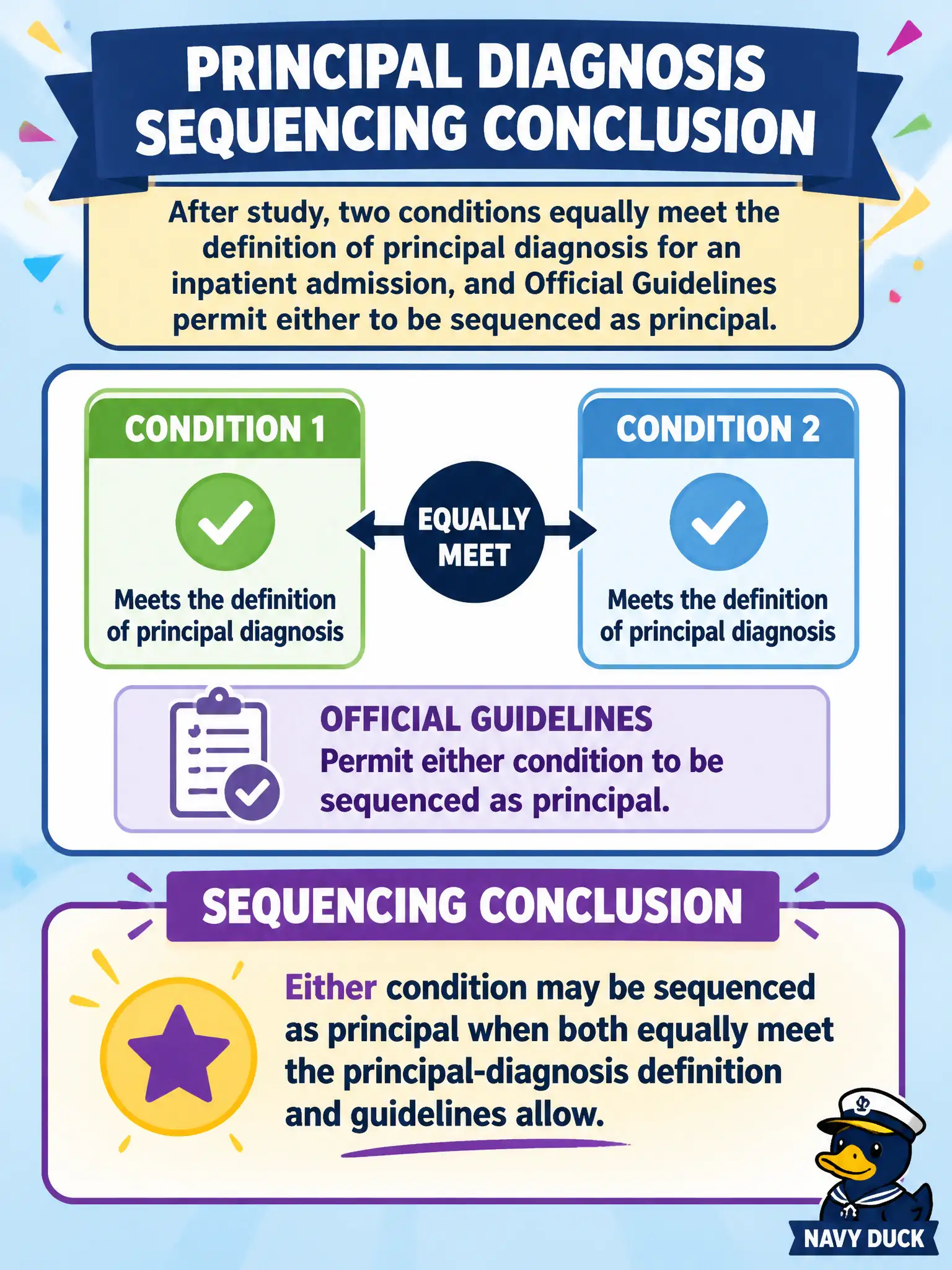
After study, two conditions equally meet the definition of principal diagnosis for an inpatient admission, and Official Guidelines permit either to be sequenced as principal. What is the correct sequencing conclusion?
Select an answer to reveal the explanation.
Short Explanation
Sometimes two villains tied for “reason we admitted you.” When the guidelines say it’s a true tie, either can wear the principal jersey—you’re not forced into a fake ranking just to feel decisive.
Full Explanation
When, after study, two conditions equally meet the inpatient principal-diagnosis definition and Official Guidelines permit either to be sequenced as principal, either condition may be selected. This is an explicit guideline allowance for true ties—not a mandate to invent a hierarchy based on payment, alphabet, or coder preference beyond what guidelines allow. Applying the tie rule correctly avoids distorting civic hospital data with artificial principal choices that guidelines do not require.
Always picking the higher relative-weight condition while ignoring guideline equality fails by concept because reimbursement optimization is not the principal-diagnosis definition; unethical upcoding-by-sequencing violates compliance expectations. Leaving neither coded and holding the bill until one condition is deleted fails because both conditions remain valid reportable diagnoses; the tie concerns sequencing of principal, not deletion. Using only alphabetical order of ICD titles fails because alphabetization is not the Official Guideline method for resolving equal principal candidates.
Exam caveat: the “either may be sequenced” pathway applies only when both truly and equally meet the definition after study—not when one condition clearly occasioned admission more than the other. Operational check: document the clinical basis for equality in abstract notes if required by facility policy; select either eligible condition as principal consistently with guidelines and facility compliant practice; report the other as an additional diagnosis; never delete a valid condition to force a false single-cause narrative.