
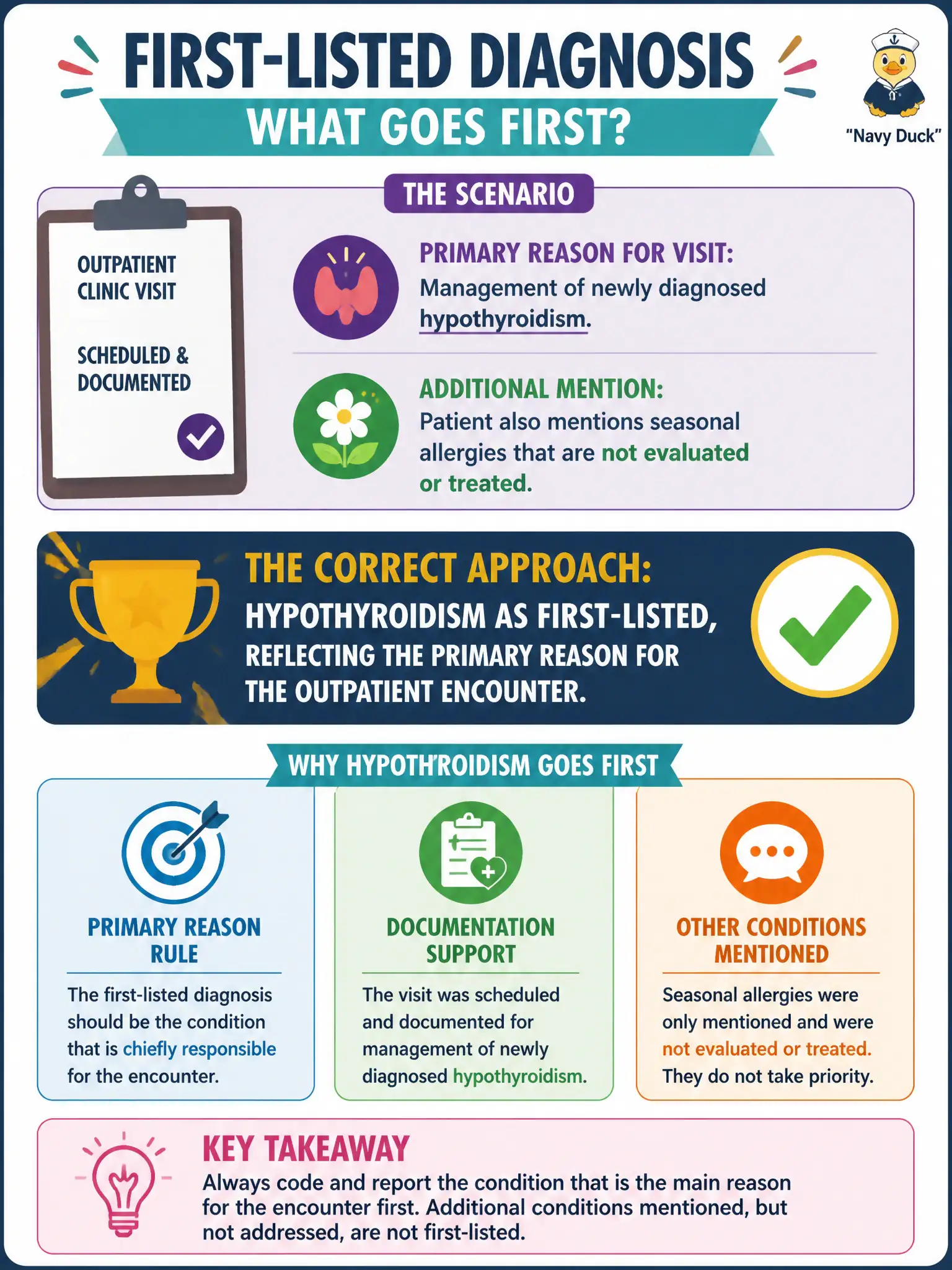
An outpatient hospital clinic visit is scheduled and documented for management of newly diagnosed hypothyroidism. During the visit the patient also mentions seasonal allergies that are not evaluated or treated. What is the correct first-listed diagnosis approach?
Select an answer to reveal the explanation.
Short Explanation
Outpatient first-listed is “why did you book this appointment?”—not every side comment in the room. New hypothyroidism management is the reason for the visit; casual allergy chatter that nobody treated stays off the starting slot.
Full Explanation
For an outpatient hospital clinic visit scheduled and documented for management of newly diagnosed hypothyroidism, the first-listed diagnosis should be hypothyroidism—the primary reason for the encounter. Seasonal allergies mentioned but neither evaluated nor treated do not become first-listed merely because the patient spoke of them. Outpatient first-listed selection protects accurate ambulatory reporting for public clinics by reflecting why the visit was booked and what was managed, not every incidental complaint.
Placing seasonal allergies first because any patient-mentioned complaint outranks the visit reason fails by concept: unaddressed mentions are not the encounter focus. Using an unspecified endocrine symptom code instead of documented hypothyroidism fails because a specific, documented visit-focus diagnosis should not be discarded for a vaguer symptom. Defaulting hypertension as first-listed for every adult clinic visit fails because first-listed diagnosis is encounter-specific documentation, not a demographic default.
Exam caveat: if allergies had been evaluated or treated, they could be additional diagnoses; first-listed would still generally remain the hypothyroidism management reason unless documentation showed a different primary focus. Operational check: identify the scheduled/documented visit purpose; confirm what was assessed and managed; assign hypothyroidism first-listed; omit or demote unevaluated allergy mentions per outpatient reporting rules; never auto-first-list chronic diseases unrelated to today’s documented focus.