
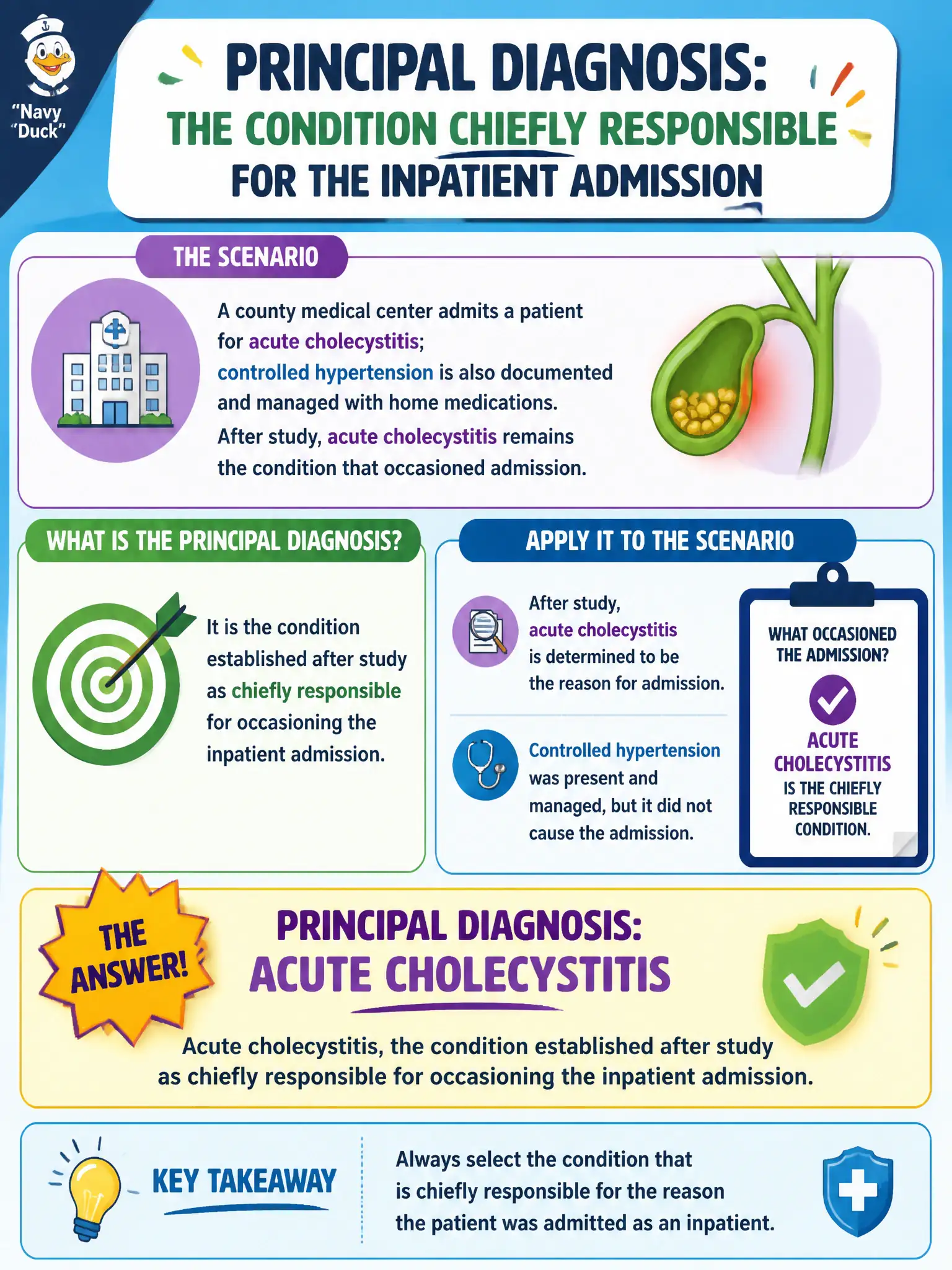
A county medical center admits a patient for acute cholecystitis; controlled hypertension is also documented and managed with home medications. After study, acute cholecystitis remains the condition that occasioned admission. Which diagnosis should be principal?
Select an answer to reveal the explanation.
Short Explanation
Principal diagnosis is the main reason the hospital doors opened for this stay—after the workup settles the story. Here that’s acute cholecystitis. Stable hypertension tagging along on home meds doesn’t steal the headline.
Full Explanation
Principal diagnosis selection for a county medical center inpatient follows the UHDDS definition: the condition established after study to be chiefly responsible for occasioning the admission. Here, acute cholecystitis occasioned admission and remains that condition after study, so it is principal. Controlled hypertension managed with home medications is an additional diagnosis when it meets reporting criteria, but it does not displace the acute surgical condition that drove the stay. Correct principal selection preserves honest public DRG and quality reporting for civic hospitals.
Sequencing hypertension as principal because chronic conditions “always” precede acute surgical conditions fails by concept: chronicity does not outrank the after-study reason for admission. Listing both as dual principals on one claim fails because inpatient claims require a single principal diagnosis; additional diagnoses are secondary. Coding abdominal pain as a symptom instead of established acute cholecystitis fails because a definitive diagnosis after study replaces the nonspecific symptom that prompted workup.
Exam caveat: “two or more diagnoses equally meeting principal definition” is a separate guideline pathway; this stem is not that scenario—cholecystitis is clearly the occasioning condition. Operational check: confirm after-study narrative in H&P, progress notes, and discharge summary; assign acute cholecystitis as principal; report managed hypertension as additional if criteria met; avoid symptom principal when a definitive related diagnosis is established.