
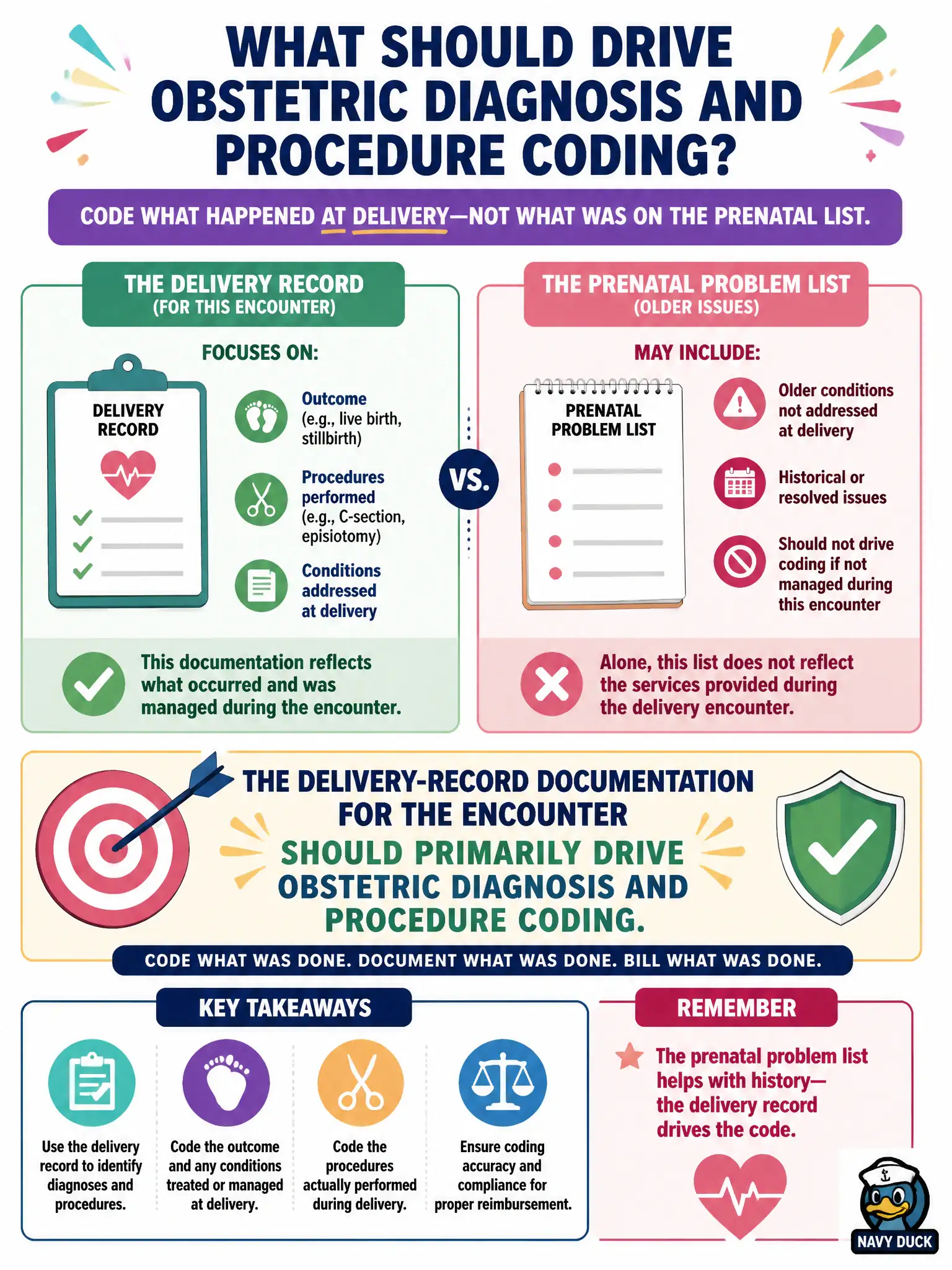
A municipal hospital obstetrics coder reviews a delivery encounter. The delivery record documents outcome and procedures performed; the prenatal problem list includes older issues not addressed at delivery. What should primarily drive obstetric diagnosis and procedure coding for this encounter?
Select an answer to reveal the explanation.
Short Explanation
The prenatal list is the season-long roster; the delivery record is today’s game tape. For the delivery encounter, code what that delivery documentation shows—not every old prenatal bullet that never touched this admission.
Full Explanation
Obstetric diagnosis and procedure coding for a municipal hospital delivery encounter is driven primarily by the delivery-record documentation for that encounter—labor, delivery, procedures performed, and outcomes—not by every entry on a historical prenatal problem list. Prenatal lists accumulate season-long issues; many may be resolved, inactive, or irrelevant to the delivery admission. Coding from the delivery documentation keeps maternal encounter reporting aligned to what actually affected this episode of care and supports trustworthy civic perinatal statistics.
Coding every historical prenatal problem list entry whether or not it affected delivery fails by concept because problem lists are not encounter-validated diagnoses; inactive or unaddressed historical items should not inflate the delivery abstract. Basing maternal delivery coding only on the newborn’s chart fails because maternal diagnoses and procedures are reported from the mother’s record for the obstetrical encounter. Using the ultrasound dating worksheet alone while ignoring labor, delivery, and procedure notes fails because dating worksheets support gestational age context but do not replace delivery and procedure documentation as the primary coding sources.
Exam caveat: some prenatal conditions remain relevant if they complicate pregnancy, childbirth, or the puerperium and are documented as such for the encounter—relevance and documentation, not list membership alone, govern inclusion. Operational check: prioritize delivery summary, labor record, operative/delivery procedure notes, and provider diagnoses for the encounter; include prenatal conditions only when documentation shows they affected this delivery episode; never code the entire prenatal list by default.