
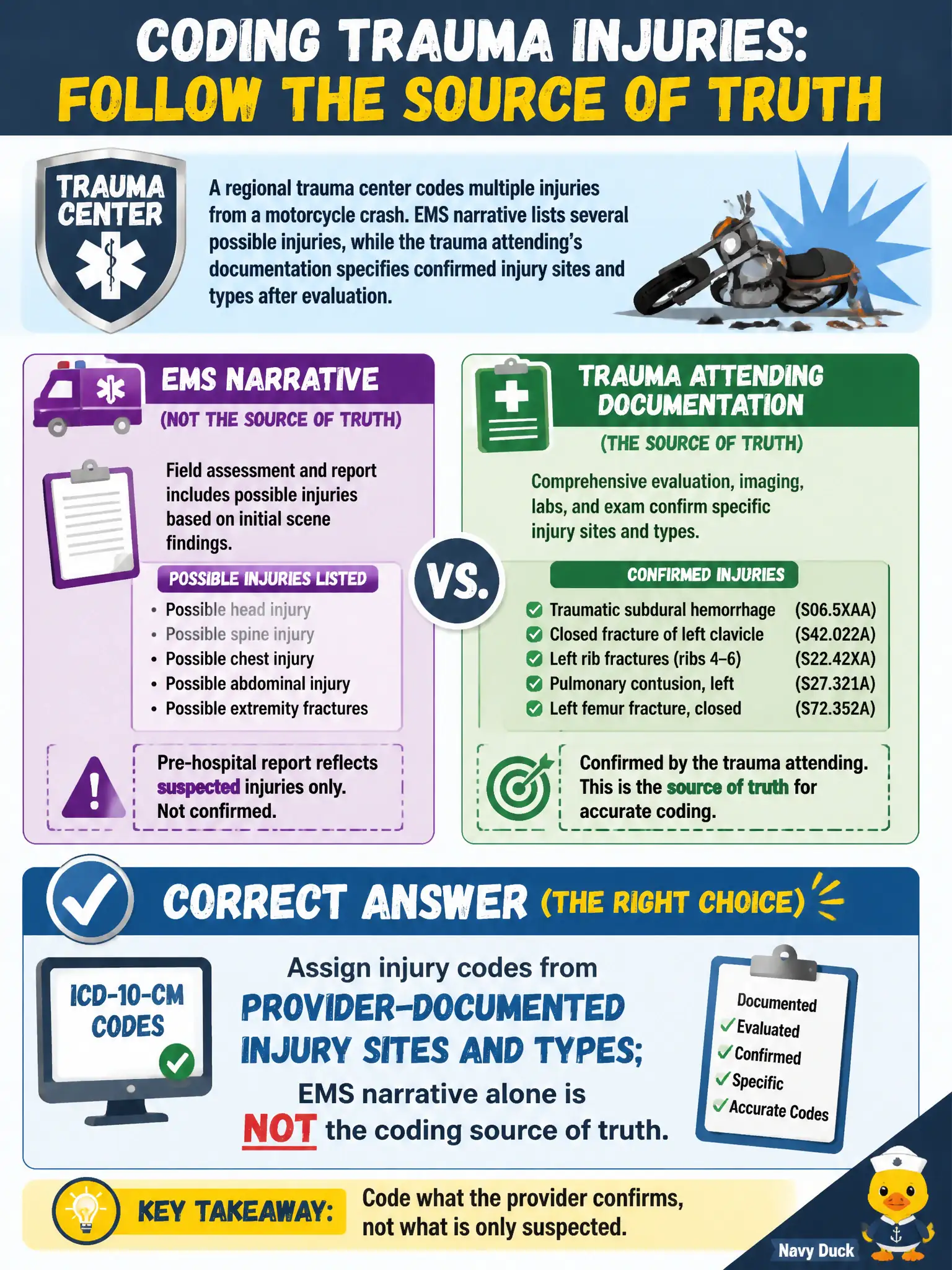
A regional trauma center codes multiple injuries from a motorcycle crash. EMS narrative lists several possible injuries, while the trauma attending’s documentation specifies confirmed injury sites and types after evaluation. Which statement is correct?
Select an answer to reveal the explanation.
Short Explanation
EMS writes the roadside first draft; the trauma attending writes the verified edition. You code the injuries the provider documented—not every possibility that rode in on the ambulance note.
Full Explanation
At a regional trauma center, injury diagnosis coding is based on the trauma attending’s documented injury sites and types after evaluation—not on every possibility listed in the EMS narrative. EMS documentation is invaluable for mechanism, timeline, and early findings, but facility ICD-10-CM injury assignment requires provider confirmation of injuries that were evaluated and established. Coding from verified trauma documentation protects accuracy of civic trauma registries, quality programs, and reimbursement integrity when motorcycle-crash cases carry many provisional roadside impressions.
Coding every injury mentioned by EMS even when never confirmed fails by concept because provisional field impressions may be ruled out or refined; coding unconfirmed EMS lists overstates injury burden. Using only the mechanism-of-injury external cause code and omitting injury diagnoses fails because external causes supplement, they do not replace, codes for the injuries themselves. Preferring a police report over the trauma attending’s diagnoses fails because police narratives are not the health-record provider documentation source for ICD-10-CM clinical injury assignment.
Exam caveat: EMS and scene reports may support external cause or raise query opportunities, but confirmed injury codes come from provider documentation; do not confuse trauma activation paperwork with final injury diagnoses. Operational check: map each candidate injury to trauma attending/H&P/progress/operative documentation; code confirmed injuries with appropriate seventh characters and encounters; assign external causes from documented mechanism; query unresolved high-impact discrepancies rather than importing the entire EMS differential.