
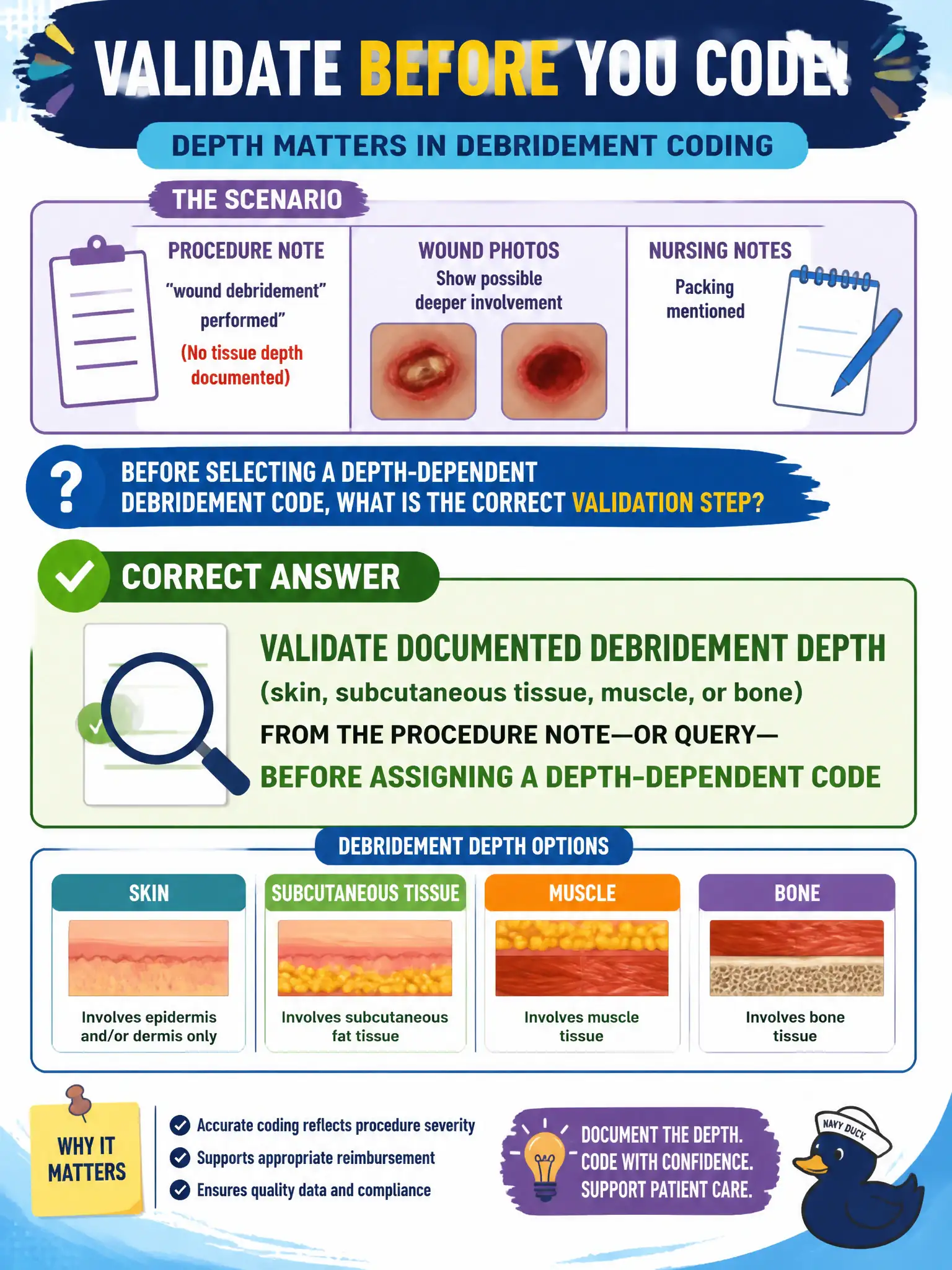
A procedure note states “wound debridement performed” without naming tissue depth. Wound photos show possible deeper involvement, and nursing notes mention packing. Before selecting a depth-dependent debridement code, what is the correct validation step?
Select an answer to reveal the explanation.
Short Explanation
Debridement depth is like floors in a building—you code the floor the surgeon documented, not the floor the photo might imply. Vague “debridement performed” is not enough. Validate depth in the note or query before you pick a depth-based code.
Full Explanation
Debridement coding that depends on tissue depth requires documented depth—skin, subcutaneous tissue, muscle, or bone—from the procedure note, not inferences from photos or packing alone. Before selecting a depth-dependent debridement code, validate documented depth or query when depth is missing from the authenticated procedure description. Assuming muscle depth because packing usually means bone involvement invents anatomy and confuses packing practice with the level of tissue actually removed. Defaulting to skin-only debridement solely to avoid overcoding may underreport documented deeper work and is still a guess if depth was never stated by the provider. Picking the deepest available code so wound photos are fully reflected codes photography rather than the operative description and risks overcoding for municipal wound clinics. Exam caveat: excisional versus nonexcisional debridement definitions and depth hierarchies are frequently tested—apply current CPT or PCS definitions to the documented tissues removed. Operational check for county wound-care procedures: read the procedure note for tissues removed and depth; if only vague "debridement performed" language exists, query before locking a depth-specific code.