
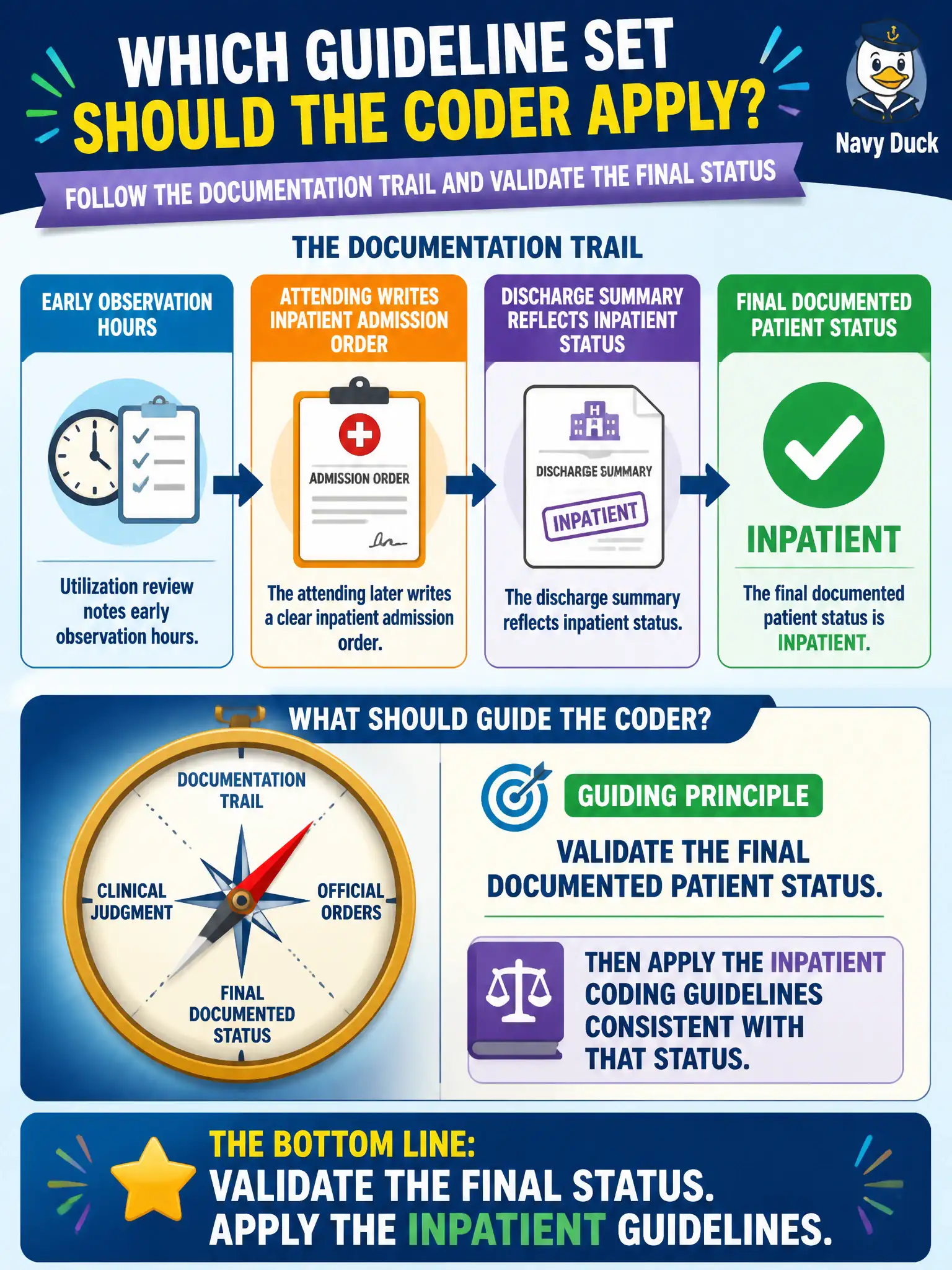
Utilization review notes early observation hours, but the attending later writes a clear inpatient admission order and the discharge summary reflects inpatient status. When validating the documentation trail for coding, what should guide which guideline set the coder applies?
Select an answer to reveal the explanation.
Short Explanation
Status can change mid-stay—like a ticket upgraded from standby to boarded. Coders validate the final status trail, not the first sticky note. Once inpatient status is ordered and documented, inpatient guidelines follow.
Full Explanation
Patient status for hospital billing and coding guideline selection follows authenticated orders and the final documented status, not the earliest utilization-review note. When utilization review notes early observation hours but the attending later writes a clear inpatient admission order and the discharge summary reflects inpatient status, the coder should validate the final documented patient status and apply the inpatient coding guidelines consistent with that status. Always following the first observation note because early status overrides later orders ignores lawful status changes after provider orders. Coding as observation whenever any observation hour appears anywhere in the chart freezes an interim status and misapplies inpatient abstracts. Choosing whichever status yields higher payment without regard to orders is abusive billing for public and commercial payers alike. Exam caveat: condition codes, order timing, and two-midnight concepts interact with status determination for Medicare—apply current CMS and facility status rules alongside coding guidelines. Operational check: locate the authenticating inpatient order and discharge status language, reconcile against utilization-review notes, and select the guideline set and bill type that match the validated final status for the municipal stay.