
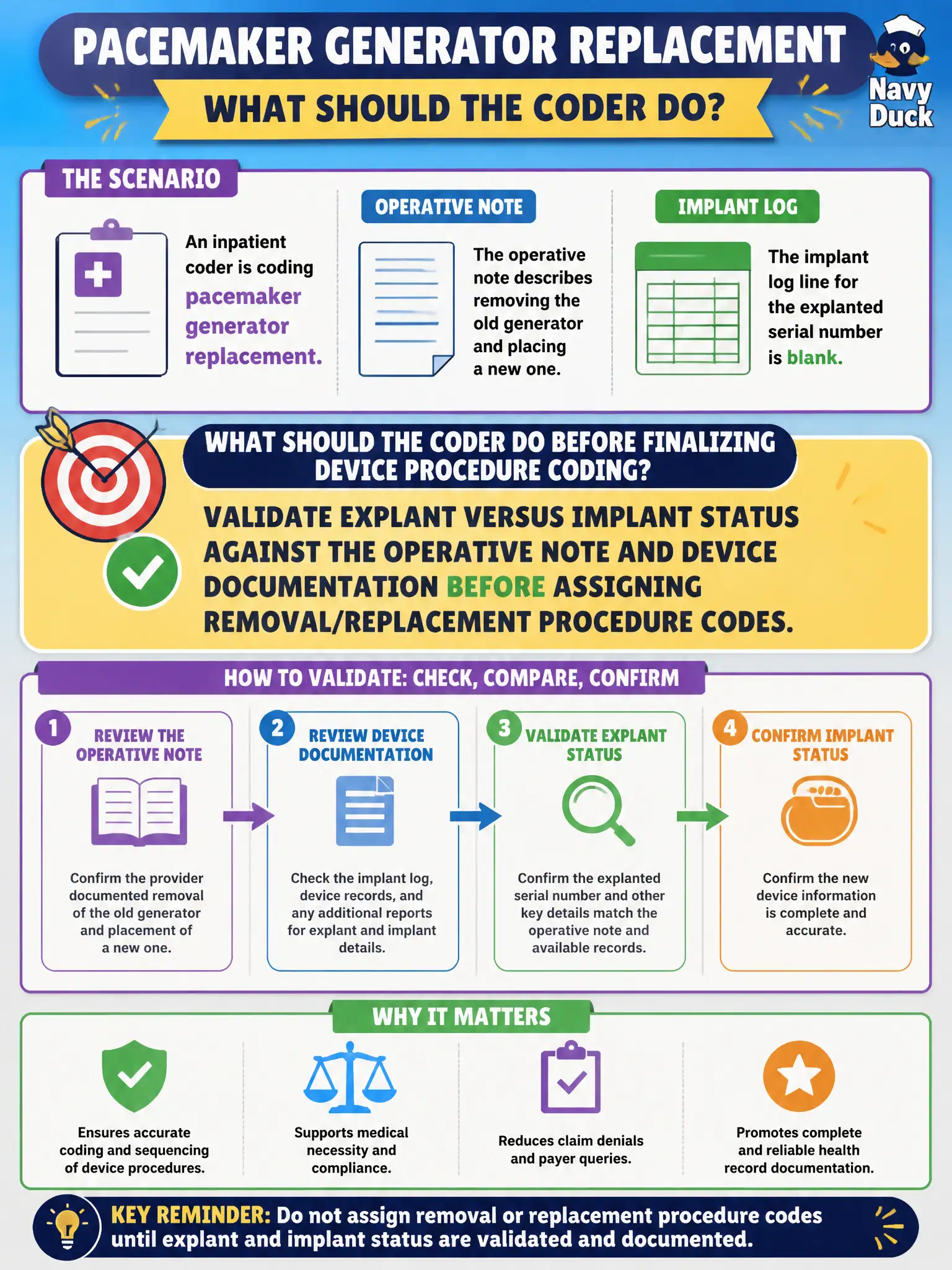
An inpatient coder is coding pacemaker generator replacement. The operative note describes removing the old generator and placing a new one, but the implant log line for the explanted serial number is blank. What should the coder do before finalizing device procedure coding?
Select an answer to reveal the explanation.
Short Explanation
Think of the op note as the map and the implant log as the packing slip—you need both to know what left the body and what went in. Blank explant details are a red flag, not a free pass to guess. Validate device status before you lock removal or replacement codes.
Full Explanation
Device procedure coding for pacemaker generator replacement depends on accurate documentation of what was removed and what was implanted. When the operative note describes removing the old generator and placing a new one but the implant log line for the explanted serial number is blank, the coder should validate explant versus implant status against the operative note and device documentation before assigning removal or replacement procedure codes. Coding only the new implant while ignoring a documented explant because a serial field is blank underreports the removal component of the procedure. Assigning a revision code from the charge ticket alone without reading the operative narrative substitutes charging for clinical documentation. Coding the case as a new implant only to avoid delaying the bill for a blank explant line prioritizes throughput over accurate device procedure reporting. Exam caveat: PCS and CPT device procedure distinctions for removal, insertion, and revision are precise—match codes to documented work, and pursue missing device identifiers through clinical or HIM channels when required for implant logs. Operational check in a civic electrophysiology lab case: reconcile operative narrative, implant and explant logs, and stickers; clarify blank explant fields; then finalize removal and replacement codes.