
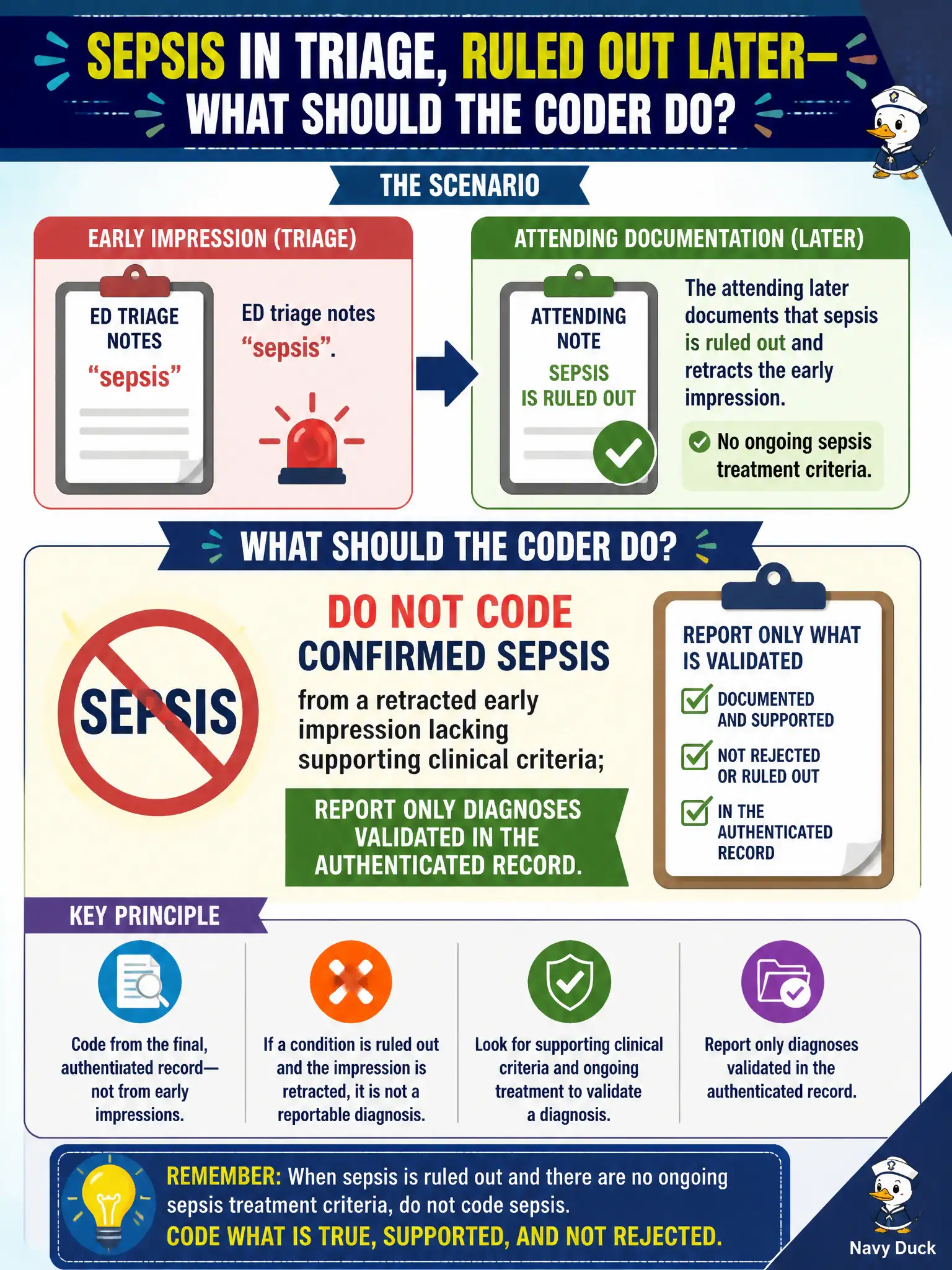
ED triage notes list 'sepsis,' but the attending later documents that sepsis is ruled out and retracts the early impression, with no ongoing sepsis treatment criteria. What should the coder do?
Select an answer to reveal the explanation.
Short Explanation
Early ED impressions can be working theories that get walked back. If the attending rules sepsis out and treatment never supports it, you do not keep coding the scare. Validated final diagnoses beat retracted first drafts.
Full Explanation
Early emergency department impressions can be revised as the clinical picture clarifies. When triage notes list "sepsis" but the attending later documents that sepsis is ruled out, retracts the early impression, and ongoing sepsis treatment criteria are absent, the coder should not report confirmed sepsis from the retracted impression; report only diagnoses validated in the authenticated record. Coding sepsis because the first impression always remains reportable ignores later authenticated retraction and current inpatient uncertain-diagnosis and ruled-out concepts. Automatically coding severe sepsis whenever an ED nurse documents SIRS invents severity and organ dysfunction not established by the provider. Keeping sepsis as POA Yes plus a history-of-sepsis Z code doubles down on a retracted acute diagnosis and misuses personal-history conventions. Exam caveat: distinguish ruled-out, possible or probable at discharge, and confirmed sepsis pathways under Official Guidelines for the encounter setting. Operational check: compare early impressions with final authenticated diagnostic statements and the treatment course; omit retracted sepsis or query only if conflicting evidence truly remains unresolved for the civic hospital abstract.