
Before assigning OB codes that depend on specific gestational weeks, what should the hospital coder validate in the record?
Select an answer to reveal the explanation.
Short Explanation
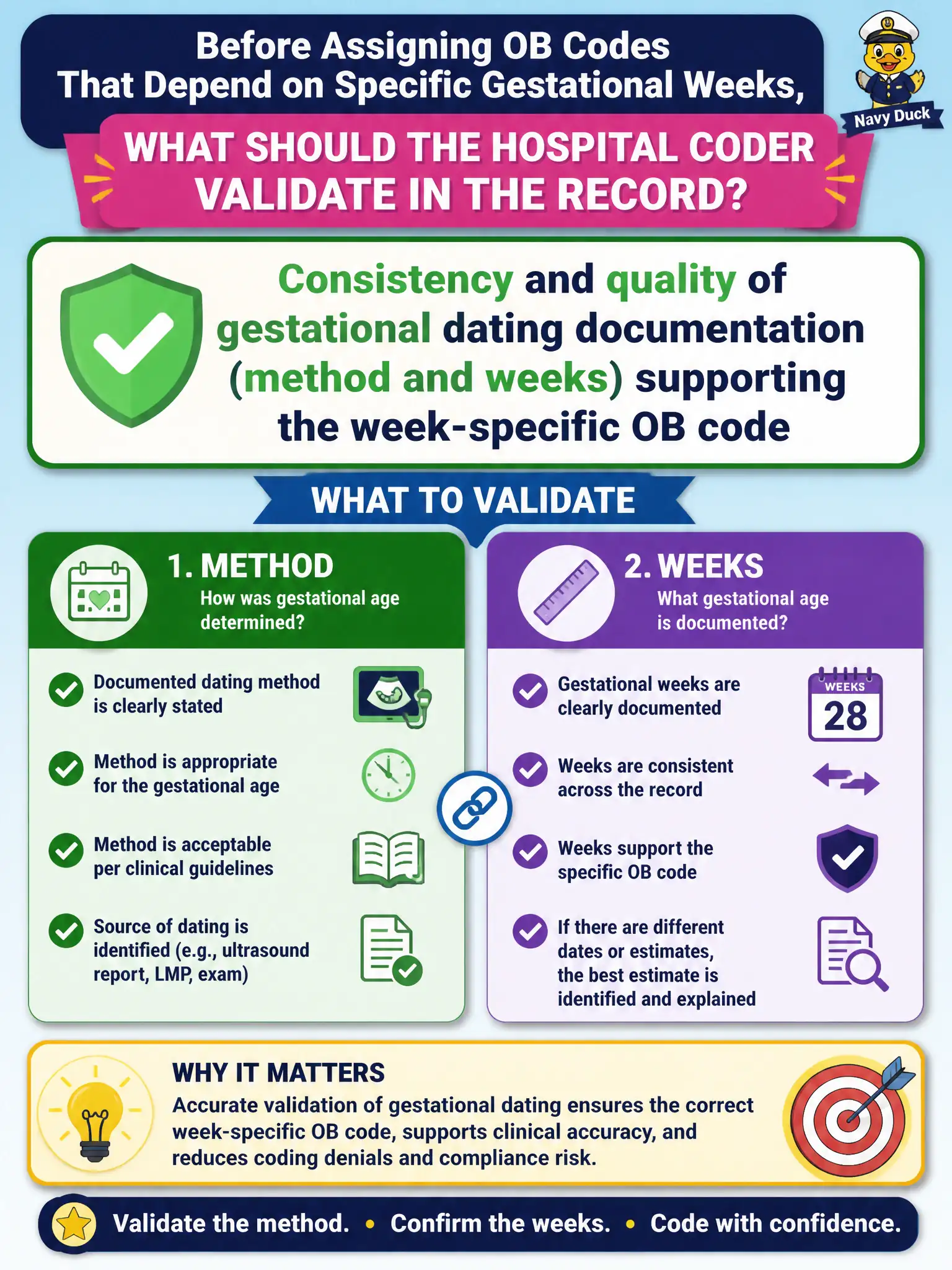
Week-specific OB codes need a trustworthy gestational age story — LMP, ultrasound dating, and stated weeks should hang together. If dating is fuzzy or conflicting, fix the documentation before you pick the week code.
Full Explanation
Obstetric ICD-10-CM codes that depend on specific gestational weeks require validated gestational dating documentation—method and weeks—consistent enough to support the week-specific code. Coders should confirm quality and consistency of dating in the prenatal and hospital record before assigning those codes. A patient's self-reported due date from a prior pregnancy app, without clinical dating documentation for this pregnancy, is not adequate validation for week-specific obstetric coding. Neonatal birth weight charts inform newborn coding axes but do not by themselves establish maternal gestational-week codes. An ultrasound machine serial number is equipment metadata, not a gestational age determination for the mother. Exam caveat: trimester versus week-specific codes, weeks of gestation secondary codes, and conflicting dating methods are common obstetrics testing topics—follow Official Guidelines for obstetrics current to the discharge date. Operational check in a municipal labor and delivery unit: reconcile LMP, ultrasound dating, and provider gestational-age statements; if week-specific coding is required and dating conflicts or is missing, clarify before locking the obstetric week codes.